Louisiana Bayou Families Lose Power, Face Exit
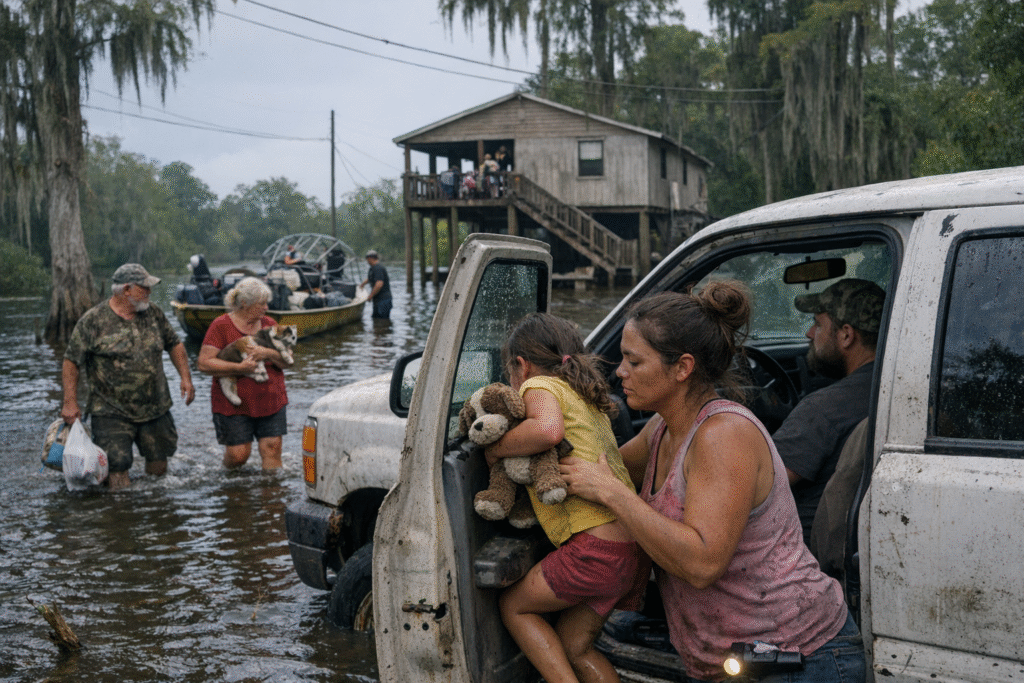
A remote cluster of families in Louisiana’s bayou country is confronting an abrupt end to a way of life that has persisted for decades, after an electric utility withdrew service to the area, according to reporting by The Wall Street Journal in its article “Families Spent Decades on Louisiana’s Bayous. The Power Company Pulled the Plug.”
For generations, residents built homes along narrow waterways accessible only by boat, living off a combination of fishing, subsistence practices, and modest modern amenities made possible by electric service extended years ago. That fragile link to the grid, however, has now been severed, leaving remaining households to reckon with the loss of refrigeration, air conditioning, and basic lighting in a region where extreme heat and isolation pose significant risks.
The utility’s decision reflects a convergence of economic and environmental pressures. Maintaining infrastructure across marshland has grown increasingly costly, particularly as coastal erosion and land subsidence accelerate in southern Louisiana. Rising maintenance expenses, paired with a dwindling number of customers in sparsely populated areas, have made continued service difficult to justify from a business standpoint. Company representatives have indicated that keeping lines operational in such terrain is not sustainable.
Residents, many of whom lack the financial means to relocate, describe the shutdown as devastating. For them, the bayou is not only home but also heritage, tied to cultural traditions that are difficult to replicate elsewhere. The disappearance of reliable electricity intensifies already harsh living conditions, effectively forcing a choice between leaving ancestral land or adapting to a far more precarious existence.
The episode highlights the broader challenges facing communities on the front lines of climate change and infrastructure retreat. As coastal regions become more vulnerable and costly to maintain, utilities and local governments are increasingly confronted with decisions about whether to reinforce, relocate, or abandon services altogether. In Louisiana, where land loss is among the fastest in the United States, such dilemmas are becoming more frequent.
The situation also underscores gaps in policy frameworks addressing managed retreat and rural service obligations. While urban areas tend to attract investment and protection, isolated communities often face limited support when essential services are withdrawn. The absence of clear pathways for relocation assistance or infrastructure adaptation leaves residents to navigate complex personal and financial decisions with minimal guidance.
In the bayous, the immediate reality is stark. Without electricity, daily routines—from storing food to accessing medical equipment—become significantly more difficult. Some residents are experimenting with generators and solar panels, though these options are costly and not always reliable in extreme weather conditions.
As The Wall Street Journal’s reporting makes clear, the withdrawal of power is more than a technical or economic decision; it marks a turning point for a community whose future is now uncertain, and reflects a growing national challenge as environmental change and infrastructure economics collide.