Europe Eyes Gulf Security Without U.S. Leadership
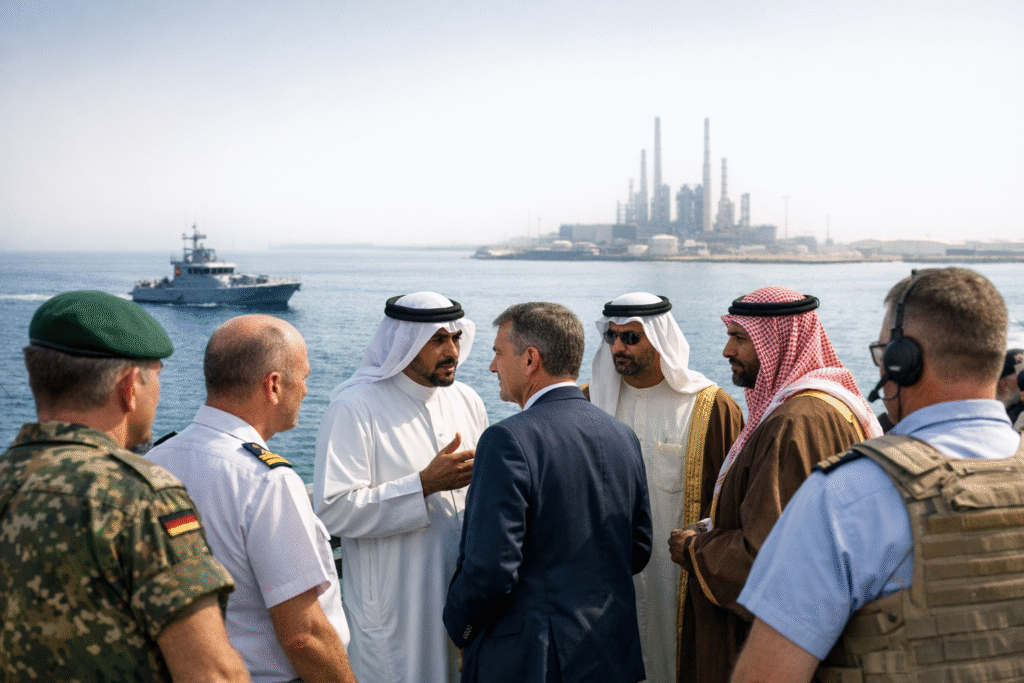
European governments are quietly exploring how they might secure critical maritime routes in the Persian Gulf without relying on U.S. military leadership, reflecting growing concern about long-term American engagement in global security. According to The Wall Street Journal article “Europe Drafts Postwar Plan to Free Up Hormuz Without U.S.,” policymakers and defense planners are examining options for safeguarding shipping through the Strait of Hormuz in a future where Washington reduces its direct role.
The discussions, still in early stages, underscore the extent to which Russia’s war in Ukraine and shifting U.S. strategic priorities have altered European threat calculations. For decades, freedom of navigation in the Gulf has effectively depended on American naval dominance. European officials now appear to be contemplating whether that assumption can hold indefinitely, particularly amid uncertainty surrounding U.S. political commitments abroad.
At the center of the planning is the Strait of Hormuz, a narrow chokepoint through which roughly a fifth of the world’s oil supply passes. Any disruption there would have immediate global economic repercussions, especially for energy-importing European states still navigating the aftershocks of curtailed Russian supplies. Ensuring the uninterrupted flow of maritime traffic has therefore become not just a regional concern but a core strategic priority.
The Journal reports that defense officials and analysts are considering a range of measures, including expanded European naval coordination, investment in surveillance and escort capabilities, and closer partnerships with Gulf states. These proposals reflect a broader shift toward what some policymakers describe as “strategic autonomy,” though the concept remains contested within Europe, particularly among countries that continue to see NATO and the U.S. security umbrella as indispensable.
Despite the exploratory nature of the planning, significant obstacles remain. European navies, while capable, lack the scale and logistical depth of the U.S. Fifth Fleet, which has long underwritten security operations in the Gulf. Coordination among European Union member states also presents challenges, given differing threat perceptions and defense priorities. Moreover, projecting sustained naval power far from home waters would require political consensus and financial commitments that have historically proven difficult to secure.
The effort nonetheless reflects a broader reevaluation underway across Europe. The war in Ukraine has already driven increases in defense spending and a focus on territorial security, but it has also exposed vulnerabilities tied to global supply chains and energy routes. In that context, safeguarding distant chokepoints like the Strait of Hormuz is increasingly viewed as part of Europe’s own security architecture rather than solely an American responsibility.
While officials involved in the discussions emphasize that no immediate shift away from cooperation with the United States is envisioned, the planning signals a desire for contingency options. As The Wall Street Journal article makes clear, the question is not whether Europe seeks to replace U.S. leadership outright, but whether it can develop the capability to act if circumstances require it.
Whether these ambitions translate into concrete policy will depend on political will, budgetary realities, and the evolving geopolitical landscape. For now, the initiative highlights a subtle but significant recalibration in transatlantic relations and a recognition in European capitals that reliance on U.S. power, once taken for granted, may no longer be absolute.