Army Adopts Waist-to-Height Ratio to Modernize Fitness Standards and Boost Readiness
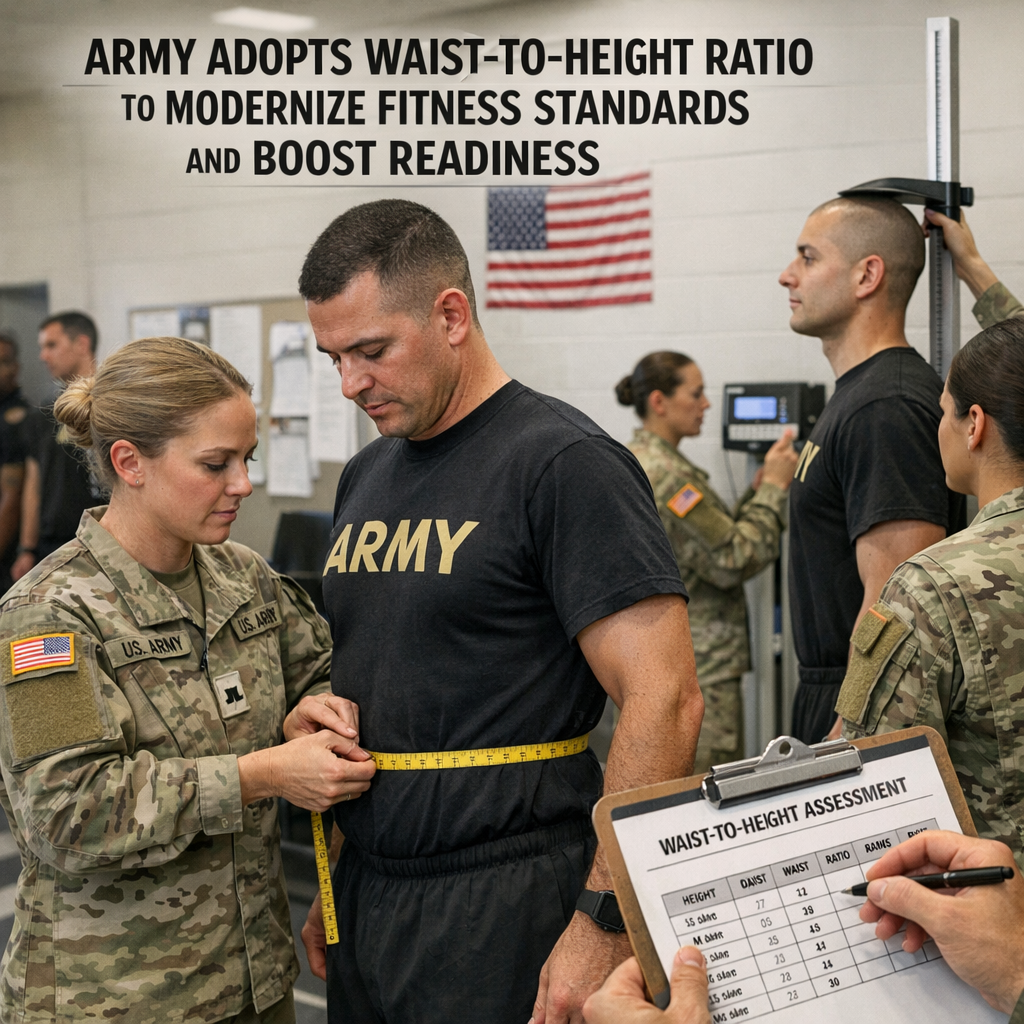
The U.S. Army is moving forward with a significant change to how it evaluates soldiers’ physical readiness, replacing long-standing body composition assessments with a waist-to-height ratio standard that leaders say is a more accurate measure of health and performance. The shift, outlined in the Military Times article “Do you meet the Army’s new waist-to-height standard? Find out with our calculator,” reflects a broader effort to modernize fitness benchmarks amid ongoing recruiting and retention challenges.
Under the new guidance, a soldier’s waist circumference will be measured against their height, with a ratio of 0.55 or less generally considered within acceptable limits. The method is intended to provide a simpler and more scientifically grounded alternative to the Army’s previous reliance on body fat calculations derived from circumference measurements, which have long drawn criticism for inconsistency and potential bias.
Army officials argue that the waist-to-height ratio better correlates with health risks and physical capability, focusing on abdominal fat, which is linked to metabolic and cardiovascular issues. By contrast, earlier methods could inaccurately penalize muscular individuals or underestimate risk in others. The new standard is also easier to administer in the field, requiring only a tape measure and eliminating the need for more complex calculations.
The Military Times report highlights the Army’s push to make the transition accessible, including the release of a calculator to help soldiers quickly determine whether they meet the requirement. This tool is part of a wider communication effort as the service prepares troops and commanders for implementation, which is expected to unfold alongside existing fitness tests such as the Army Combat Fitness Test.
The change comes at a time when the Army is under pressure to broaden its pool of eligible recruits while maintaining readiness. Leaders have acknowledged that outdated or overly rigid standards can disqualify otherwise capable candidates. By adopting a metric more closely tied to overall health, the Army hopes to strike a balance between inclusivity and operational effectiveness. Broader defense discussions around recruitment challenges have been documented by organizations like the RAND Corporation.
Still, the introduction of the waist-to-height ratio is not without controversy. Critics caution that any single measurement risks oversimplifying complex questions of fitness and performance. Research published in journals such as the British Journal of Sports Medicine has explored both the strengths and limitations of waist-to-height ratio as a universal metric. Others note that adjustments to standards must be carefully monitored to ensure they do not inadvertently lower expectations or create new disparities.
Army officials maintain that the new approach is grounded in research and reflects evolving understanding of physical fitness. Guidance from institutions like the National Institutes of Health has supported the idea that waist-to-height ratio can be an effective screening tool. They emphasize that the change is not about making standards easier, but about making them more relevant to the demands placed on soldiers.
As the policy is rolled out, its impact will be closely watched both داخل the ranks and by outside observers. Whether the waist-to-height ratio proves to be a lasting improvement over previous methods will depend on how well it aligns with real-world performance and the Army’s broader goals of readiness, resilience, and force sustainability.