Ukrainian Ground Robot Producer Expands Output and Pursues Global Defense Partnerships
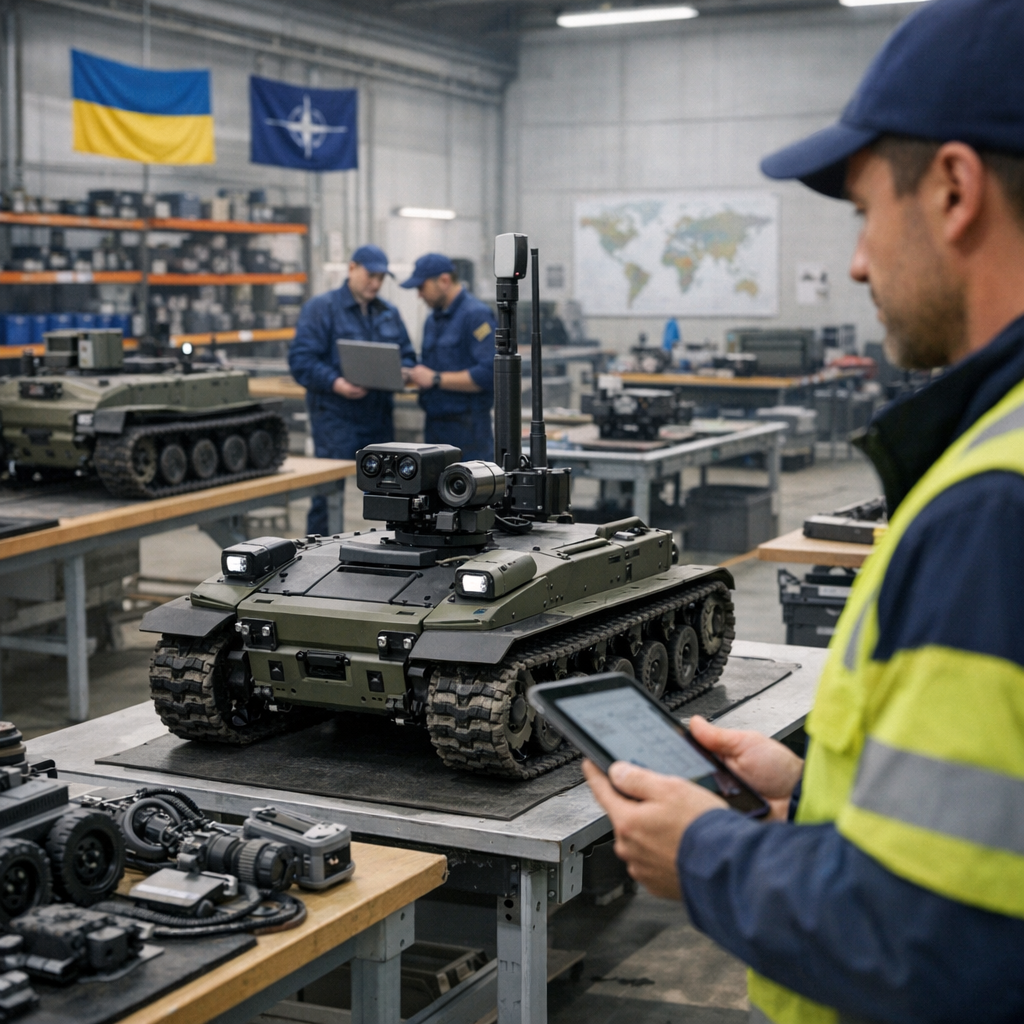
A Ukrainian manufacturer of unmanned ground systems is rapidly expanding its production capacity while seeking deeper collaboration with foreign partners, underscoring both the urgency of battlefield innovation and Kyiv’s long-term ambitions to integrate with global defense-industrial networks.
According to a report titled “Ukrainian ground robot maker doubles production, eyes ventures with foreign partners” published by Defense News, the company has significantly increased output of its robotic platforms in response to sustained operational demand from Ukrainian forces. The surge reflects a broader shift within Ukraine’s defense sector, where domestic firms have moved from small-scale, improvised solutions toward more structured, industrialized production models.
The company’s ground robots, designed for tasks such as logistics support, reconnaissance, and casualty evacuation, have become increasingly central to military operations where reducing human exposure to frontline risks is critical. Officials cited in the Defense News report indicate that production has doubled over a relatively short period, aided by streamlined manufacturing processes and closer coordination with frontline units providing real-time feedback.
This expansion comes as Ukraine continues to recalibrate its defense industry under wartime conditions, emphasizing speed, adaptability, and cost efficiency. Ground-based robotic systems, in particular, have emerged as a key focus area due to their versatility and comparatively lower cost compared to aerial platforms. Their ability to operate in contested environments, including areas subject to electronic warfare, has added to their appeal.
Beyond scaling up domestically, the company is actively exploring partnerships with foreign firms. These prospective ventures aim to address both technological gaps and production bottlenecks, while also opening pathways to international markets. Cooperation could include joint development, component sourcing, and localized manufacturing arrangements in partner countries.
Executives suggest that collaboration with established defense companies abroad would help standardize systems according to NATO-compatible requirements, a step seen as crucial if Ukrainian firms are to secure long-term export opportunities. At the same time, foreign partners may benefit from Ukraine’s battlefield-tested innovations, particularly in rapidly evolving areas such as autonomous navigation and resilient communications.
The push for international engagement also reflects broader strategic calculations. As Western governments continue to support Ukraine militarily, integrating Ukrainian manufacturers into multinational supply chains could enhance sustainability and reduce dependency on external aid. For Kyiv, this approach aligns with its objective of transforming its defense sector into a competitive, export-oriented industry even after active hostilities subside, a goal highlighted by institutions like the Center for Strategic and International Studies in analyses of Ukraine’s defense transformation.
However, challenges remain. Scaling production while maintaining quality and reliability under wartime constraints is a persistent concern. Supply chain disruptions, workforce pressures, and the need for consistent financing all pose risks to continued expansion. Moreover, navigating regulatory frameworks and intellectual property considerations in cross-border partnerships adds complexity to the company’s ambitions.
Despite these hurdles, the trajectory outlined in the Defense News report highlights a notable evolution in Ukraine’s defense-industrial base. What began as an urgent response to immediate battlefield needs is increasingly taking on the characteristics of a more mature and outward-looking sector, reflecting broader global trends in military automation and robotics.
As the conflict continues to drive technological adaptation, Ukraine’s growing capacity in unmanned ground systems may not only shape its own military effectiveness but also influence broader trends in how allied nations approach robotics and automation in modern warfare.