Army purses advanced rifling method to boost artillery barrel durability and performance
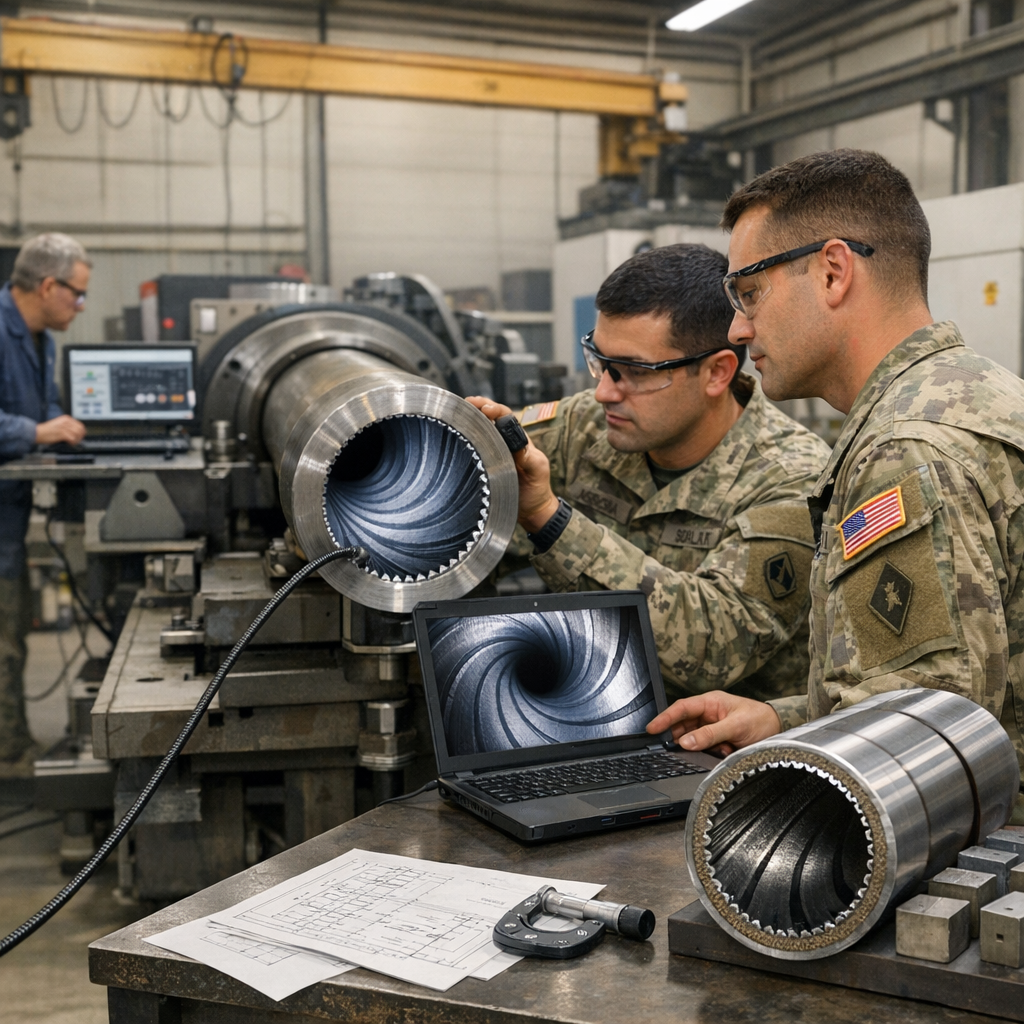
The U.S. Army is pursuing a new approach to manufacturing artillery barrels that could significantly improve both performance and durability, according to a recent report by Military Times titled “Army develops new technique for rifling cannon bores.” The effort reflects a broader push within the service to modernize its industrial base and adapt to the demands of sustained, high-intensity conflict.
Traditional rifling—the process of cutting spiral grooves inside a cannon barrel to stabilize projectiles—has long been a complex, time-consuming step in weapons production. Existing methods rely on mechanical cutting or forging techniques that can introduce stress into the metal and require extensive finishing. The Army’s new technique aims to streamline this process while producing more consistent and resilient internal geometries.
According to Military Times, the approach under development uses advanced manufacturing methods that reduce material strain and allow for greater precision. While specific technical details remain limited, officials have indicated that the process could extend the lifespan of cannon barrels, a critical factor as modern artillery systems are pushed to fire at higher rates and over longer operational periods.
Barrel wear has emerged as a major concern in recent conflicts, where sustained artillery use has led to rapid degradation of traditional gun systems. Excessive wear not only reduces accuracy but also forces more frequent replacements, adding strain to logistics and maintenance pipelines. By improving how rifling is formed, the Army hopes to mitigate these challenges and increase overall readiness.
The innovation is being developed alongside broader modernization efforts within the Army’s arsenal system, which has faced persistent criticism for slow production speeds and reliance on aging facilities. Officials see advanced manufacturing techniques such as this as a way to both accelerate output and improve quality control across critical weapons components, aligning with initiatives from the U.S. Army Futures Command.
If successful, the new rifling process could also have cost implications. Although advanced manufacturing methods often require higher upfront investment, they can reduce long-term expenses by lowering failure rates and extending component life cycles. For artillery units, this translates into fewer barrel replacements and more consistent performance in the field.
The development comes at a time when artillery has regained prominence in U.S. military planning, particularly in light of lessons drawn from conflicts in Ukraine and elsewhere. High-volume, long-range fires are once again seen as essential to battlefield success, making the reliability of cannon systems a top priority.
While the technique is still under evaluation, Army officials suggest that initial results are promising. Further testing will determine whether the method can be scaled for widespread use across different artillery platforms, including systems like the M109A7 Paladin.
As Military Times reports, the effort underscores a shift toward integrating cutting-edge manufacturing into legacy weapons systems, signaling that even longstanding technologies like cannon barrels remain subject to innovation.