US Army Shelves 10000 IVAS Goggles Amid Ongoing Performance and Usability Concerns
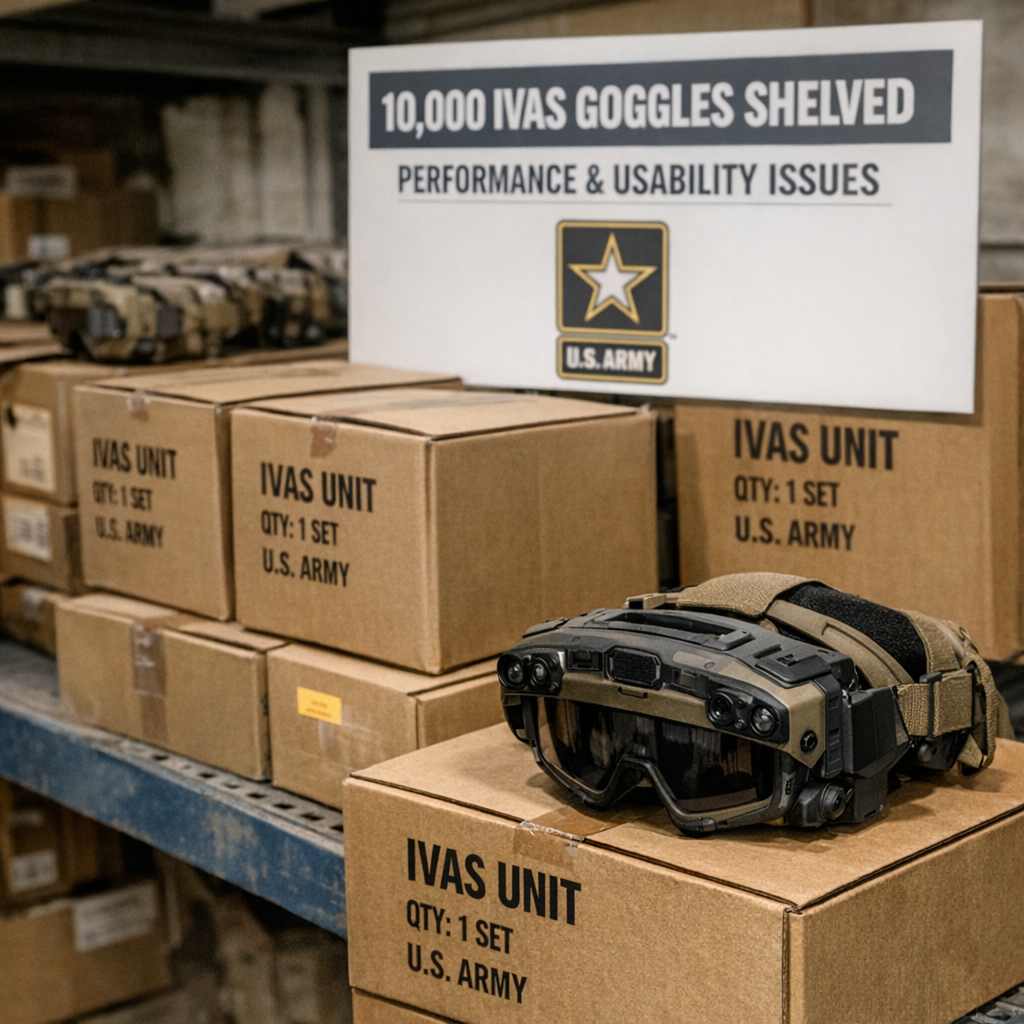
The U.S. Army plans to mothball approximately 10,000 units of its troubled Integrated Visual Augmentation System (IVAS), a high-profile program intended to provide soldiers with advanced battlefield awareness through mixed-reality goggles, according to a report by Military Times. The decision, detailed in the article “US Army will mothball 10,000 sets of clunky IVAS goggles, report reveals,” underscores ongoing concerns about the system’s performance, usability, and long-term viability.
IVAS, developed in partnership with Microsoft, has been billed as a transformative capability that would integrate night vision, navigation, targeting data, and real-time information sharing into a single wearable platform. However, the program has faced repeated setbacks over several years, including technical flaws, soldier discomfort, and operational limitations identified during field testing.
According to the Military Times report, the Army’s move to sideline a substantial portion of the currently produced goggles reflects both practical and strategic considerations. Many soldiers who tested earlier versions of IVAS reported symptoms including headaches, eye strain, and disorientation, raising concerns about the system’s suitability for prolonged use in combat environments. Additional issues involved the device’s bulk, limited reliability in varied lighting conditions, and challenges with software integration.
Rather than continuing to issue these earlier-generation units broadly, Army leaders appear to be pivoting toward refining future iterations. The decision to mothball the 10,000 units suggests an effort to avoid further distributing equipment that may undermine troop effectiveness or confidence, while preserving the possibility of incorporating lessons learned into subsequent designs.
The IVAS program has been one of the Army’s most closely watched modernization efforts, with billions of dollars allocated in pursuit of enhanced situational awareness and networked warfare capabilities. Its struggles illustrate the difficulty of translating emerging commercial technologies, such as augmented reality and virtual reality, into rugged, reliable tools for military operations.
Despite the setbacks, the Army has not abandoned the initiative. Instead, officials are continuing to work with industry partners to address the system’s deficiencies, focusing on improving ergonomics, reducing weight, and stabilizing performance. Future versions are expected to undergo further testing before being fielded more widely.
The move to mothball existing units also raises broader questions about procurement and innovation within the military. Critics have pointed to the risks of large-scale investments in unproven technologies, while proponents argue that iterative development and early field testing are necessary to achieve breakthroughs.
As outlined in the Military Times report, the Army’s decision marks a significant inflection point for IVAS. While the concept remains central to the service’s vision of a digitally integrated battlefield, the challenges encountered so far highlight the gap between technological ambition and operational reality. Whether the program ultimately succeeds may depend on the Army’s ability to reconcile that gap without compromising the needs of the soldiers expected to rely on the system in combat.