Trump Escalates Trade Criticism Toward Key Ally in Push for America First Policies
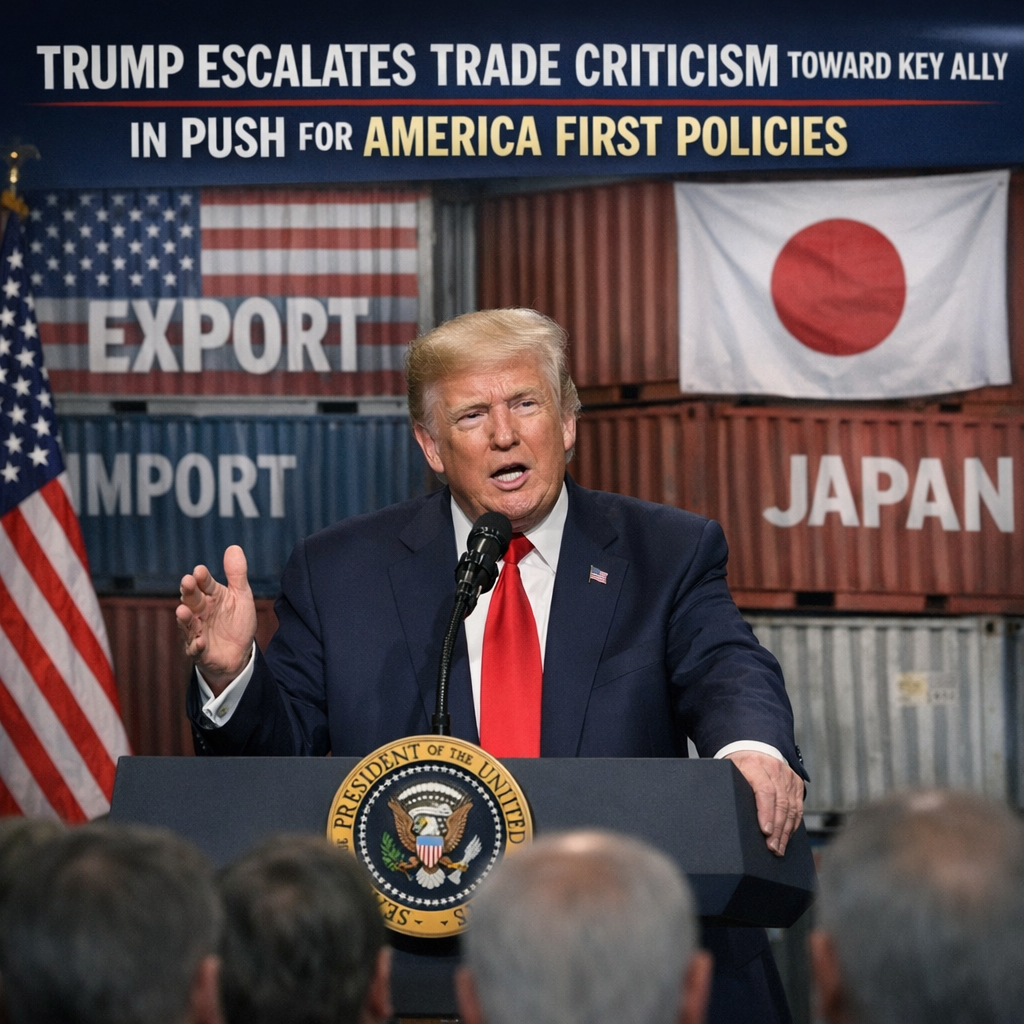
In a recent Fox News article titled “Trump Demands End to Trade With Key U.S. Ally, Calls It ‘Wasted Cause,’” former President Donald Trump is reported to have intensified his criticism of longstanding U.S. trade relationships, arguing that continued economic engagement with a major allied nation no longer serves American interests. The original report can be found here: Fox News article.
According to Fox News, Trump framed the trade relationship as fundamentally imbalanced, asserting that the United States has been disadvantaged by existing agreements and practices. He characterized the arrangement as a “wasted cause,” suggesting that diplomatic and economic efforts to recalibrate the partnership have failed to produce meaningful results.
The remarks reflect a continuation of Trump’s broader “America First” economic agenda, which during his presidency emphasized renegotiating trade deals, imposing tariffs, and seeking to reduce trade deficits, as outlined by the Office of the United States Trade Representative. His latest comments indicate that, despite being out of office, he remains committed to a confrontational approach toward allies he believes benefit disproportionately from access to U.S. markets.
The Fox News report notes that Trump’s position diverges from more traditional views within both major political parties, where stable trade relationships with allies are often seen as critical to geopolitical stability as well as economic growth, a perspective frequently discussed by organizations like the Council on Foreign Relations. Critics of Trump’s stance argue that abruptly severing or significantly downgrading trade ties with a key partner could disrupt supply chains, increase costs for American consumers, and strain diplomatic relations.
Supporters, however, contend that such rhetoric underscores legitimate concerns about fairness in international trade. They argue that longstanding alliances should not preclude hard bargaining and that the United States should be prepared to reconsider agreements that appear structurally unequal, an issue often examined by the Peterson Institute for International Economics.
Economists and policy analysts are divided on the potential impact of the approach Trump outlined. Some warn that disengagement from allied economies could have unintended consequences, including retaliatory measures and reduced competitiveness for U.S. exports, as noted in research from the International Monetary Fund. Others suggest that the threat of withdrawal could be used as leverage to extract concessions in future negotiations.
The Fox News article situates Trump’s comments within the broader political landscape, where trade policy remains a contentious issue ahead of future elections. As debates over globalization, supply chain resilience, and domestic manufacturing continue, Trump’s latest remarks signal that trade will likely remain a defining topic in American political discourse.
While it remains unclear whether such proposals would gain traction in a future administration, the statements highlight enduring tensions between economic nationalism and the strategic value of alliances.