Israel Claims Control of Hezbollah Tunnel Network Beneath Strategic Beaufort Ridge in Southern Lebanon
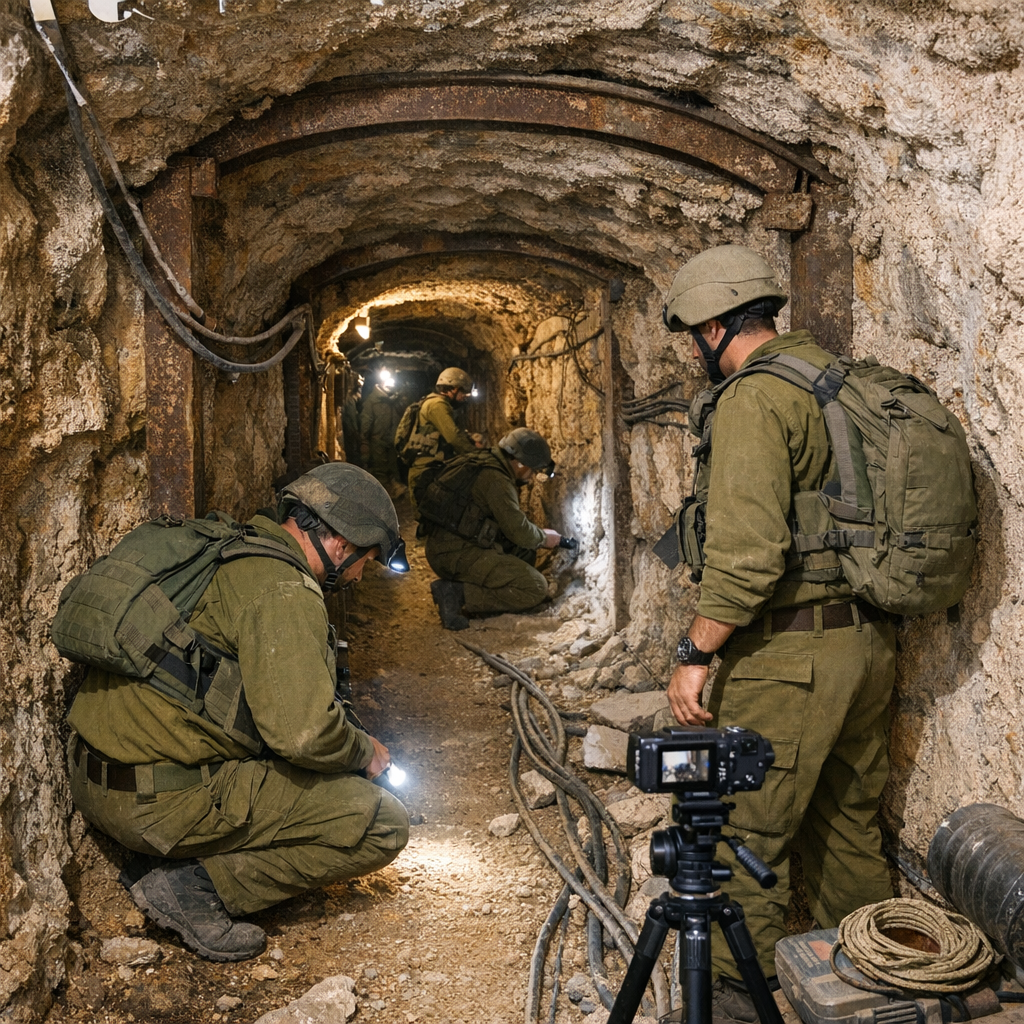
Israel’s military leadership says it has secured operational control over a network of subterranean tunnels in southern Lebanon that it attributes to Hezbollah, marking a notable development along one of the region’s most sensitive frontlines.
According to an i24NEWS report titled “IDF chief: Israel controls Hezbollah tunnel network beneath Beaufort Ridge”, Israel Defense Forces Chief of Staff Lt. Gen. Herzi Halevi stated that Israeli troops have effectively neutralized a system of underground passages running beneath the Beaufort Ridge area, a strategic high ground overlooking parts of northern Israel and southern Lebanon.
The announcement comes amid continued tensions between Israel and Hezbollah, which have intensified since the start of Israel’s war in Gaza. Cross-border exchanges of fire have become more frequent, raising concerns among regional and international observers that the conflict could expand into a broader confrontation, as noted in coverage by Reuters on Israel-Hezbollah clashes.
Halevi’s remarks suggest that the Israeli military has not only located but also entered and mapped segments of the tunnel network, which Israeli officials say was intended for offensive operations, including potential infiltrations into Israeli territory. Military sources have long warned that Hezbollah has invested heavily in underground infrastructure to offset Israel’s technological and aerial advantages, a strategy examined by the Center for Strategic and International Studies.
The Beaufort Ridge area has both tactical and symbolic significance. The medieval fortress overlooking the ridge has historically served as a strategic vantage point, and in modern conflicts it has been associated with some of the most intense fighting between Israeli forces and Lebanese armed groups, as documented by Encyclopaedia Britannica’s entry on Beaufort Castle. Control over subterranean routes in this area could affect both defensive and offensive calculations on either side of the border.
Israeli officials framed the development as part of a broader campaign to dismantle Hezbollah’s capabilities near the frontier. The military has said it is applying lessons learned from past operations, including earlier efforts to expose and destroy cross-border tunnels such as Operation Northern Shield reported by the BBC, to prevent surprise incursions and reduce the threat to northern communities.
Hezbollah has not publicly detailed the extent or purpose of the specific tunnel network referenced in the i24NEWS report, but the group has repeatedly emphasized its preparedness for a potential large-scale conflict with Israel. Analysts note that underground systems have become a central feature of asymmetric warfare in the region, allowing armed groups to conceal movements, store weapons, and maintain resilience under airstrikes, a trend also discussed in reports by International Crisis Group.
The latest claim by the Israeli chief of staff is likely to be scrutinized for its operational implications as well as its messaging. Publicizing control over such infrastructure may be intended to deter Hezbollah by signaling deep intelligence penetration and operational reach. At the same time, it underscores the continuing volatility along the Israel-Lebanon border, where even limited disclosures can carry strategic weight.
Diplomatic efforts to contain the escalation have so far struggled to produce lasting de-escalation. With both sides maintaining heightened readiness, developments such as the reported seizure of tunnel networks feed into a broader pattern of incremental moves that could either reinforce deterrence or risk miscalculation.