Honor and Remember Flag Proposal Faces Opposition Over Symbolism Concerns from Vietnam Veterans
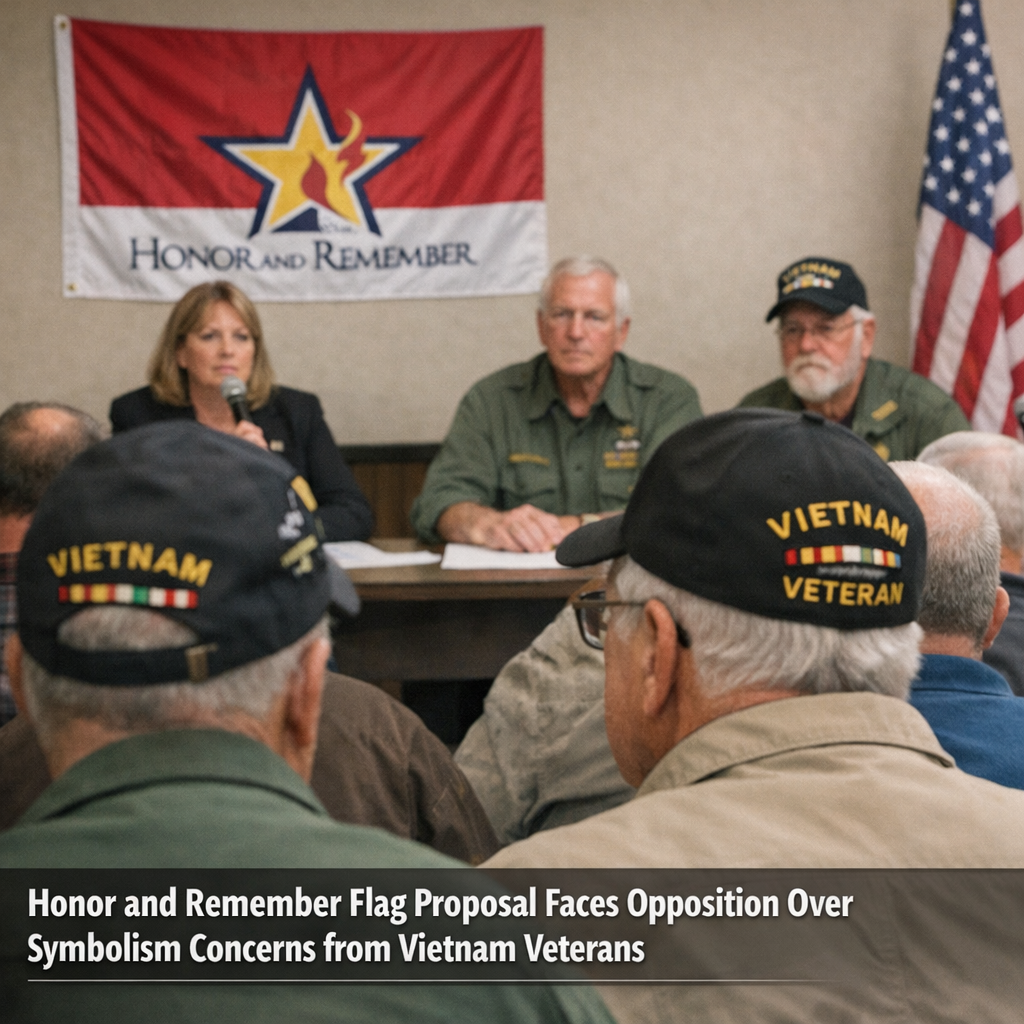
A proposed measure in Congress to designate the “Honor and Remember” flag as a national emblem for fallen U.S. service members is drawing unexpected opposition from some Vietnam War veterans, who argue that the flag’s design evokes imagery associated with communist regimes.
The debate, highlighted in Military Times’ article “Proposed ‘Honor and Remember’ flag resembles communist imagery, Vietnam veterans argue”, reflects a broader divide over how best to commemorate military sacrifice while maintaining sensitivity to historical symbolism.
The Honor and Remember flag, created to recognize American service members who died in the line of duty, has gained increasing visibility in recent years. Advocates in Congress have pushed for legislation that would formalize its status and encourage its display alongside the U.S. flag on certain federal occasions. Supporters say the flag provides a unified way to honor the fallen, distinct from the POW/MIA flag, which represents prisoners of war and those missing in action.
However, some Vietnam veterans’ groups have voiced strong objections, focusing on the flag’s visual elements. Critics point to its prominent red field and gold star, arguing that the design bears an uncomfortable resemblance to symbols used by communist governments, particularly in countries where U.S. forces once fought, such as Vietnam during the Cold War conflict.
For veterans who served during the Cold War and Vietnam War era, these associations carry deep emotional weight. Some have expressed concern that elevating the flag to official status could inadvertently evoke the imagery of adversaries American troops once confronted on the battlefield.
Proponents of the flag reject those claims, emphasizing that its design was intended to be symbolic rather than political. The red background represents the sacrifice of blood, while the gold star signifies the ultimate price paid by service members. Additional design elements, including a white border and blue field, are meant to convey purity, vigilance, and resolve.
Supporters also argue that the flag fills a gap in national commemorative practices. While the POW/MIA flag has long been recognized, they note that it does not specifically represent those who died in service. The Honor and Remember flag, they contend, gives families of the fallen a distinct and visible form of recognition.
The dispute has surfaced as lawmakers weigh whether to advance legislation granting the flag broader official status. While the proposal has attracted bipartisan support, the objections from some veterans’ groups underscore the challenges of forging consensus around national symbols, particularly those tied to military history.
The controversy also illustrates how generational perspectives can shape interpretations of imagery. Veterans from different conflicts may attach different meanings to colors and symbols, reflecting their own experiences and the geopolitical context in which they served.
As the debate continues, lawmakers face a delicate balance between honoring sacrifice and respecting the diverse views within the veteran community. Whether the Honor and Remember flag ultimately gains official designation may hinge not only on its intended meaning, but on how its symbolism is perceived by those it seeks to honor most.