Air Dominance Without Decisive Impact Lessons From the US Strike Campaign on Iran
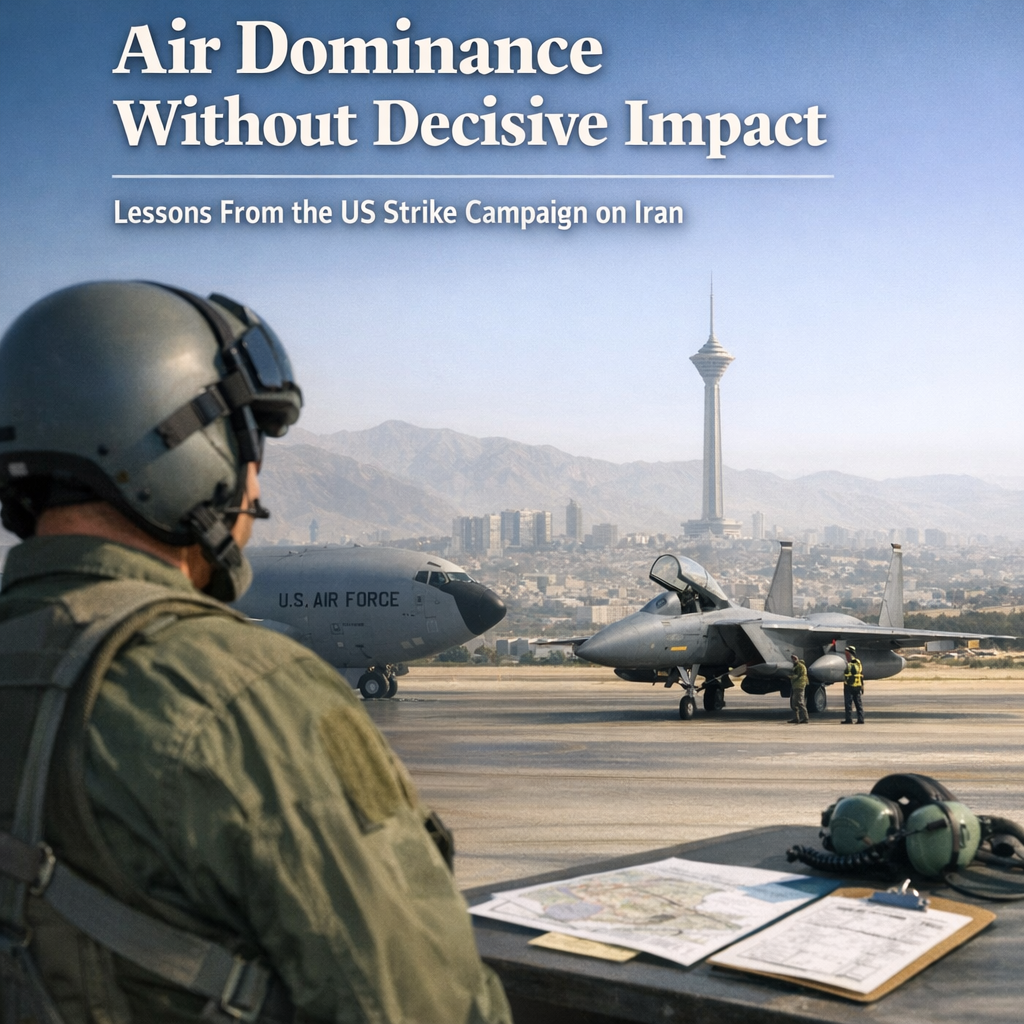
A recent analysis published by Breaking Defense, titled “Iran Was the Most Successful Failure in US Airpower History,” argues that Washington’s latest air campaign against Iran has exposed a paradox at the heart of modern American military power: overwhelming tactical success paired with limited strategic effect.
According to the report, U.S. forces demonstrated the full extent of their technological and operational superiority in the air domain. Advanced stealth aircraft, long-range precision-guided munitions, and networked intelligence capabilities enabled rapid degradation of Iran’s integrated air defenses, missile infrastructure, and key command nodes. By conventional military metrics, the campaign achieved what planners intended—dominance of Iranian airspace and the destruction of designated targets with minimal American losses.
Yet the article contends that these battlefield gains did not translate into lasting strategic outcomes. Iran retained enough military capacity, political cohesion, and regional influence to continue shaping events in its favor. Its decentralized command structure and reliance on asymmetric capabilities—such as proxy forces and dispersed missile units—blunted the long-term impact of U.S. strikes. In effect, while airpower succeeded in dismantling high-value assets, it did not fundamentally alter Tehran’s strategic posture.
Breaking Defense frames this outcome as emblematic of a broader challenge in U.S. military doctrine. For decades, American airpower has been refined to achieve rapid dominance in high-intensity conflicts. However, adversaries like Iran have adapted by investing in resilience rather than parity. Hardened infrastructure, mobile launch systems, and layered defenses complicate targeting and reduce the decisive impact of even the most sophisticated air campaigns.
The article also highlights how political constraints shaped the operation’s scope. U.S. leaders sought to avoid a protracted regional war, limiting both the duration and intensity of strikes. This calibrated approach, while reducing escalation risks, allowed Iran to absorb losses and recover. As a result, the campaign became a demonstration of capability rather than a decisive strategic turning point.
Another factor identified is the enduring gap between destruction and control. Airpower can disable facilities and disrupt operations, but it cannot by itself secure territory, enforce political outcomes, or eliminate deeply embedded networks. In Iran’s case, many of the regime’s most critical instruments of power—its internal security apparatus, ideological cohesion, and regional alliances—remained largely intact, including its network of proxy forces.
The Breaking Defense analysis suggests that the campaign may ultimately be remembered less for what it destroyed than for what it revealed. It underscores the limits of stand-off strike warfare against a determined and adaptive adversary, particularly in conflicts where objectives extend beyond immediate military degradation.
For U.S. defense planners, the implications are significant. The article argues that future strategies will need to better integrate airpower with other tools of statecraft, including cyber operations, economic pressure, and diplomacy. It also raises questions about whether the United States has become overly reliant on air dominance as a substitute for broader strategic planning.
In labeling the operation “the most successful failure in US airpower history,” Breaking Defense captures a tension that is likely to shape military thinking in the years ahead: the ability to win battles decisively without necessarily winning the outcomes that matter most.