Ukraine Turns Everything Into a Drone Launcher in Expanding Hybrid Warfare Strategy
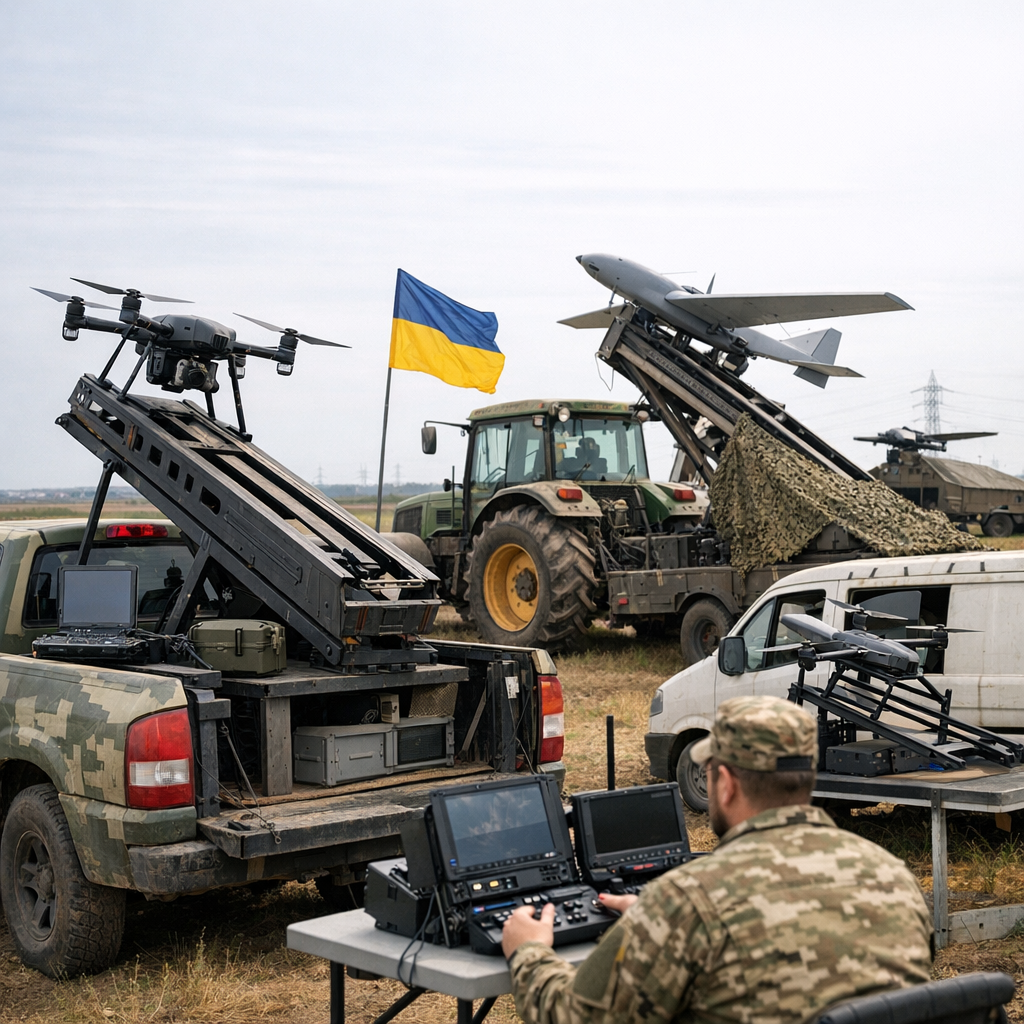
Ukraine is rapidly expanding the ways it deploys strike drones, adapting civilian and military platforms alike into improvised launch systems as Kyiv continues to confront Russia’s larger conventional forces. According to the Defense News report titled “Ukraine is launching strike drones from everything, including Black Sea robo-boats,” Ukrainian forces are integrating unmanned aerial vehicles into a diverse array of carriers, from naval drones to ground vehicles, reflecting a broader shift toward distributed and unconventional warfare.
The approach underscores how Ukraine has leaned heavily on innovation to offset resource constraints. By modifying existing platforms rather than relying solely on purpose-built systems, Ukrainian engineers and operators are creating flexible, lower-cost methods to project force over long distances. The reported use of unmanned surface vessels in the Black Sea as mobile launch platforms for aerial drones represents a particularly notable evolution, effectively extending the operational reach of both systems while complicating Russian defenses.
Military analysts say this kind of hybridization blurs traditional distinctions between domains. A naval drone acting as a launch point for aerial strikes introduces new tactical challenges, forcing adversaries to defend against layered threats emerging from unexpected vectors. It also allows Ukraine to stage attacks closer to contested areas without risking human crews, a crucial advantage in heavily surveilled and mined environments such as the Black Sea.
The Defense News article highlights how Ukraine’s experimentation has been driven in part by necessity. Limited access to high-end, Western-supplied systems early in the war accelerated domestic innovation, leading to a proliferation of modified commercial drones and improvised launch techniques. Over time, these efforts have matured into more coordinated operations, integrating reconnaissance, targeting, and strike capabilities into cohesive drone-centric campaigns, a trend also noted by Reuters reporting on Ukraine’s drone warfare.
The implications extend beyond Ukraine. Defense planners in Europe and elsewhere are closely watching how relatively low-cost systems, when combined creatively, can produce outsized effects on the battlefield. The concept of launching strike drones from unconventional platforms raises questions about future maritime and border security, particularly for nations facing asymmetric threats, as explored in analysis by the International Institute for Strategic Studies.
At the same time, the expanding reliance on drones has intensified the technological contest between Ukraine and Russia. Electronic warfare, signal jamming, and counter-drone systems are evolving rapidly as both sides attempt to neutralize each other’s unmanned capabilities. The use of mobile and multi-domain launch platforms may help Ukraine mitigate some of these vulnerabilities by increasing unpredictability and reducing reliance on fixed infrastructure.
While it remains unclear how sustainable this approach will be over the long term, Ukraine’s strategy illustrates a broader trend in modern warfare: adaptability can, at least in part, compensate for disparities in scale and firepower. As described in Defense News, the country’s ability to turn “everything” into a potential drone launcher signals a continued willingness to experiment, even as the conflict enters a protracted phase.
The result is a battlefield increasingly defined not just by advanced weaponry, but by how creatively existing tools can be combined and deployed.