Japanese Torpedo Sinks Retired US Warship in Valiant Shield, Showcasing Allied Naval Firepower
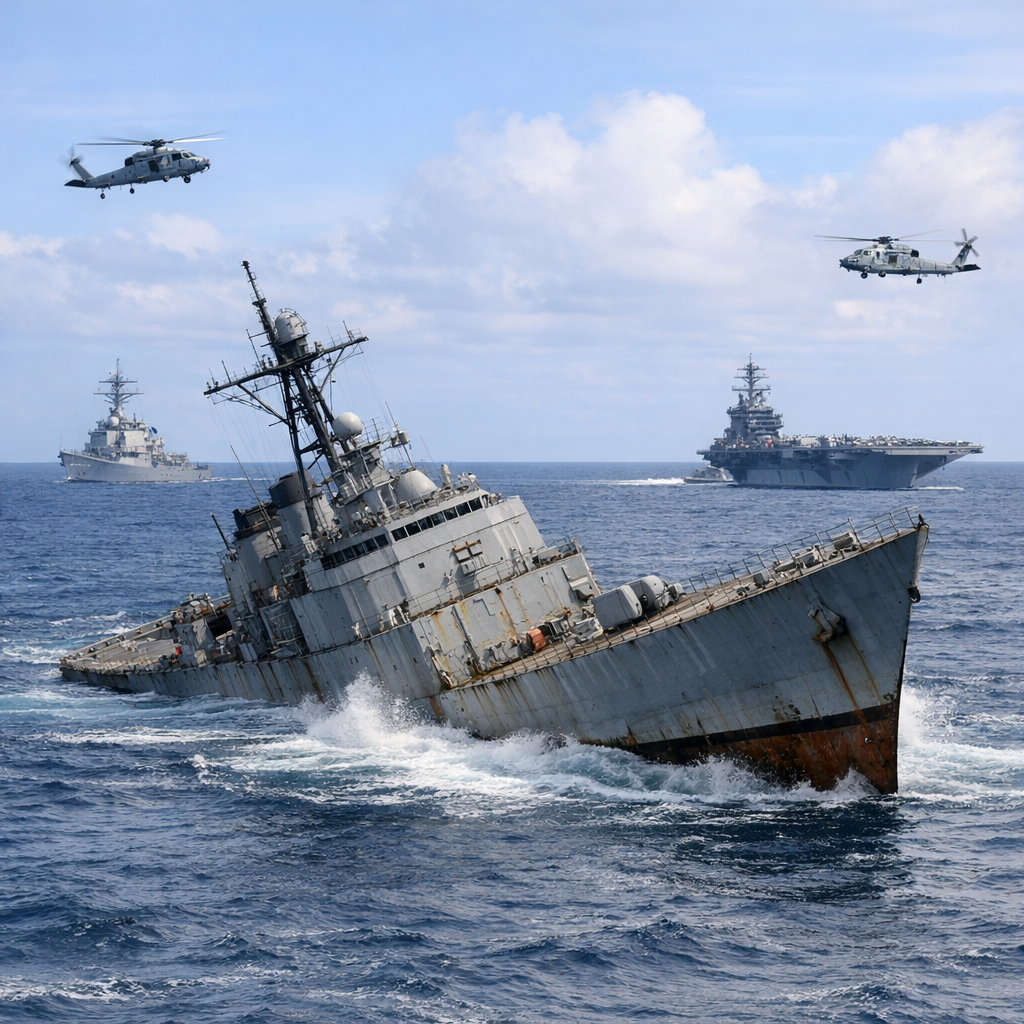
During the recent Valiant Shield exercise in the Pacific, a Japanese torpedo successfully sank a retired U.S. Navy vessel in a live-fire demonstration that underscored the growing interoperability and striking capability of allied maritime forces.
According to reporting by Defense News in its article “Japanese torpedo sends US ship to the ocean floor during Valiant Shield exercise,” the sinking was carried out as part of a coordinated multinational training operation designed to test advanced naval warfare systems under realistic conditions. The target was a decommissioned U.S. ship prepared specifically for the exercise, allowing participating forces to practice complex attack scenarios without risk to active crews.
The torpedo launch was executed by Japan’s Maritime Self-Defense Force, highlighting the country’s continued investment in anti-ship warfare capabilities amid rising regional tensions. The successful strike demonstrated both precision targeting and the ability to integrate with U.S. naval operations, reinforcing longstanding defense ties between the two countries.
Valiant Shield, a large-scale U.S.-led exercise typically held in the Indo-Pacific region, brings together multiple service branches and allied partners to rehearse joint operations across air, sea, space, and cyber domains. This year’s iteration placed particular emphasis on distributed maritime operations and combined lethality, reflecting the Pentagon’s strategic focus on countering near-peer adversaries.
Military officials cited the sinking not only as a technical achievement but also as a valuable data-gathering opportunity. Sensors and instrumentation aboard the retired vessel recorded the impact and structural failure in detail, providing insights into weapon effectiveness and ship survivability that are difficult to replicate in simulations alone. Such data are expected to inform both future ship design and defensive measures.
The exercise also served a broader signaling function. By conducting a live torpedo strike in a multinational setting, the United States and its allies demonstrated a credible capacity to coordinate high-end combat operations in contested maritime environments. Analysts note that these displays are increasingly aimed at deterring aggressive actions in the Indo-Pacific, particularly as competition intensifies in areas such as the South China Sea and around Taiwan.
Japan’s participation in such exercises has steadily expanded over the past decade, reflecting a shift in its defense posture toward greater operational integration with allies. While its constitution still places limits on collective self-defense, Tokyo has incrementally broadened the scope of its military cooperation, including joint exercises, equipment development, and intelligence sharing.
The sinking during Valiant Shield illustrates how these evolving partnerships are translating into practical combat capabilities. As Defense News reported, the event was not merely symbolic; it showcased the real-world effectiveness of allied weapons systems operating in concert, a factor that defense planners increasingly view as essential in maintaining a balance of power in the region.