Israeli Air Force Launches New Unit to Integrate Religious Women into Operational Roles
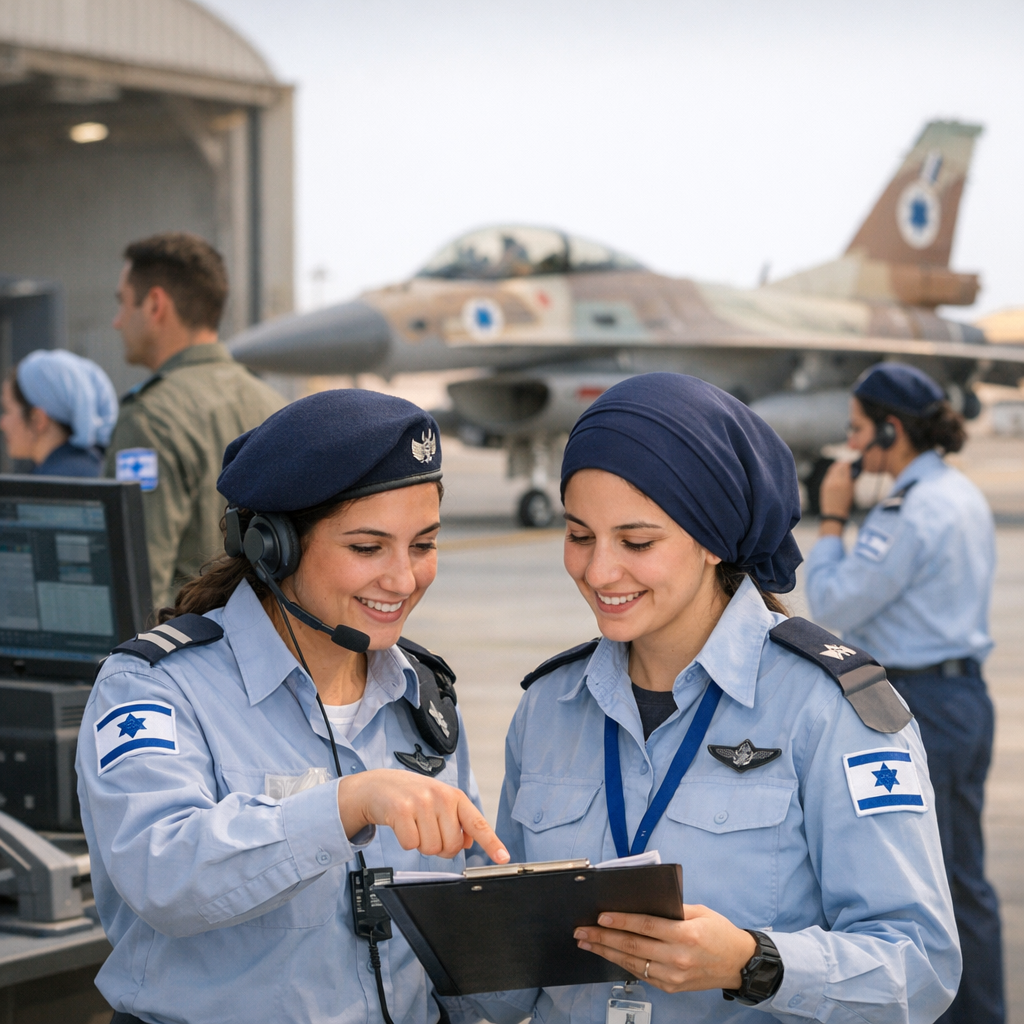
The Israeli Air Force has launched a new unit designed to integrate religious women into operational roles, marking a significant development in the evolving relationship between military service and religious observance in Israel. The move, first reported in “Air Force opens new unit for religious women in operational roles” by i24NEWS, reflects broader efforts within the Israel Defense Forces (IDF) to expand opportunities for female service members while accommodating diverse religious lifestyles.
According to the report, the newly established unit aims to provide a framework in which observant women can serve in meaningful operational capacities without compromising their religious commitments. This includes adjustments to living arrangements, training environments, and daily routines to align with requirements such as modesty standards and observance of Jewish law. Military officials involved in the initiative have indicated that the program is part of a larger push to address longstanding barriers that have limited participation by religious women in frontline or operational positions.
Historically, many religious women in Israel have opted out of military service, often choosing instead to perform national civilian service, citing concerns about maintaining religious practices in a mixed-gender, secular military environment. While the IDF has made incremental changes over the years to accommodate religious male soldiers, integrating religious women into more demanding operational roles has proven more complex. Issues ranging from housing arrangements to the structure of training exercises have posed challenges in balancing operational readiness with religious sensitivities.
The new unit seeks to overcome such challenges by offering a tailored service track. Reports suggest that the Air Force has designed the program in consultation with religious leaders and female service members to ensure it meets both military standards and the expectations of observant communities. This collaborative approach is intended to encourage greater enlistment among religious women who might previously have been deterred by the lack of suitable options.
The initiative also reflects a broader trend within Israeli society, where debates over religion, gender, and military service remain highly consequential. Supporters of expanded roles for women in the IDF argue that increasing diversity strengthens the military by tapping into a wider pool of talent. As noted in coverage of women’s evolving roles in the military by outlets such as BBC News, integration efforts have continued to reshape expectations. Critics, however, caution that special accommodations could create friction within units or challenge the principle of uniform service requirements.
Within the Air Force, officials appear to be framing the new unit as both a pragmatic and symbolic step. Pragmatically, it addresses recruitment and retention goals at a time when the military continues to adapt to evolving security demands. Symbolically, it signals an effort to bridge social divides between secular and religious populations, which have often found themselves at odds over questions of military participation and cultural norms. Additional background on the structure and evolution of the military can be found via the Israel Defense Forces overview.
It remains to be seen how widely the program will be adopted and whether it will lead to a lasting increase in the number of religious women serving in operational roles. Much will depend on the experiences of the first cohort and the military’s ability to maintain a balance between accommodation and cohesion.
What is clear is that the establishment of this unit represents a notable shift in policy and perception. By actively creating space for religious women in operational service, the Israeli Air Force is testing a model that could reshape expectations of who serves and how, with implications that may extend beyond the military into Israeli society as a whole.