Marine Corps Tests Call of Duty-Style Simulation to Modernize Combat Training
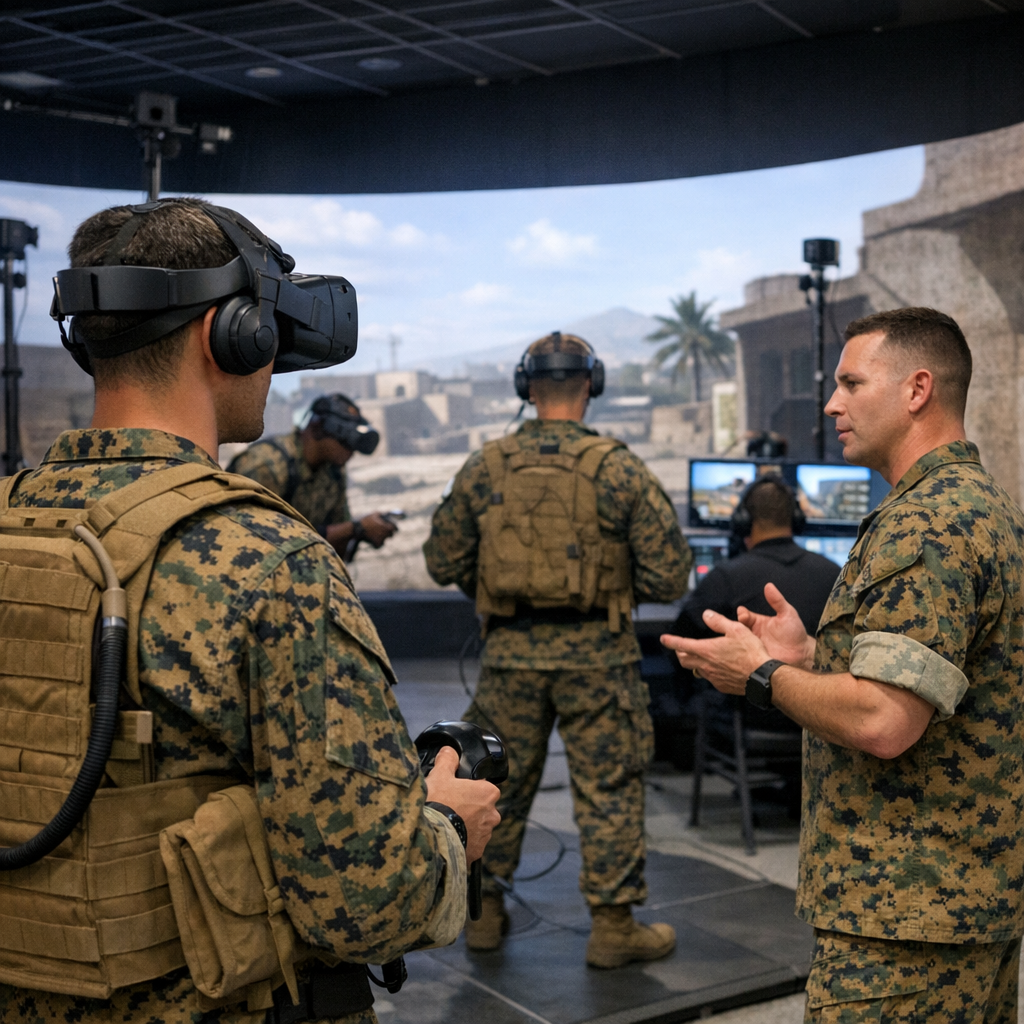
The U.S. Marine Corps is experimenting with an unconventional training tool: a modified version of the popular video game franchise Call of Duty. The initiative, detailed in Military Times’ report “Inside the Marine Corps’ ‘Call of Duty’ training experiment,” reflects a broader effort within the military to adapt to evolving technologies and learning preferences among younger service members.
According to the Military Times article, the program centers on using a customized, non-commercial iteration of the game to simulate combat scenarios in a controlled digital environment. The intent is not to replace traditional field training but to supplement it, offering Marines a low-risk setting to develop decision-making skills, situational awareness, and team coordination. The virtual scenarios can be rapidly adjusted to reflect different terrains, threats, and mission parameters, enabling more flexible and repeatable training than is possible in many live exercises.
Marine officials involved in the experiment describe the project as part of a wider modernization push, one that acknowledges both the growing sophistication of synthetic training environments and the familiarity many recruits already have with interactive digital environments. By leveraging a platform that resembles a widely played game, trainers hope to shorten learning curves and increase engagement, particularly among younger Marines who grew up with similar systems.
At the same time, the article notes that the initiative is being approached with caution. Military leaders are aware of the limitations inherent in game-based simulations, particularly when it comes to replicating the physical and psychological stresses of real-world combat. There are also concerns about ensuring that training remains rooted in discipline and realism, rather than drifting toward entertainment.
Experts cited by Military Times emphasize that while digital tools can enhance cognitive training, they cannot fully replicate the complexity of live operations. Research on military simulation and training effectiveness supports this view, highlighting both the benefits and constraints of virtual systems. As a result, the Marine Corps appears to be positioning the Call of Duty-based system as one component within a broader training ecosystem, rather than a standalone solution.
The experiment also underscores a larger trend across the U.S. military, where branches are increasingly investing in virtual and augmented reality platforms to prepare troops for modern warfare. Programs led by the U.S. Army Program Executive Office for Simulation, Training and Instrumentation illustrate the scale of these efforts. These technologies offer cost efficiencies and scalability, but they also raise questions about how best to measure effectiveness and ensure that simulated experience translates into real-world competence, a topic explored by the National Defense Magazine.
For now, the Marine Corps’ exploration of a game-inspired training system remains in a trial phase. As Military Times reports, feedback from participants and instructors will play a central role in determining whether the program expands or is refined further. The outcome may help shape how the military integrates commercial technology into professional training, balancing innovation with the enduring demands of operational readiness.