UK Targets Nearly $105B Defense Budget by 2029 in Major Strategic Shift
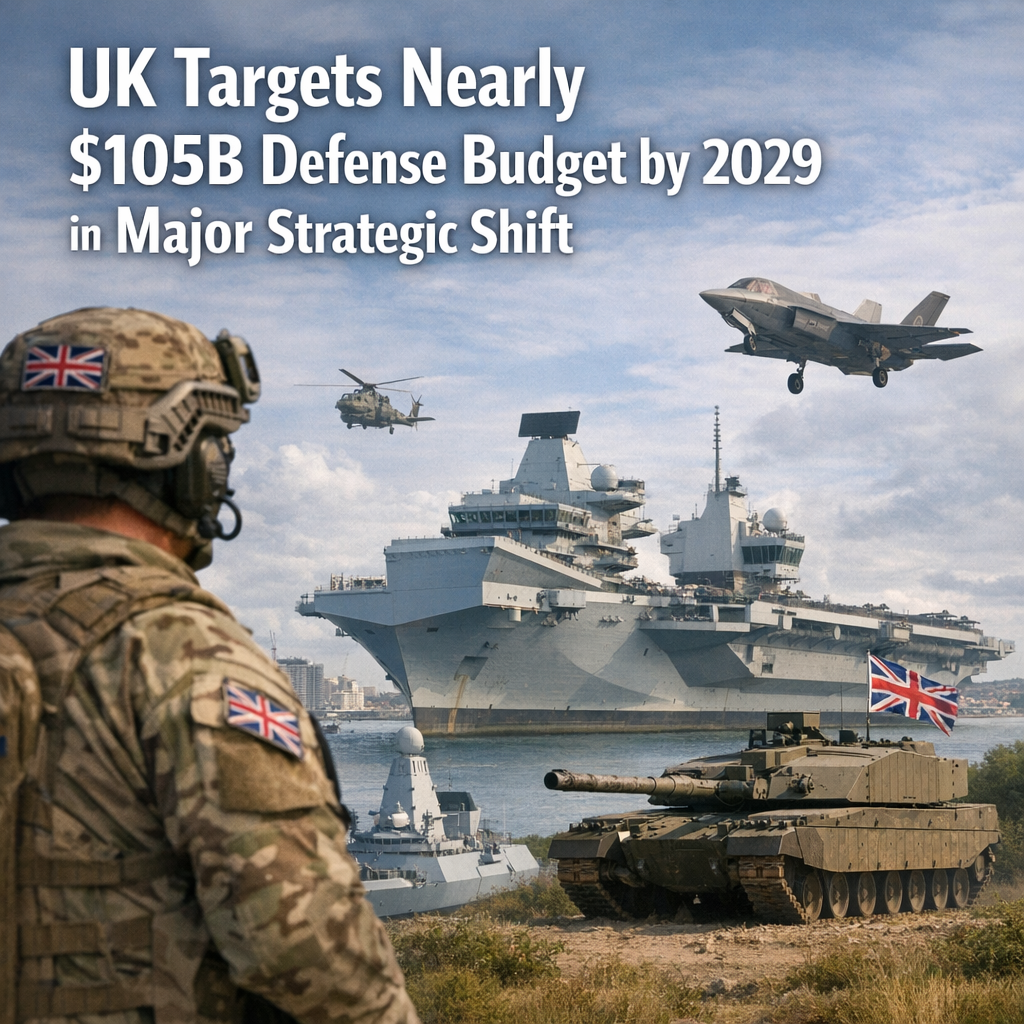
The British government has set out an ambitious plan to significantly expand defense spending, signaling a long-term strategic shift as security pressures mount across Europe and beyond. According to the report “UK prime minister pledges near $105B defense budget by 2029”, Prime Minister Keir Starmer has committed to raising the United Kingdom’s annual defense budget to nearly $105 billion by the end of the decade.
The pledge represents a substantial increase from current spending levels and underscores the government’s effort to meet evolving military demands tied to NATO obligations, the war in Ukraine, and growing geopolitical competition. While British officials have previously signaled incremental increases, the scale and timeline outlined in this commitment suggest a more decisive pivot toward sustained military investment.
Starmer’s proposal aligns the UK more closely with NATO’s expectation that member states spend at least 2 percent of GDP on defense, with indications that London may aim to exceed that benchmark in the coming years. The expansion is expected to fund modernization programs across all branches of the armed forces, including advanced air capabilities, naval power, cyber defense, and nuclear deterrence, as outlined by the UK Ministry of Defence.
The report notes that the funding trajectory is intended not only to rebuild readiness after years of constrained budgets but also to position the UK as a leading European military power at a time when the United States has encouraged greater burden-sharing among allies. Analysis from institutions such as the International Institute for Strategic Studies has highlighted how the war in Ukraine exposed gaps in stockpiles, industrial capacity, and rapid deployment capabilities across NATO.
Officials have also emphasized the role of defense spending in strengthening domestic industry. Increased procurement is expected to support British defense manufacturers and stimulate technological innovation, particularly in emerging areas such as artificial intelligence, autonomous systems, and next-generation weapons platforms. However, the expansion will likely come with fiscal trade-offs, as the government balances defense priorities against broader economic pressures and domestic spending commitments.
Critics have raised questions about affordability and the risk of inefficiencies within the defense procurement system, which has historically faced delays and cost overruns—issues frequently highlighted by the UK National Audit Office. Ensuring that additional funding translates into operational effectiveness remains a central challenge. Transparency, oversight, and realistic planning are likely to be key factors in determining whether the ambitious spending targets achieve their intended outcomes.
The pledge also carries political implications domestically and internationally. At home, it signals a shift toward a more security-focused agenda, while abroad it reinforces Britain’s effort to maintain influence within NATO and on the global stage. As European nations reassess their defense postures, the UK’s commitment may serve as a benchmark for others weighing similar increases.
While details of specific allocations are still emerging, the overarching message is clear: London is preparing for a more contested security environment and is willing to invest heavily to meet it. Whether the plan succeeds will depend not only on sustained political will but also on the government’s ability to translate financial commitments into credible military capability.