Army Orders Chaplains to Drop Rank Insignia in Shift Redefining Battlefield Role
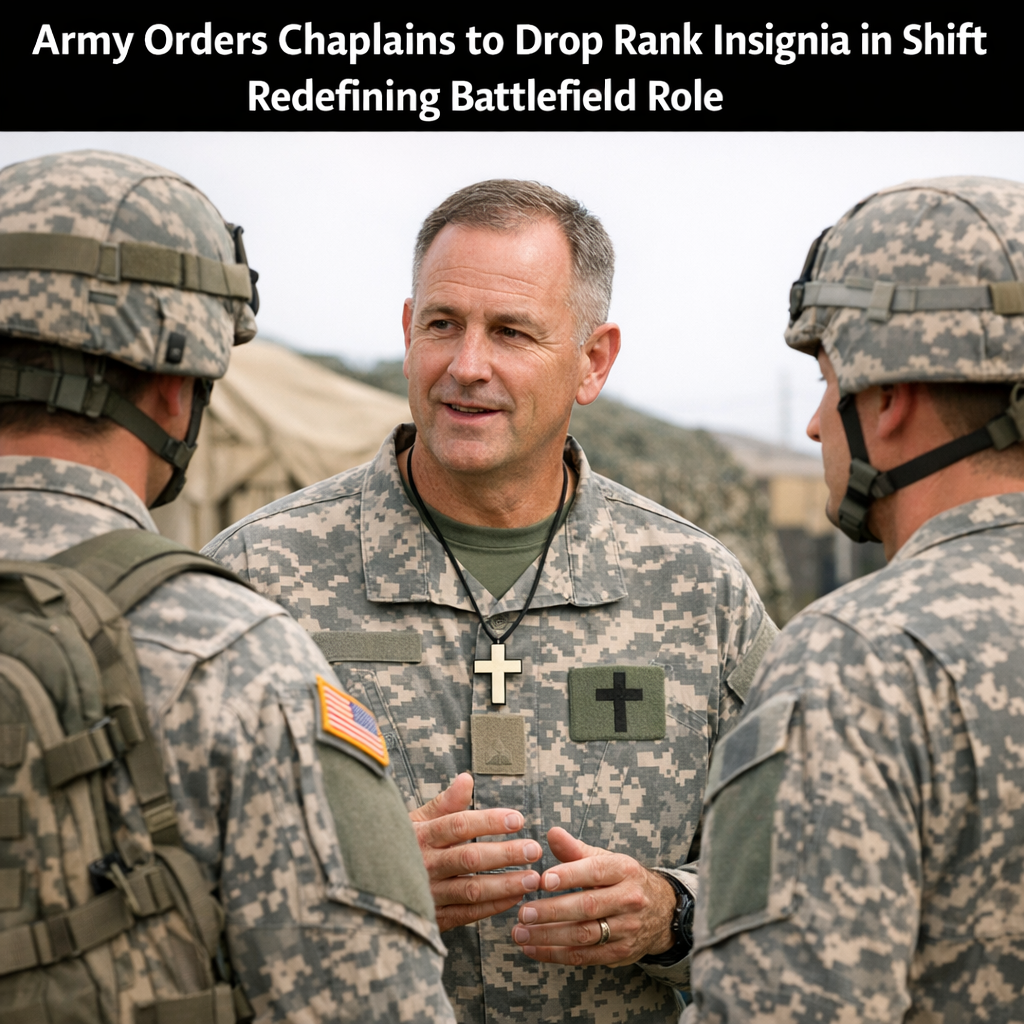
The U.S. Army has directed its chaplains to remove rank insignia from their uniforms within 90 days, a policy shift that is drawing scrutiny across the force and among religious liberty advocates.
According to a report titled “US Army gives chaplains 90 days to remove rank insignia,” published by Military Times, the directive reflects an effort by Army leadership to more clearly distinguish the unique noncombatant status of chaplains from the command authority typically associated with military rank. Chaplains, who serve as religious leaders and advisers to commanders, have historically worn the same rank insignia as other officers while simultaneously operating under protections afforded to noncombatants under the Geneva Conventions and the broader law of armed conflict.
Army officials have indicated that the move is intended to reduce confusion about the role of chaplains on the battlefield and reinforce their primary function as providers of spiritual care rather than participants in command structures. According to the U.S. Army Chaplain Corps, chaplains are responsible for providing religious support while advising commanders on moral and ethical issues. By removing visible indicators of rank, leaders argue, chaplains will be better positioned to emphasize their pastoral responsibilities and accessibility to service members of all ranks.
The change, however, has prompted mixed reactions. Some supporters see it as a meaningful clarification that aligns visual representation with the long-established doctrinal understanding of chaplains’ duties. They argue that the adjustment could strengthen trust by underscoring that chaplains are outside the traditional chain of command when delivering confidential counseling, a protection also recognized in Department of Defense policies on religious accommodation.
Critics, including some current and former chaplains, have raised concerns that eliminating rank insignia may inadvertently diminish chaplains’ authority within units or complicate their interactions with commanders and troops accustomed to the military’s hierarchical structure. In practice, they note, rank can help facilitate access and ensure that chaplains are included in key operational discussions where their advisory role is critical, particularly within established Army command structures.
The directive also raises broader questions about how the Army balances tradition, operational clarity, and the evolving expectations placed on its personnel. Chaplains have long occupied a hybrid position, commissioned as officers but restricted from bearing arms, a distinction rooted in both legal frameworks and centuries of military custom.
As the 90-day implementation window progresses, Army leaders are expected to provide further guidance on how chaplains will be identified in uniform and how their roles will be communicated across the force. The outcome may shape not only internal Army culture but also how the military presents the role of faith leadership in modern conflict environments.