Gen. Christopher Donahue Set for Early Exit from U.S. Army Europe and Africa Command Amid Strategic Uncertainty
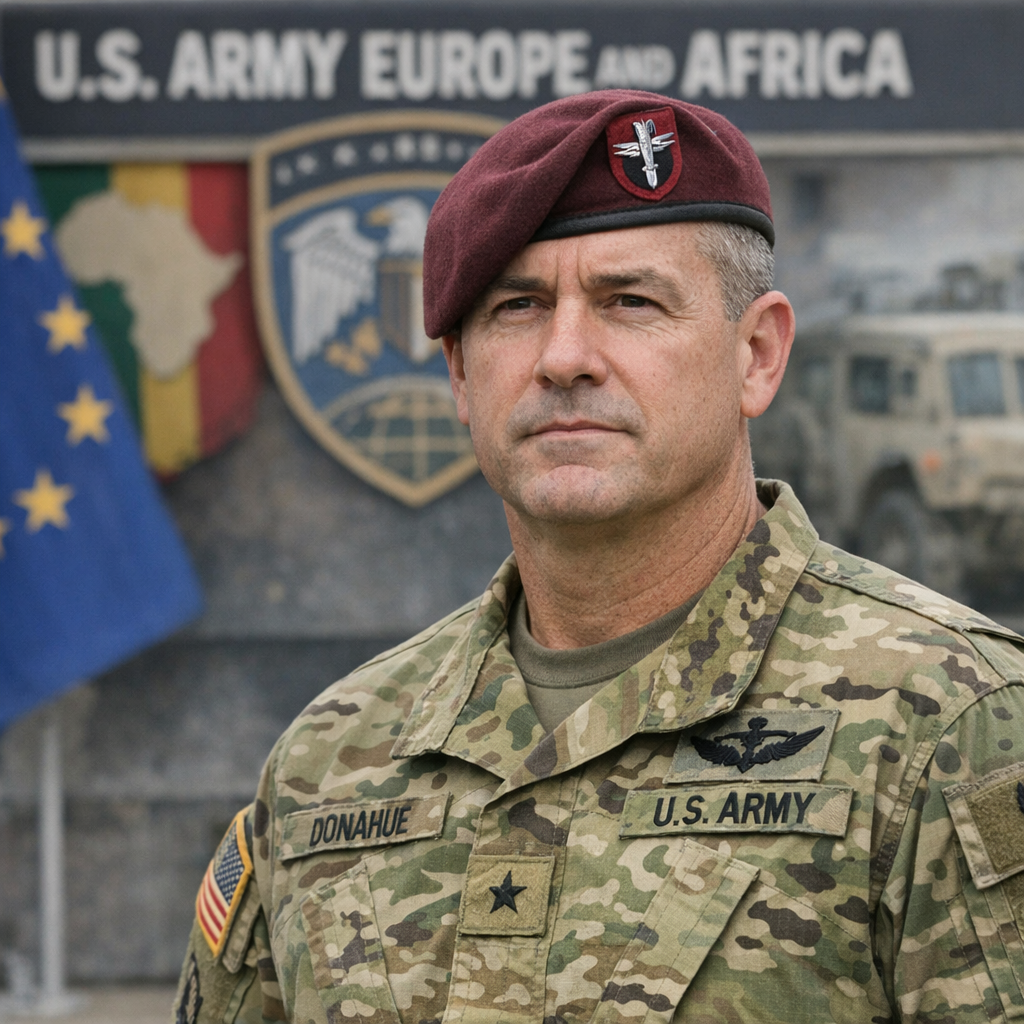
Gen. Christopher Donahue, commander of U.S. Army Europe and Africa, is set to relinquish his post earlier than anticipated, according to a June 24 report by Defense News titled “Gen. Christopher Donahue to unexpectedly relinquish command of Army Europe and Africa.” The development marks an abrupt leadership transition at a time of continued geopolitical tension across both regions, where U.S. Army presence plays a central role in deterrence, partnership-building, and crisis response.
Defense News reported that the decision for Donahue to step down came sooner than previously expected, though officials have not publicly detailed a specific reason for the timing. The Army has likewise not indicated that the move is linked to misconduct or controversy, leaving open questions about whether the shift is part of broader personnel realignment within senior military ranks or tied to internal strategic considerations.
Donahue assumed command of U.S. Army Europe and Africa during a period defined by heightened operational tempo, particularly in Europe following Russia’s ongoing war in Ukraine. Under his leadership, U.S. forces in the region expanded training efforts with NATO allies, reinforced forward deployments, and supported rotational troop presence designed to reassure Eastern European partners. His role also encompassed oversight of Army activities across Africa, where missions have ranged from advising partner forces to conducting counterterrorism operations.
The unexpected nature of the transition has drawn attention because of the significance of the command. U.S. Army Europe and Africa remains central to Washington’s military engagement with both NATO allies and African partners, serving as a critical hub for joint exercises, logistics coordination, and rapid response capabilities. Leadership continuity is often viewed as a stabilizing factor in such a complex operational environment, particularly amid ongoing security challenges.
Defense officials cited in the Defense News report suggested that an interim or succeeding commander would be named in due course, ensuring that operational readiness and strategic priorities remain unaffected. However, the lack of detailed explanation underscores the often opaque nature of senior-level personnel decisions within the Department of Defense.
Donahue is widely recognized for his experience in special operations and high-level command roles. Prior to leading U.S. Army Europe and Africa, he held key positions that shaped U.S. military operations in multiple theaters. His tenure in the current role coincided with a period of recalibration in U.S. defense posture, particularly in Europe, where the Army has sought to balance immediate deterrence needs with long-term alliance commitments.
While leadership changes are not uncommon within the military’s senior ranks, the timing of Donahue’s departure is notable given the strategic demands facing the command. The Army’s activities in Europe remain closely tied to NATO’s collective defense posture, while operations in Africa continue to evolve in response to shifting regional threats and political dynamics, including those addressed by U.S. Africa Command.
As Defense News noted, further details surrounding the transition may emerge as the Army formalizes its succession plans. For now, the announcement highlights both the fluidity of military leadership assignments and the ongoing importance of U.S. Army Europe and Africa at a pivotal moment in global security affairs.