Israel Conducts Eilat Naval Drill Amid Rising Fears of Multi-Front Attack Scenarios
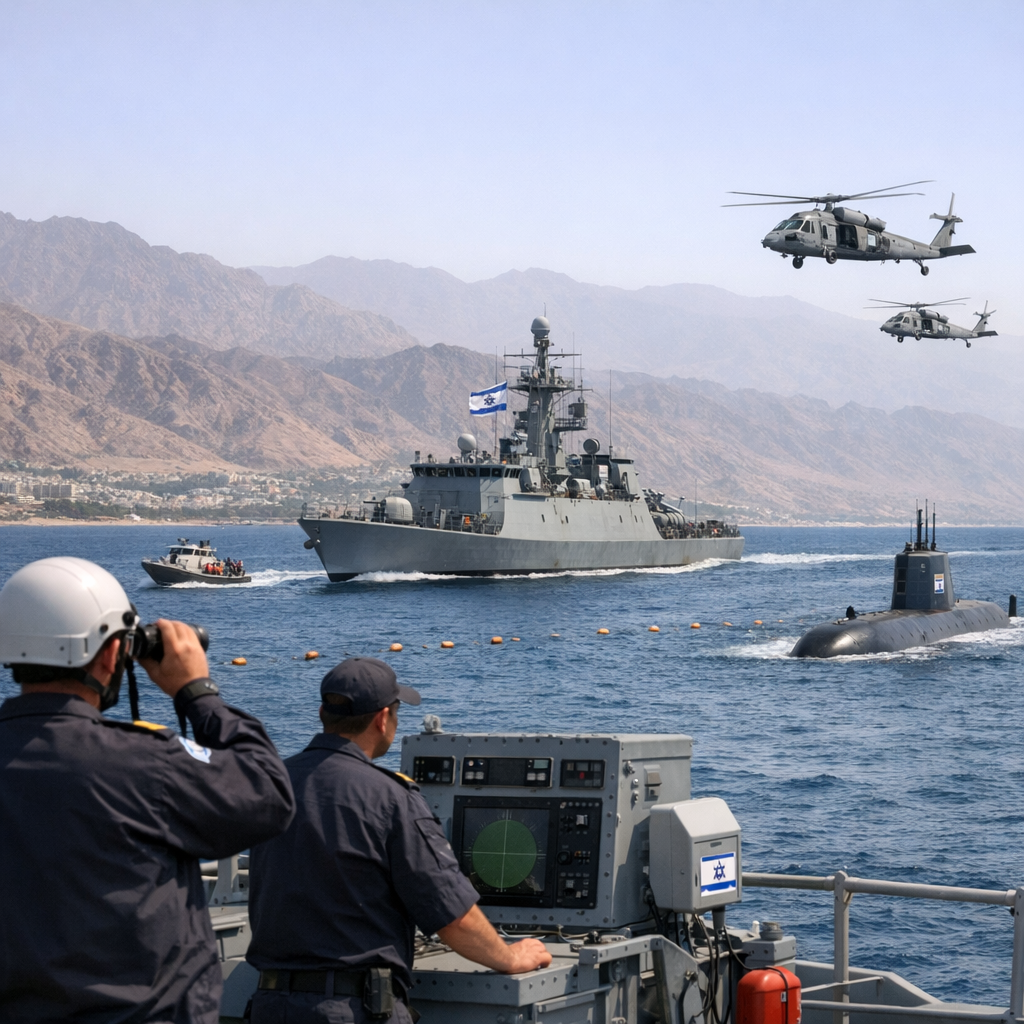
The Israeli military conducted a naval exercise this week in the Red Sea port city of Eilat, signaling heightened concern over potential security threats along the country’s southern flank. The drill coincided with a public warning from Shin Bet chief Ronen Bar, who cautioned against the risk of a large-scale, coordinated assault reminiscent of the October 7 attacks.
According to the report titled “IDF holds Eilat naval exercise as Shin Bet chief warns of October 7-style attack on city,” published by i24NEWS, the Israel Defense Forces carried out the exercise to test response readiness to a range of maritime threat scenarios. These included infiltration attempts by sea, attacks on civilian infrastructure, and coordinated assaults combining naval and land-based elements.
Military officials framed the drill as part of an ongoing effort to adapt operational preparedness in the aftermath of Hamas’s October 7 attack, which exposed critical vulnerabilities in Israel’s defensive posture. The exercise in Eilat, a strategic gateway to the Red Sea and a major tourist hub, reflects growing concern that similar tactics could be attempted in other regions, particularly those where civilian and economic targets are concentrated.
Ronen Bar’s warning added urgency to the exercise. The Shin Bet chief reportedly emphasized that adversaries are studying the tactics employed in October and may seek to replicate or adapt them in new theaters. While he did not specify an immediate, concrete threat to Eilat, his remarks underscored the evolving nature of the risks facing Israel’s security services.
Eilat has long been considered relatively insulated from the kinds of cross-border attacks that have affected Israel’s northern and Gaza-adjacent regions. However, its proximity to regional actors and maritime routes has elevated its strategic importance. Israeli defense planners are increasingly treating the city as a potential target for unconventional or surprise operations, including those involving seaborne infiltration or coordinated strikes on critical infrastructure.
The naval exercise reportedly involved multiple branches of the military, including naval commandos and coastal defense units, aiming to simulate rapid-response scenarios under conditions of limited warning. Officials indicated that the goal was not only to test tactical coordination but also to identify gaps in intelligence-sharing and operational readiness.
The broader context of the drill points to a shift in Israeli defense doctrine following October 7. Rather than focusing primarily on known hotspots, the military is expanding its preparedness across a wider geographic spectrum, including areas previously considered lower risk. This approach reflects an assessment that adversaries may seek to exploit perceived vulnerabilities in less fortified regions.
While Israeli authorities have sought to reassure the public that there is no immediate cause for alarm, the combination of visible military activity and high-level warnings signals a continued period of heightened vigilance. The developments in Eilat illustrate how the lessons of October 7 are reshaping both strategic thinking and operational priorities within Israel’s security establishment.