Israel’s Security Gains Mask Deeper Uncertainty
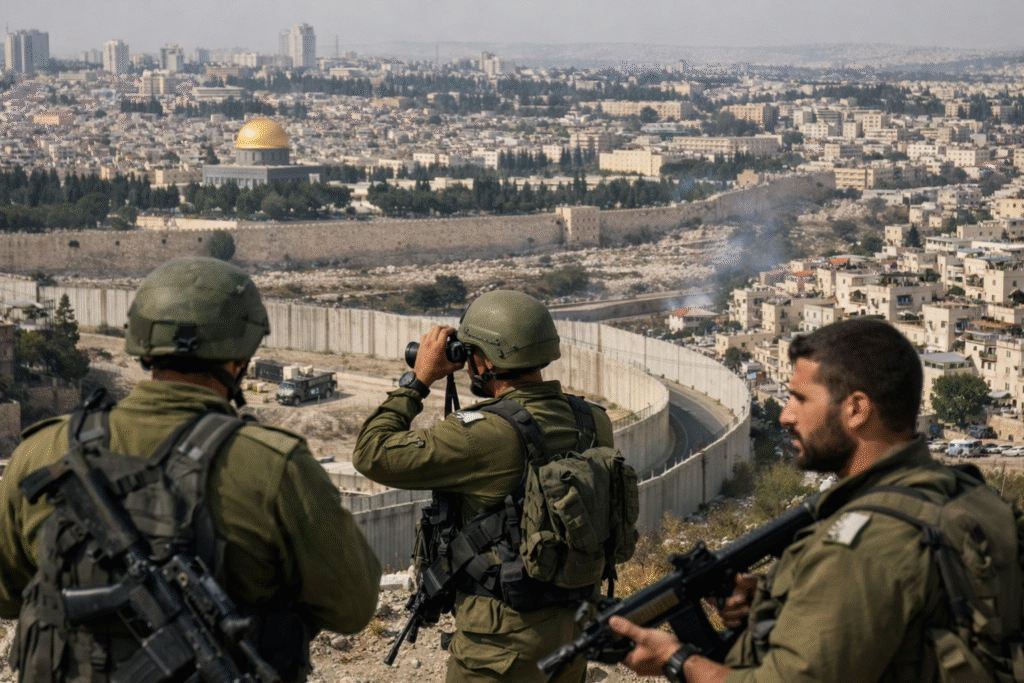
A recent analysis published on the Substack platform by Spencer Guard, titled “Is Israel Safer Today?”, raises a sobering question at a moment of continued instability in the Middle East. The article examines Israel’s current security environment in the aftermath of recent conflicts, arguing that military successes have not necessarily translated into long-term strategic safety.
Guard’s central contention is that while Israel has demonstrated significant tactical and technological superiority in confronting immediate threats, the broader regional picture remains deeply uncertain. He points to the persistence of non-state militant groups, evolving geopolitical alliances, and internal political divisions as factors that complicate any straightforward assessment of national security.
The piece emphasizes that Israel’s recent military operations have degraded the capabilities of specific adversaries but have not eliminated the underlying conditions that give rise to conflict. Guard notes that groups such as Hamas and Hezbollah continue to adapt, often shifting tactics rather than abandoning confrontation altogether. This dynamic, he suggests, creates a cycle in which periods of relative calm are interspersed with sudden escalations.
Another key argument in the article is the distinction between short-term deterrence and long-term stability. Guard suggests that while Israel’s deterrence capacity remains formidable, it is increasingly challenged by asymmetric warfare and the decentralization of threats. In this environment, traditional measures of security—such as territorial control or battlefield success—may offer only limited reassurance.
The article also touches on internal pressures within Israel, including political polarization and debates over governance, which Guard argues can influence national resilience. He implies that domestic cohesion is an often-overlooked component of security, particularly in a state that faces constant external challenges.
Regionally, Guard highlights shifting dynamics involving Iran and its network of allied groups, as well as the cautious normalization efforts between Israel and several Arab states. While these diplomatic developments have been framed as signs of progress, the article suggests they coexist with enduring hostility in other arenas, underscoring the complexity of the strategic landscape.
Ultimately, “Is Israel Safer Today?” presents a nuanced view that resists simple conclusions. Guard does not argue that Israel is weaker than before, but rather that the nature of the threats it faces has evolved in ways that complicate traditional notions of safety. The article concludes that assessing Israel’s security requires looking beyond immediate military outcomes to consider longer-term political, social, and regional factors that remain in flux.