NATO envoy visits Armenia amid regional shifts
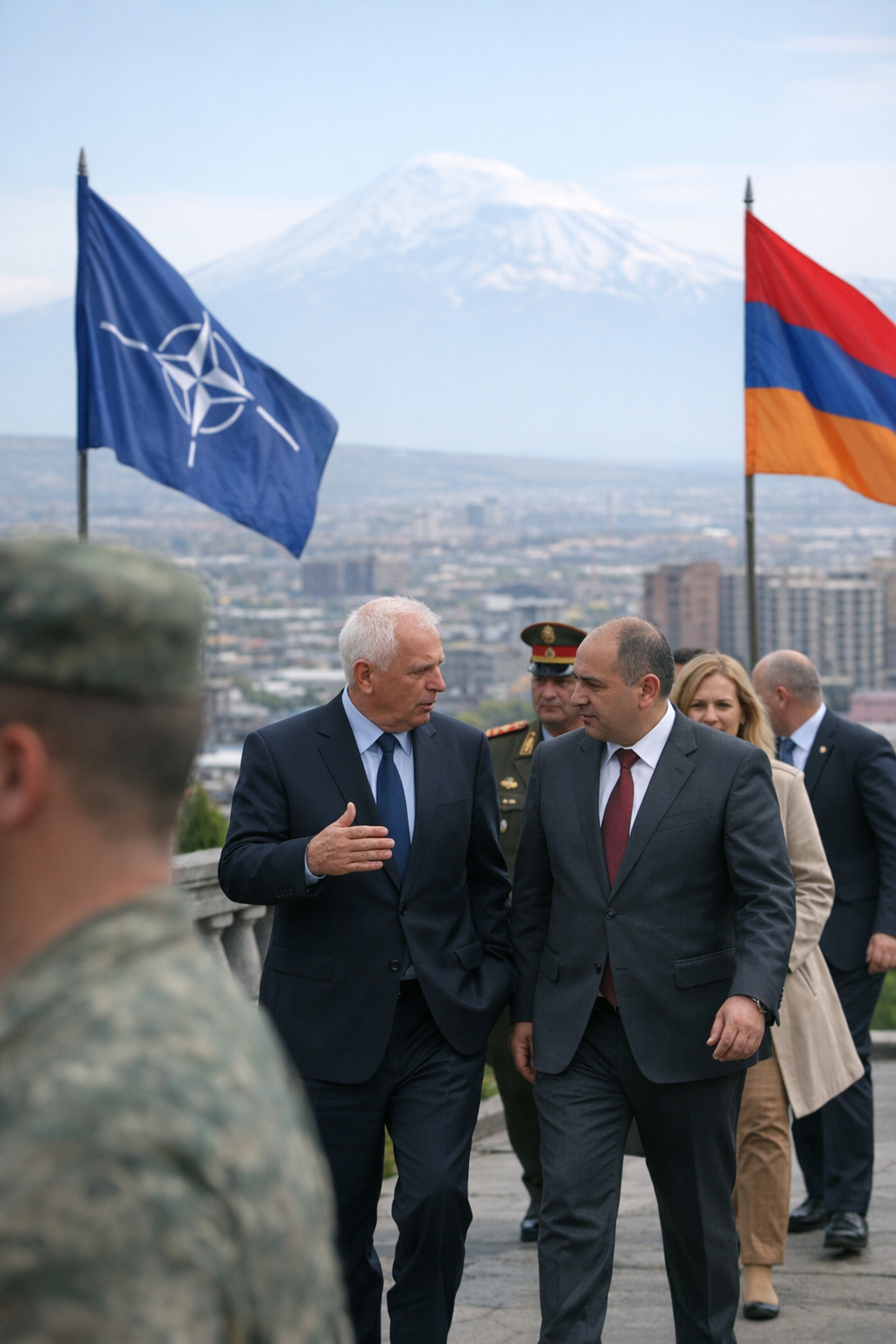
NATO’s Special Representative for the Caucasus and Central Asia has made a first official visit to Armenia, signaling a calibrated but notable step in the Alliance’s engagement with the South Caucasus at a time of shifting regional dynamics.
According to an article titled “NATO’s Special Representative for the Caucasus and Central Asia pays first visit to Armenia,” published on NATO’s official website, the visit underscored Brussels’ ongoing interest in strengthening political dialogue and practical cooperation with Yerevan. The trip included meetings with senior Armenian officials focused on security reforms, defense cooperation, and broader regional stability.
The visit comes as Armenia continues to reassess its security partnerships following recent tensions in the South Caucasus. NATO officials used the occasion to reiterate support for Armenia’s sovereignty and reform agenda, highlighting areas where cooperation has already developed, including defense capacity-building and interoperability under existing partnership frameworks.
Discussions also addressed democratic reforms and institutional resilience, with NATO emphasizing that its partnerships are grounded in shared principles as well as practical collaboration. Armenian officials, for their part, signaled continued interest in diversifying the country’s external relationships while maintaining a balanced foreign policy approach.
The visit is symbolically important as the first of its kind, suggesting a gradual deepening of engagement without signaling any immediate shift toward formal alignment. Analysts are likely to interpret the move as part of NATO’s broader effort to remain present in strategically sensitive regions where competing influences are intensifying.
At the same time, the Alliance appears to be proceeding cautiously, framing the visit as part of routine diplomatic outreach rather than a transformative development. This reflects both the complexity of regional geopolitics and the limits of NATO’s role in the South Caucasus, where Russia, Turkey, and the European Union also play significant roles.
While no major agreements were announced, the meetings reinforced an ongoing dialogue that has gained relevance as Armenia navigates evolving security challenges. The visit may also lay groundwork for more sustained engagement, particularly in areas such as defense reform, civil preparedness, and crisis response coordination.
In that sense, the significance of the visit lies less in immediate outcomes and more in its signaling effect: NATO is maintaining an active, if measured, presence in Armenia, and Yerevan is keeping its options open as it recalibrates its strategic outlook.