Air Force Tests Unmanned Boats at Tyndall AFB
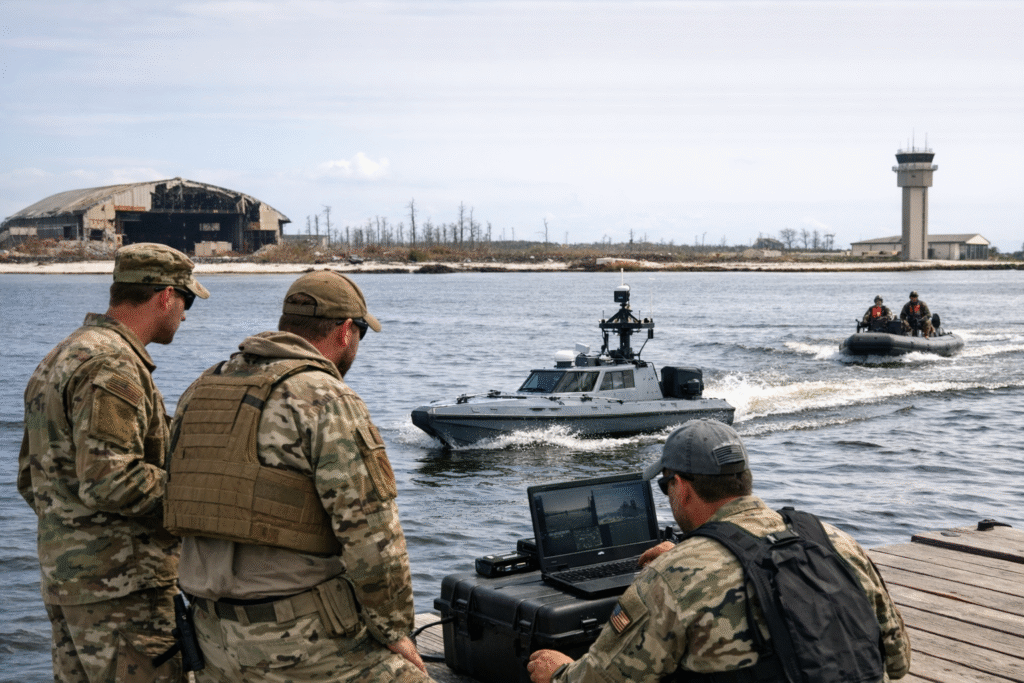
The U.S. Air Force is expanding its experimentation with unmanned maritime technology at Tyndall Air Force Base in Florida, signaling a broader push to integrate autonomous systems into coastal defense and base security operations. According to the article “Air Force taps Tyndall AFB for unmanned surface vessel experimentation,” published by DefenseScoop, the service is using the installation as a testbed for unmanned surface vessels (USVs) designed to enhance situational awareness and reduce risk to personnel.
Tyndall, still in the midst of reconstruction following Hurricane Michael in 2018, has increasingly become a proving ground for emerging technologies. Its coastal location along the Gulf of Mexico makes it particularly suitable for evaluating maritime systems that could be deployed at other installations or in operational theaters. Defense officials quoted in the DefenseScoop report emphasized that the service is looking to better understand how autonomous or remotely operated vessels can perform persistent surveillance, patrol restricted waters, and respond to potential threats.
The initiative reflects a wider Pentagon effort to accelerate adoption of autonomous platforms across domains. While the Navy has been at the forefront of unmanned maritime development, the Air Force’s interest in USVs underscores a growing recognition that base defense, especially for installations near coastlines, may require new layers of detection and response capability. Officials indicated that the systems under evaluation at Tyndall are intended not only for security but also for data collection and integration with broader command-and-control networks.
One of the key areas of focus is interoperability. The Air Force is examining how USVs can communicate with aerial drones, ground sensors, and manned assets in real time. This networked approach is intended to create a more comprehensive picture of environmental and security conditions, allowing commanders to make faster and more informed decisions. The DefenseScoop article notes that such experimentation aligns with the Department of Defense’s broader emphasis on joint all-domain operations.
Challenges remain, particularly in ensuring reliability, cybersecurity, and safe operation in congested or contested waters. Autonomous systems must be able to navigate complex maritime environments while adhering to safety protocols and avoiding collisions. Additionally, the integration of commercial technologies—often a component of rapid prototyping efforts—raises questions about resilience against electronic warfare or cyber intrusion.
Still, officials appear optimistic about the potential benefits. By deploying unmanned vessels for routine patrols or hazardous missions, the Air Force could reduce the burden on personnel and allocate human resources to higher-priority tasks. The use of USVs could also lower operational costs over time, particularly if the systems prove effective in long-duration missions without the need for onboard crews.
The work at Tyndall is part of a broader transformation effort at the base, which has been positioned as a “base of the future” following its rebuild. The incorporation of cutting-edge technologies, including autonomous systems, is central to that vision. As experimentation continues, the Air Force is expected to refine its concepts of operation and determine how best to scale these capabilities across its installations.
The DefenseScoop report suggests that while the program remains in an exploratory phase, it represents a significant step toward expanding the role of unmanned systems beyond traditional combat applications. If successful, the lessons learned at Tyndall could inform future investments and doctrinal shifts, reinforcing the Pentagon’s commitment to autonomy as a cornerstone of modern defense strategy.