Trump’s Bold Front Masks Private Anxiety
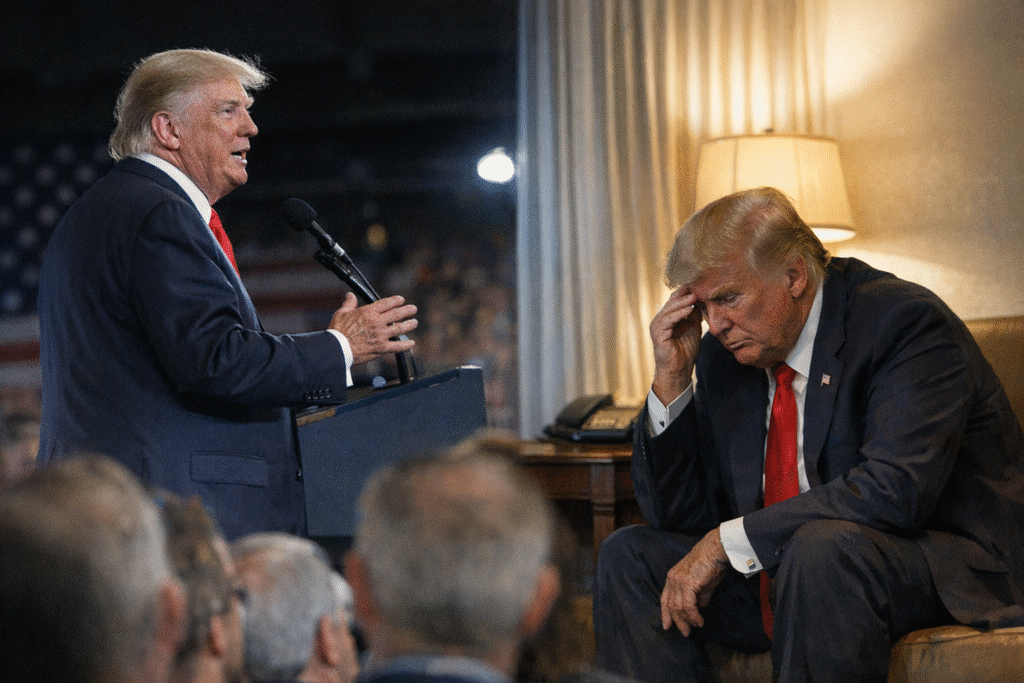
A recent Wall Street Journal article titled “Trump: Public Bravado, Private Fear” portrays a political figure whose outward confidence often contrasts sharply with private anxieties, offering a nuanced view of Donald Trump’s approach to power, legal exposure, and public messaging.
Drawing on interviews and internal accounts, the report describes how Trump has continued to project defiance in speeches, social media posts, and campaign appearances, even as he grapples behind the scenes with mounting legal and political pressures. Allies quoted in the Journal’s reporting suggest that this duality—unyielding rhetoric paired with private concern—has become a defining feature of his current political posture.
The article indicates that Trump’s public language remains combative, particularly when addressing ongoing investigations and indictments. He has framed these challenges as politically motivated, a strategy that has helped consolidate support among his base and maintain his position as a dominant figure within the Republican Party. At the same time, the Journal reports that in private conversations, Trump has shown a more cautious and, at times, apprehensive outlook, particularly regarding legal risks and the practical consequences of multiple cases unfolding simultaneously.
This tension between public bravado and private unease reflects a broader strategic calculation. By maintaining a forceful public presence, Trump appears to be reinforcing a narrative of resilience and victimhood, one that has proven politically effective in previous cycles. Yet the Journal’s account suggests that this approach coexists with a recognition within his inner circle of the unpredictable nature of the legal landscape he faces.
The reporting also underscores the role of advisers and confidants who navigate these competing dynamics. Some encourage continued aggressive messaging, viewing it as essential to sustaining political momentum. Others, according to the Journal, have expressed concern about the long-term implications of both the legal battles and the rhetoric used to confront them.
The article arrives at a moment when Trump remains a central figure in national politics, with significant influence over party direction and electoral strategy. His ability to balance public posture with private strategy may prove consequential as legal proceedings advance and the political calendar intensifies.
By highlighting this contrast, the Wall Street Journal’s “Trump: Public Bravado, Private Fear” contributes to a more layered understanding of how Trump manages pressure, communicates with supporters, and prepares for the challenges ahead.