US Navy Moves to Block Strait of Hormuz
A report published by Military Times titled “U.S. Navy to blockade Strait of Hormuz effective immediately, Trump says” describes a dramatic escalation in U.S. military posture in the Middle East, with significant implications for global energy markets and regional stability.
According to the report, former President Donald Trump announced that U.S. naval forces would begin enforcing a blockade of the Strait of Hormuz, one of the world’s most critical maritime chokepoints for oil shipments, with immediate effect. The decision, as characterized in the Military Times account, signals a sharp shift toward direct intervention in a region long marked by tension between the United States, Iran, and allied Gulf states.
The Strait of Hormuz handles a substantial share of the world’s seaborne oil trade, and any disruption to traffic there is closely watched by governments and financial markets alike. A blockade, even if limited in scope or duration, could have far-reaching economic consequences, including increased energy prices and heightened volatility across global supply chains.
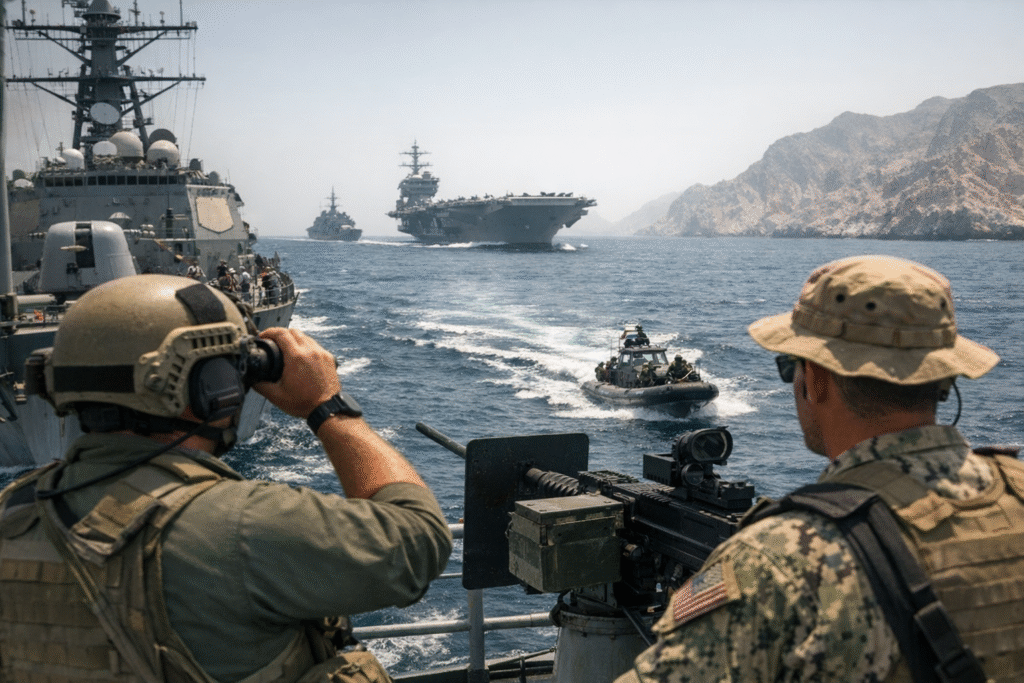
Military Times reports that U.S. naval assets have been positioned to carry out the order, though details about rules of engagement and the duration or specific objectives of the blockade remain unclear. Such operations typically require extensive coordination and carry risks of miscalculation, particularly in heavily trafficked waters where commercial vessels operate alongside military ships from multiple nations.
Regional reactions, while not fully detailed in the report, are expected to be swift. Iran has historically viewed any attempt to restrict access to the strait as a direct provocation and has previously threatened reciprocal measures. Analysts have long warned that even limited confrontations in the narrow waterways could escalate quickly, drawing in additional actors and expanding the scope of conflict.
The Military Times article also suggests that the announcement underscores ongoing friction between U.S. leadership and Congress over the use of military force. Large-scale naval operations of this kind generally raise legal and constitutional questions, particularly regarding authorization and oversight. Lawmakers from both parties have, in past instances, expressed concern about unilateral executive military actions that could lead to prolonged conflict.
At the Pentagon, officials are likely confronting complex operational and diplomatic challenges in implementing such an order. Ensuring the safety of U.S. personnel, preventing unintended clashes, and maintaining coordination with allies in the region are all critical considerations in a fast-moving and potentially volatile situation.
While further details are still emerging, the development described by Military Times marks a significant moment in U.S. defense policy, one that could reshape the strategic landscape in the Middle East and reverberate across global markets.