High-Risk CSAR Saves Downed F-15E Crew
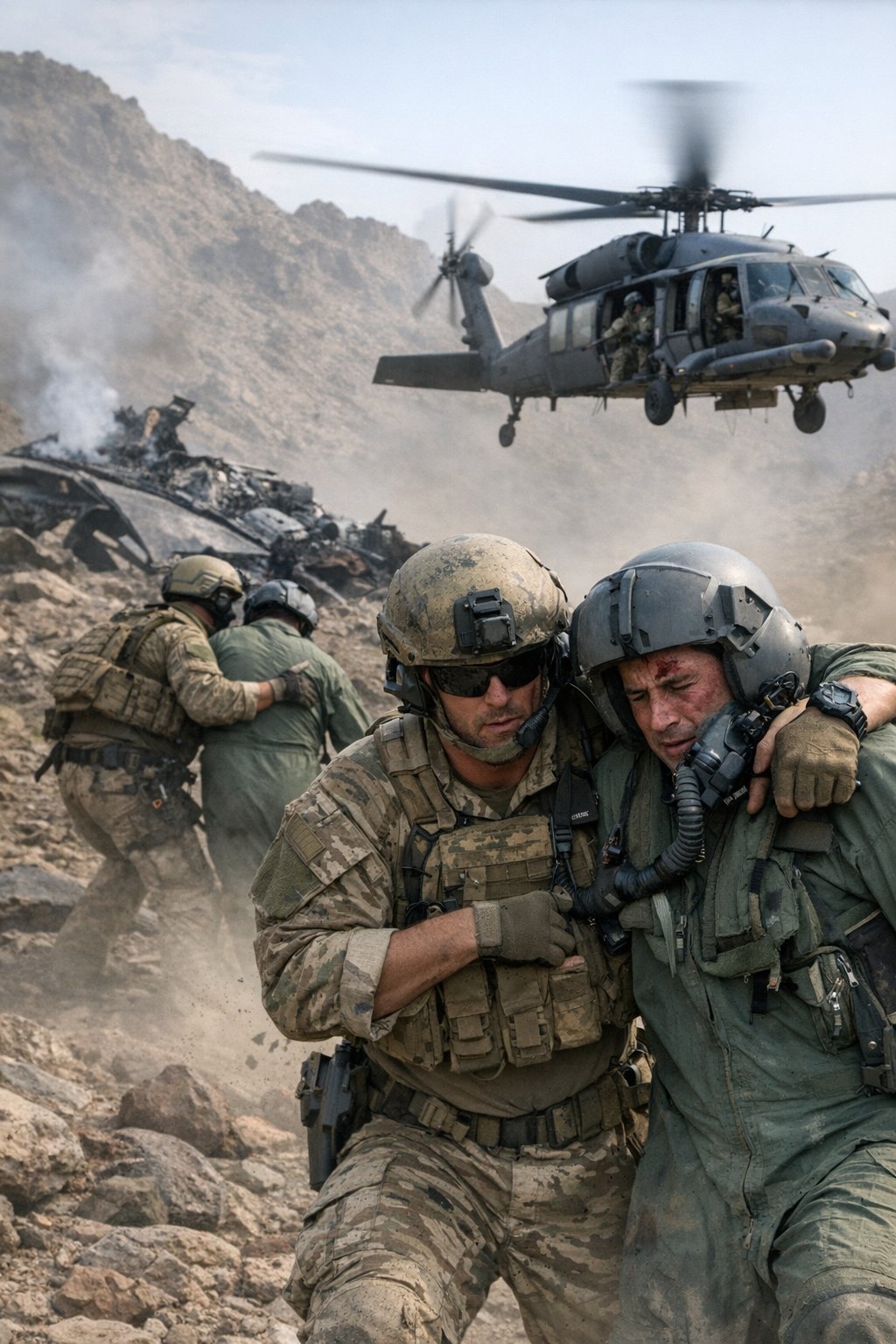
The recent account of a combat search and rescue operation involving two U.S. Air Force aviators underscores both the enduring risks of modern air warfare and the operational complexity required to recover downed personnel in hostile environments. As detailed in “The rescue mission that brought 2 F-15E Strike Eagle crew members home,” published by Military Times, the mission highlights the coordination, speed, and precision that define high-stakes personnel recovery efforts.
According to the report, the incident began when an F-15E Strike Eagle experienced a critical failure during a mission, forcing the pilot and weapons systems officer to eject. Their survival quickly became contingent on a tightly orchestrated recovery effort involving multiple aircraft, ground coordination, and real-time intelligence. Such missions, often referred to as “combat search and rescue” (CSAR), are among the most demanding operations conducted by the U.S. military, requiring seamless integration across units and platforms.
The Military Times article emphasizes that once the crew members were on the ground, the window for extraction was narrow. Downed aircrew are at heightened risk of enemy detection, capture, or injury, making rapid response essential. Rescue forces, typically including specialized helicopters, escort aircraft, and airborne command assets, must navigate uncertain terrain and potential threats while maintaining constant communication with isolated personnel.
The operation described in the report reflects the doctrine that no service member is left behind, a principle that carries both moral and strategic weight. Successful recoveries not only preserve lives but also sustain morale across the force. They signal to service members that, even in worst-case scenarios, significant resources will be deployed to bring them home.
At the same time, the mission illustrates the inherent dangers faced by rescue crews themselves. CSAR operations often place additional personnel in harm’s way, as they must enter contested or unstable environments to retrieve those in distress. The Military Times account points to the layered planning required to mitigate these risks, including suppression of enemy threats and the use of advanced surveillance to monitor conditions on the ground.
While specific operational details remain limited, as is typical for such missions, the successful recovery of both F-15E crew members demonstrates the effectiveness of current training and capabilities. It also reflects ongoing investments in personnel recovery infrastructure, from specialized aircraft to survival training for pilots operating in high-risk theaters.
The episode serves as a reminder that even routine or planned missions can rapidly evolve into emergencies requiring extraordinary measures. In that sense, the rescue operation is not only a story of survival but also of institutional preparedness, illustrating how doctrine, technology, and human skill converge in moments of crisis.