Hegseth Ousts Army Chief Amid Iran War Tensions
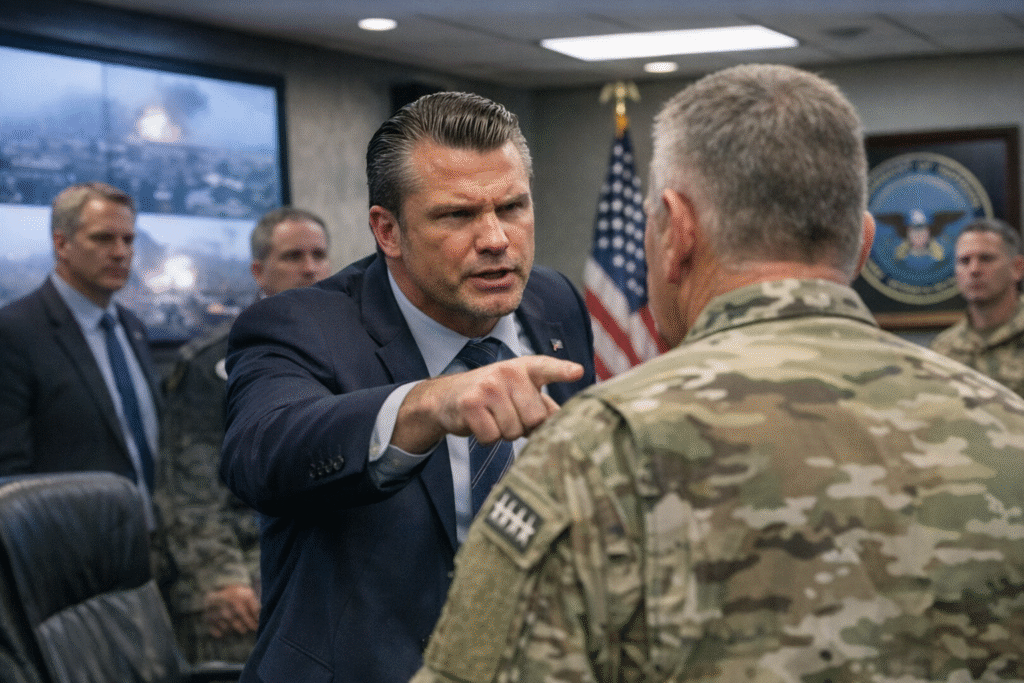
Defense Secretary Pete Hegseth has asked the Army’s top officer to retire immediately, a move that underscores mounting tensions within the Pentagon as the United States confronts an intensifying conflict with Iran. The request, first reported in an article titled “Hegseth asks Army’s top general to retire immediately as Iran war rages” published by Defense News, marks a rare and highly consequential leadership shakeup during an active military crisis.
According to the report, Hegseth’s request was directed at the Army’s Chief of Staff, a position central to coordinating ground forces and advising civilian leadership on military strategy. The timing has raised concerns among defense officials and lawmakers, who typically expect continuity in senior military leadership during wartime operations.
The Pentagon has not publicly detailed the rationale behind the decision, but officials cited in the Defense News report suggested tensions over strategy and operational direction may have played a role. Differences over troop deployments, escalation risks, and the broader conduct of the campaign against Iran have reportedly created friction between civilian leadership and uniformed commanders in recent weeks.
The war, which has expanded rapidly in scope, has strained U.S. military resources and demanded close coordination across service branches. In such an environment, abrupt leadership changes can introduce uncertainty into command structures, potentially complicating planning and execution at a critical moment.
Members of Congress from both parties have expressed concern about the implications of the move. Some lawmakers questioned whether removing a senior military leader during an ongoing conflict could disrupt operational continuity or signal instability within the administration’s national security team. Others emphasized the principle of civilian control of the military, noting that defense secretaries retain the authority to make personnel decisions, even if controversial.
Military analysts note that while disagreements between civilian leaders and top commanders are not uncommon, they are typically managed behind closed doors to preserve institutional stability. Public awareness of such a dispute, particularly in wartime, may affect perceptions among allies and adversaries alike.
The Pentagon is expected to move quickly to install a successor or an acting replacement to ensure continuity of leadership. However, the episode highlights broader questions about decision-making and cohesion within the defense establishment as the United States navigates a complex and evolving conflict.
As the situation develops, attention will likely focus not only on battlefield developments but also on whether the leadership transition affects the trajectory of U.S. military strategy in the region.