Flights Continue Amid Middle East Conflict Risks
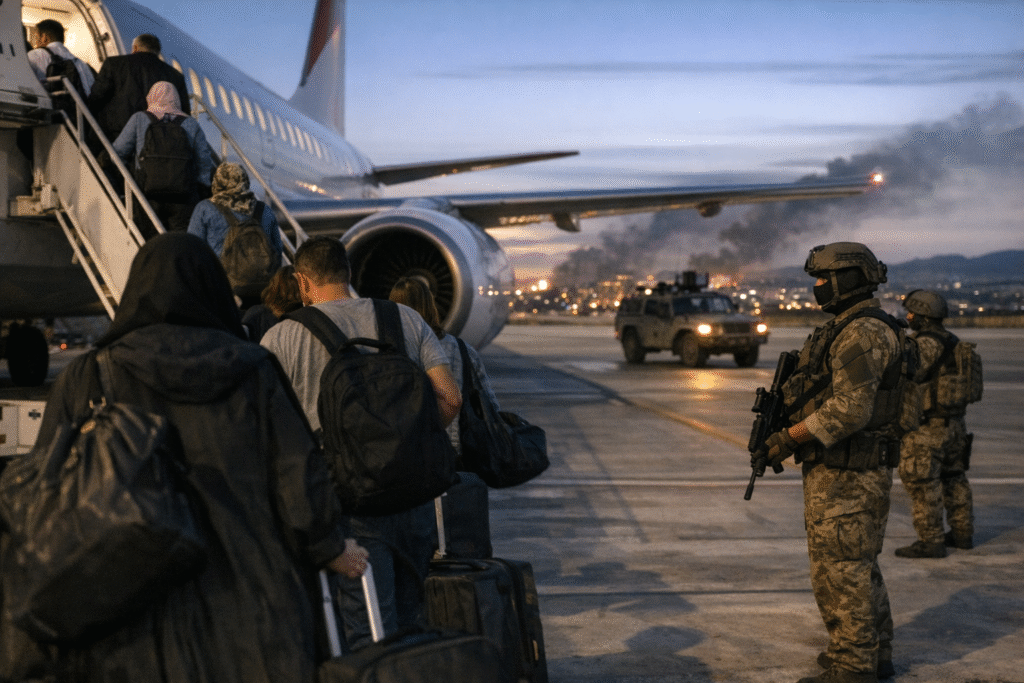
Commercial aviation in parts of the Middle East has entered a precarious phase in which routine airline operations continue even as regional hostilities intensify, underscoring the industry’s growing reliance on risk-management strategies to navigate conflict zones. As detailed in the Wall Street Journal article “Flights Are Still Taking Off as Missiles Rain Down in the Middle East,” airlines are maintaining service across contested airspace despite the presence of missile fire and escalating geopolitical tensions.
The persistence of flights in such conditions reflects both economic necessity and the adaptability of modern aviation systems. Airlines, regulators, and defense authorities are increasingly coordinating to determine which corridors remain viable, often making rapid adjustments to flight paths based on real-time intelligence. While some carriers have suspended routes or diverted flights to avoid the most dangerous areas, others continue operating, relying on updated threat assessments and established protocols designed to mitigate risk.
Airlines face competing pressures. On one hand, suspending routes can disrupt global connectivity, strand passengers, and inflict financial losses in an industry already sensitive to volatility. On the other, continuing operations in proximity to armed conflict introduces safety concerns that carry profound human and reputational consequences. Executives must weigh incomplete information and evolving threats, often making decisions on tight timelines.
Aviation safety experts note that commercial aircraft are not typically direct targets in regional conflicts, but the danger of miscalculation, errant missiles, or misidentification remains a persistent risk. Past incidents, including the downing of civilian aircraft in conflict zones, continue to shape industry caution. As a result, airlines rely heavily on government advisories, intelligence-sharing arrangements, and internal risk models to determine acceptable exposure.
Insurance also plays a key role in sustaining operations. War-risk coverage, often backed by governments or specialized insurers, enables airlines to continue flying in higher-risk areas, though premiums can rise sharply during periods of escalation. In some cases, governments provide additional guarantees or assistance to prevent disruptions to critical air travel networks.
Passengers, for their part, are often unaware of the complexity behind these decisions. Flights may operate on altered routes that add time or fuel costs but reduce exposure to volatile airspace. Airlines tend to avoid publicizing detailed risk assessments, citing both security concerns and the fluid nature of the situation.
As highlighted by the Wall Street Journal, the current environment illustrates how global aviation has adapted to operate amid persistent geopolitical instability rather than halting entirely. The calculus is no longer simply whether it is safe to fly, but how to manage varying degrees of risk while sustaining essential connectivity.
The continuation of flights under such conditions reflects both the resilience and the fragility of international aviation. While the system has proven capable of adapting to conflict, it remains dependent on a delicate balance of information, coordination, and restraint among state and non-state actors. Any breakdown in that balance could quickly alter the equation, forcing airlines to reassess routes that, for now, remain open.