French Talk Show Wins Viewers With Cinematic Lighting
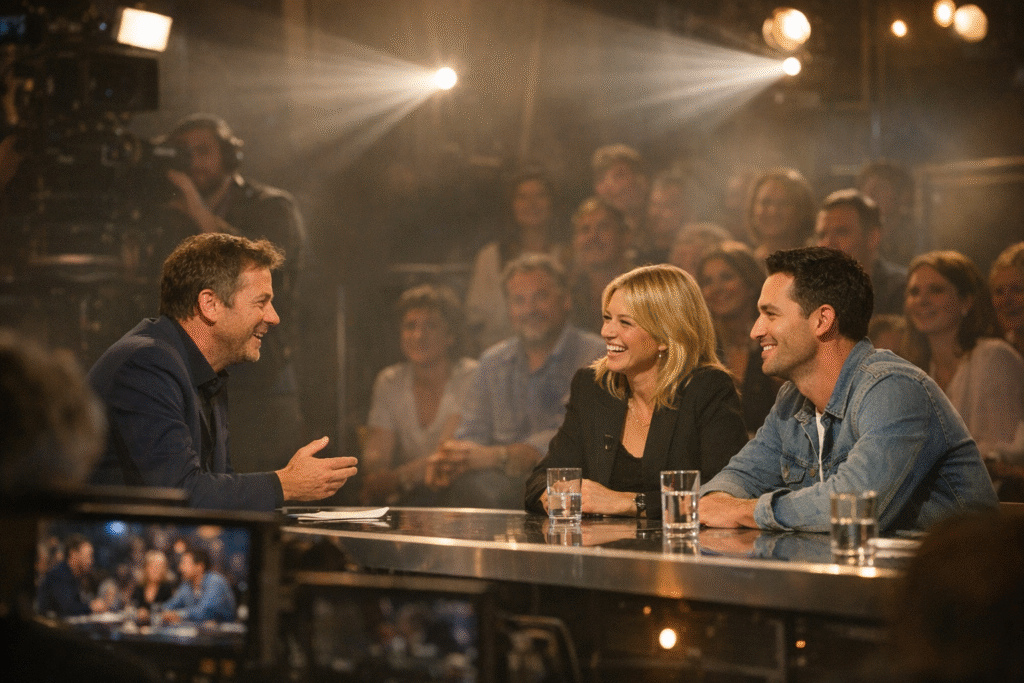
A recent Wall Street Journal article, “On ‘Quotidien,’ Talk Show Guests Get the Star Treatment With Very Good Lighting,” highlights how a French television program has distinguished itself in a crowded media landscape by focusing on an often-overlooked detail: how guests look on camera.
The program, “Quotidien,” hosted by Yann Barthès, has become known not just for its political commentary and interviews, but for a production aesthetic that rivals that of high-end photo shoots. According to the Wall Street Journal, the show’s meticulous lighting design has drawn attention from both viewers and industry professionals, particularly as clips featuring international celebrities circulate widely online. Appearances by figures such as Margot Robbie have underscored how flattering visuals can enhance a guest’s presence and amplify a program’s cultural reach.
This emphasis on lighting is not incidental. In an era when interview segments are frequently clipped and shared across social media platforms, the visual quality of a broadcast can influence whether a moment resonates beyond its original airing. “Quotidien” appears to have recognized this shift early, investing in technical precision that ensures guests appear polished and camera-ready under any circumstances.
The Wall Street Journal reports that the show’s lighting setup is carefully calibrated to produce soft, cinematic effects more commonly associated with film production than live television. This approach contrasts with the flatter, harsher lighting often found on traditional talk shows, where consistency and speed have historically taken precedence over artistry. By rethinking these priorities, “Quotidien” has created an environment in which high-profile guests feel comfortable and look their best, a factor that likely contributes to the program’s ability to attract prominent figures.
The strategy also speaks to changing audience expectations. As viewers increasingly consume content on high-resolution screens and across digital platforms, visual sophistication has become a baseline requirement rather than a luxury. Programs that fail to adapt risk appearing dated or less engaging, particularly when juxtaposed with the highly produced content that dominates social media.
At the same time, the attention to aesthetics raises questions about the balance between substance and presentation. While strong visuals can enhance storytelling, they may also risk overshadowing the content of interviews if not carefully managed. In the case of “Quotidien,” the Wall Street Journal suggests that the show has largely succeeded in integrating both elements, maintaining journalistic relevance while elevating its visual identity.
Ultimately, the success of “Quotidien” reflects a broader shift in television production, where technical excellence is increasingly intertwined with editorial impact. As other programs take note, the show’s approach may well signal a new standard for how televised interviews are produced and consumed.