Trump 2.0 Iran Strategy Divides Advisers
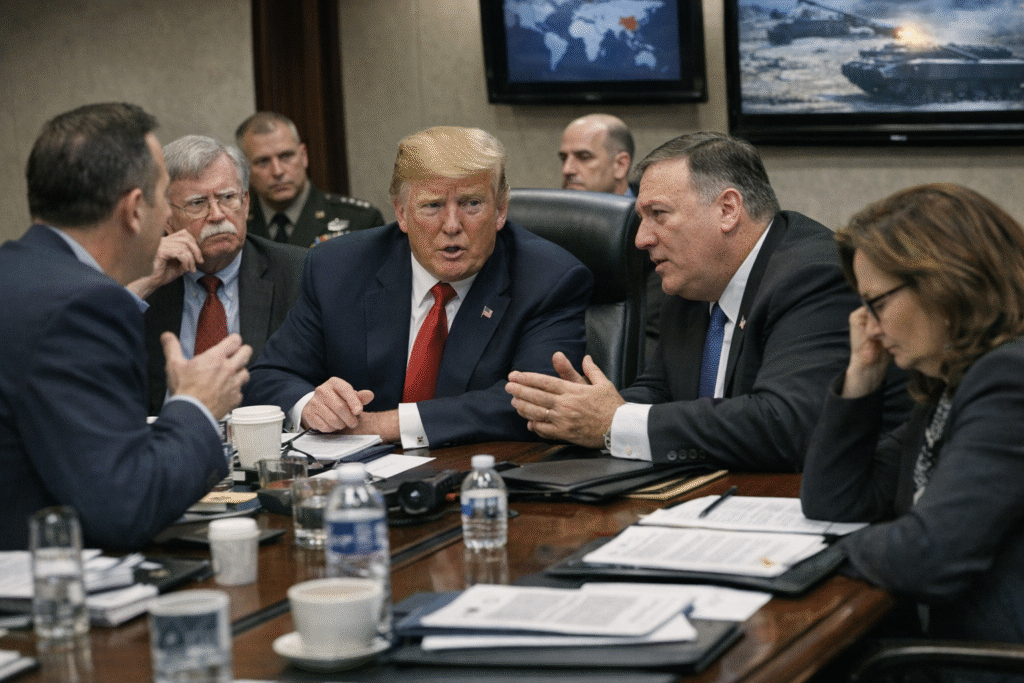
The prospect of renewed confrontation with Iran under a potential second Trump administration is already stirring debate among national security experts, exposing deep divisions over strategy, risk, and the lessons of recent history.
A Wall Street Journal report titled “Trump Iran War Adviser Reaction” highlights how former officials and policy advisers who once shaped Donald Trump’s foreign policy are offering sharply different assessments of how he might approach Tehran if returned to office. The article suggests that while some former advisers support a more assertive stance, others are warning of escalation risks and the unpredictability that marked decision-making during Trump’s first term.
At the center of the discussion is Trump’s past willingness to consider direct military action against Iran, most notably following the 2020 killing of Iranian General Qassem Soleimani and periods of heightened tension in the Persian Gulf. According to the Wall Street Journal, individuals who worked closely with Trump remain divided over whether a second administration would lean toward deterrence through force or attempt a renegotiation of nuclear constraints after the U.S. withdrawal from the 2015 nuclear agreement.
Some former advisers cited in the report argue that a credible threat of military action is essential to counter Iran’s regional influence and nuclear ambitions. They contend that Trump’s unpredictability can serve as a strategic advantage, deterring adversaries who must consider the possibility of swift escalation. Others, however, express concern that such an approach risks miscalculation, particularly in an environment where Iran has expanded its nuclear capabilities and regional proxy networks.
The debate also reflects broader uncertainty within U.S. foreign policy circles about how to balance coercion and diplomacy. Critics of a hardline approach warn that increased pressure could provoke retaliation across the Middle East, endangering U.S. forces and allies. Supporters counter that previous diplomatic efforts failed to sufficiently constrain Iran’s long-term ambitions, arguing that stronger measures may be necessary.
The Wall Street Journal’s reporting underscores how Trump’s foreign policy framework, often guided by instinct and a small circle of advisers, continues to generate both loyalty and unease among those familiar with its inner workings. The divergence of views suggests that, even among allies, there is no clear consensus on how a future administration might manage one of the most volatile geopolitical challenges facing the United States.
As tensions with Iran remain a persistent concern for U.S. policymakers, the internal disagreements highlighted in the article point to the likelihood that any future strategy will be shaped not only by external pressures but also by competing visions within Trump’s own advisory network.