US-Iran Tensions Enter a Riskier Gray Zone
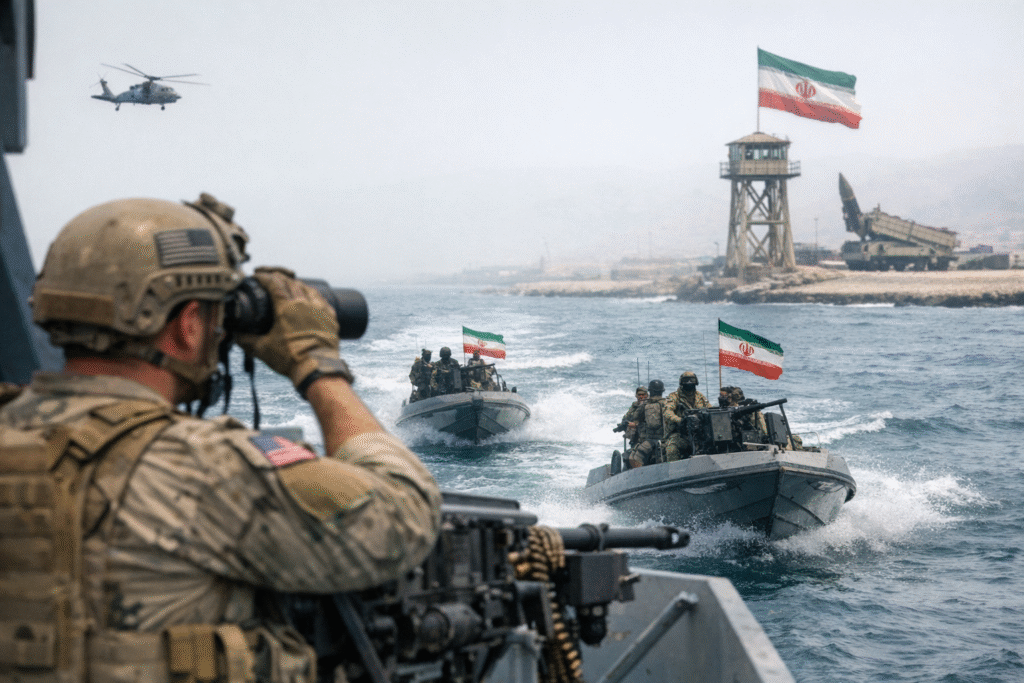
Tensions between the United States and Iran have reached a more volatile and unpredictable phase, according to a recent analysis published on Substack titled “America’s Iran Problem Has Entered a New Phase.” The article argues that Washington is confronting a shifting strategic landscape in which longstanding assumptions about deterrence, escalation, and regional stability no longer fully apply.
The Substack piece contends that Iran has grown increasingly confident in leveraging asymmetric tactics across the Middle East, relying on allied militias and proxy forces to apply pressure on U.S. interests while avoiding direct, large-scale confrontation. This approach, it suggests, allows Tehran to test boundaries without triggering a decisive military response from Washington, thereby gradually reshaping the rules of engagement.
At the same time, U.S. policymakers appear to be grappling with competing priorities. The analysis highlights how American attention has been divided by other global challenges, particularly great-power competition and ongoing conflicts elsewhere, potentially limiting Washington’s bandwidth for sustained focus on Iran. This diffusion of focus, the article argues, may be contributing to a reactive posture rather than a coherent long-term strategy.
The Substack essay also emphasizes the erosion of traditional deterrence frameworks. It notes that while the United States maintains overwhelming conventional military superiority, Iran’s network of regional partners allows it to operate in a gray zone between war and peace. Attacks on shipping, infrastructure, and U.S. personnel can be calibrated to remain below the threshold that would provoke full-scale retaliation, complicating the U.S. response.
Another concern raised in the article is the risk of incremental escalation. The author suggests that repeated, smaller incidents—each individually contained—could cumulatively increase the likelihood of a broader conflict through miscalculation. In this environment, signaling becomes more ambiguous and the margin for error narrows, particularly when actions are carried out through intermediaries rather than directly attributable state forces.
The piece also addresses the diplomatic dimension, arguing that efforts to revive or renegotiate nuclear agreements have stalled amid mutual distrust and changing political conditions. Without a clear diplomatic track, the analysis suggests, the United States may find itself relying more heavily on deterrence and crisis management, approaches that are inherently unstable over the long term.
In assessing the path forward, the Substack article calls for a reassessment of U.S. strategy that accounts for Iran’s evolving tactics and the broader regional context. It suggests that policymakers may need to clarify red lines, strengthen regional partnerships, and develop more consistent responses to proxy activity in order to restore a degree of predictability to the relationship.
While the analysis stops short of predicting imminent large-scale conflict, it portrays a strategic environment in which risks are growing and familiar tools may be losing effectiveness. As outlined in “America’s Iran Problem Has Entered a New Phase,” the challenge facing Washington is not only how to deter Iran, but how to adapt to a contest that is increasingly defined by ambiguity, indirect confrontation, and gradual escalation.