Ukraine War Seen as Four Overlapping Conflicts
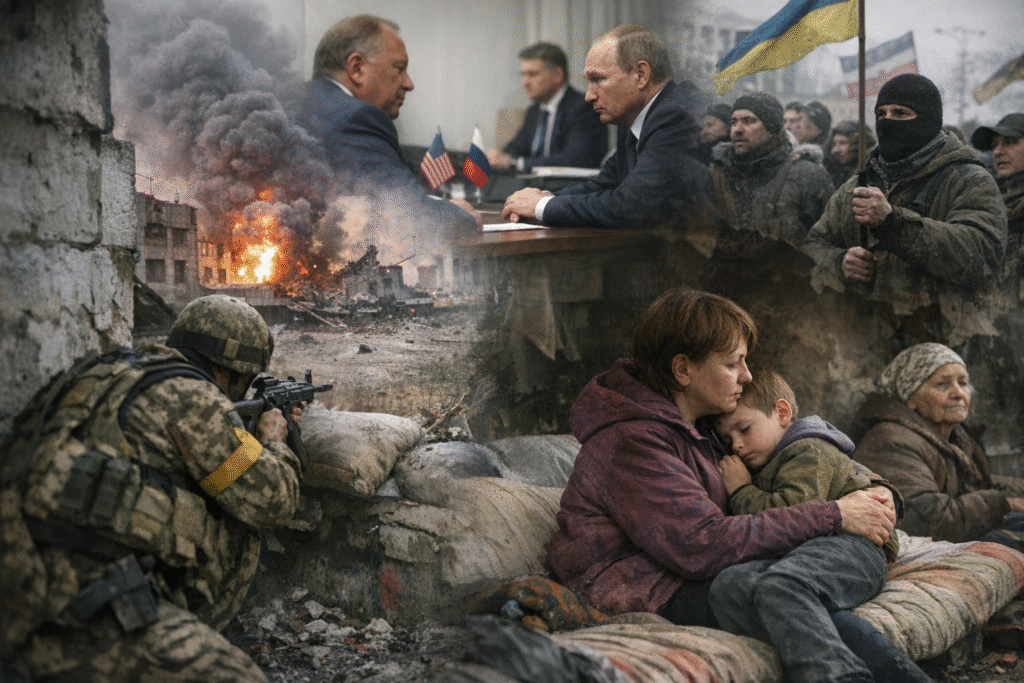
A recent analysis published on the Substack platform argues that the war in Ukraine is often misunderstood as a single, unified conflict when it is, in reality, a convergence of multiple overlapping wars with distinct objectives, actors, and timelines. In the article titled “Four Wars in One,” analyst Andrew Fox contends that failure to disentangle these layers risks obscuring both the strategic dynamics on the ground and the possible paths toward resolution.
Fox describes the conflict as comprising at least four interrelated struggles. The first is the conventional interstate war between Russia and Ukraine, characterized by large-scale military operations, territorial advances, and the use of heavy weaponry. This dimension has dominated headlines since Russia’s full-scale invasion in February 2022 and remains the most visible aspect of the crisis.
Alongside this is what Fox frames as a broader geopolitical confrontation between Russia and the West. In this interpretation, Ukraine serves as the central battleground in a wider contest over security architecture in Europe, influence over former Soviet states, and competing visions of international order. Western military aid, sanctions, and diplomatic pressure are seen as integral components of this second layer, transforming what might otherwise be a regional war into a proxy struggle with global implications.
A third dimension is the internal Ukrainian effort to assert political cohesion and national identity in wartime. Fox points to the ways in which domestic governance, civil-military relations, and societal mobilization are shaping the trajectory of the conflict. The war has accelerated processes of nation-building while also placing significant strain on Ukraine’s institutions and population.
The fourth layer, according to the analysis, involves internal Russian dynamics. This includes the Kremlin’s efforts to maintain political control, manage elite rivalries, and sustain public support in the face of economic pressure and battlefield setbacks. Fox highlights how internal considerations—from military command disputes to the handling of dissent—feed back into Russia’s strategic decisions.
By framing the war as four overlapping conflicts, Fox argues that policymakers and observers can better understand why developments on the battlefield do not always align neatly with diplomatic or political shifts. Gains in one dimension do not necessarily translate into progress across the others, complicating efforts to predict outcomes or negotiate settlements.
The analysis suggests that any durable resolution would likely need to address each of these layers simultaneously, a prospect that underscores the difficulty of ending the conflict. For now, the war’s multifaceted nature continues to challenge conventional narratives and complicate the search for a clear path forward.