UK US weigh military options in Hormuz tensions
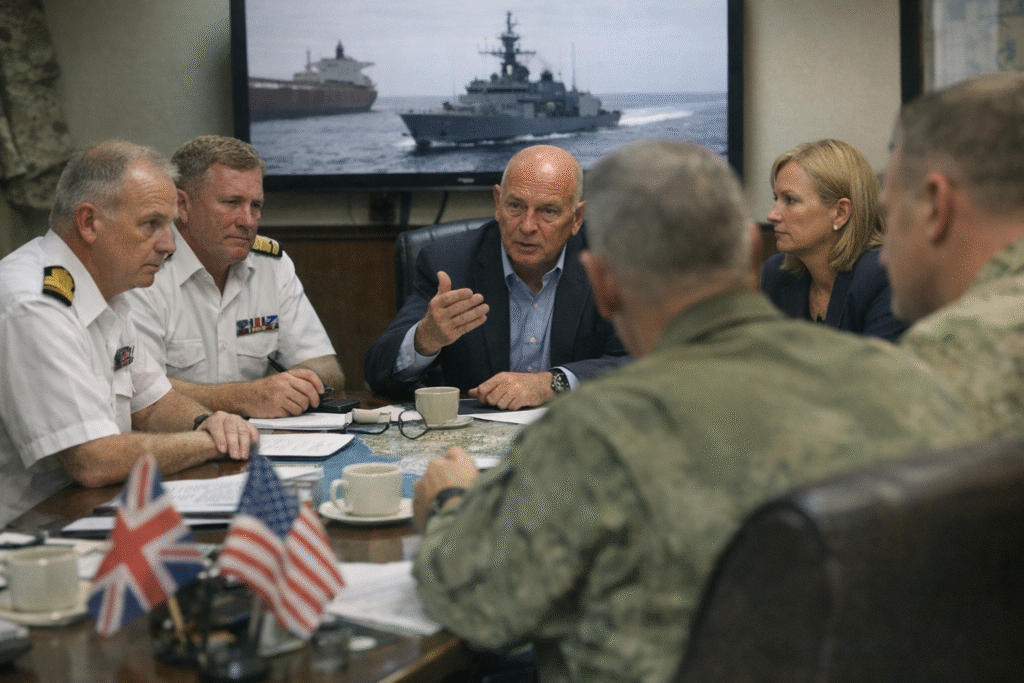
Reporting by Defense News under the headline “UK’s Starmer and Trump discussed military options for Strait of Hormuz” highlights renewed transatlantic attention on one of the world’s most strategically vital maritime chokepoints, as escalating tensions in the Gulf sharpen the focus of Western policymakers.
According to the Defense News report, UK Prime Minister Keir Starmer and former U.S. President Donald Trump recently held discussions that included potential military responses to instability in the Strait of Hormuz, a narrow waterway through which roughly a fifth of global oil supplies flow. While details of the exchange remain limited, the conversation underscores growing concern among Western leaders about the security of maritime trade routes amid persistent regional volatility.
The Strait of Hormuz has long been a flashpoint, particularly amid tensions involving Iran, Gulf states, and Western naval forces. Any disruption to shipping lanes in the area would likely have immediate and far-reaching consequences for global energy markets and supply chains. Against this backdrop, the reported dialogue suggests that contingency planning remains active at the highest political levels, even as public messaging continues to emphasize deterrence and stability.
Defense News indicates that the discussions touched on a range of possible military options, though it stops short of describing concrete plans or imminent action. The absence of specifics reflects both the sensitivity of such deliberations and the complexity of coordinating multinational responses in a region where miscalculation could rapidly escalate.
For the United Kingdom, engagement in Gulf security is not new. The Royal Navy maintains a longstanding presence in the region, including mine countermeasure vessels and patrol ships tasked with safeguarding commercial shipping. Britain is also a participant in international maritime security initiatives aimed at deterring threats to navigation. Any expansion of its role would likely depend on alignment with allies, particularly the United States.
The inclusion of Trump in the reported talks is notable given his continued influence in U.S. political and security circles, despite not currently holding office. His administration previously adopted a confrontational posture toward Iran, including the withdrawal from the Joint Comprehensive Plan of Action and the imposition of sanctions, moves that contributed to heightened tensions in the Gulf. His engagement in discussions about military options signals the persistence of hardline perspectives within segments of American leadership.
Analysts caution that while contingency planning is a routine aspect of defense policy, public awareness of such discussions can carry diplomatic implications. Signals of potential military action may be intended to deter adversaries, but they can also increase uncertainty, particularly in a region where rival powers closely monitor Western intentions.
The Defense News report situates these developments within a broader pattern of strategic recalibration, as Western governments respond to overlapping security challenges, from maritime threats to geopolitical competition. The Strait of Hormuz, by virtue of its economic significance, remains central to these considerations.
At present, there is no indication that the UK or its allies are moving toward immediate military action in the region. However, the acknowledgment that senior figures are actively discussing options reflects a recognition that the stability of key global arteries cannot be taken for granted, and that preparedness, both political and operational, remains a priority.