Trump Claims Rapid U.S. Strike Capability on Iran
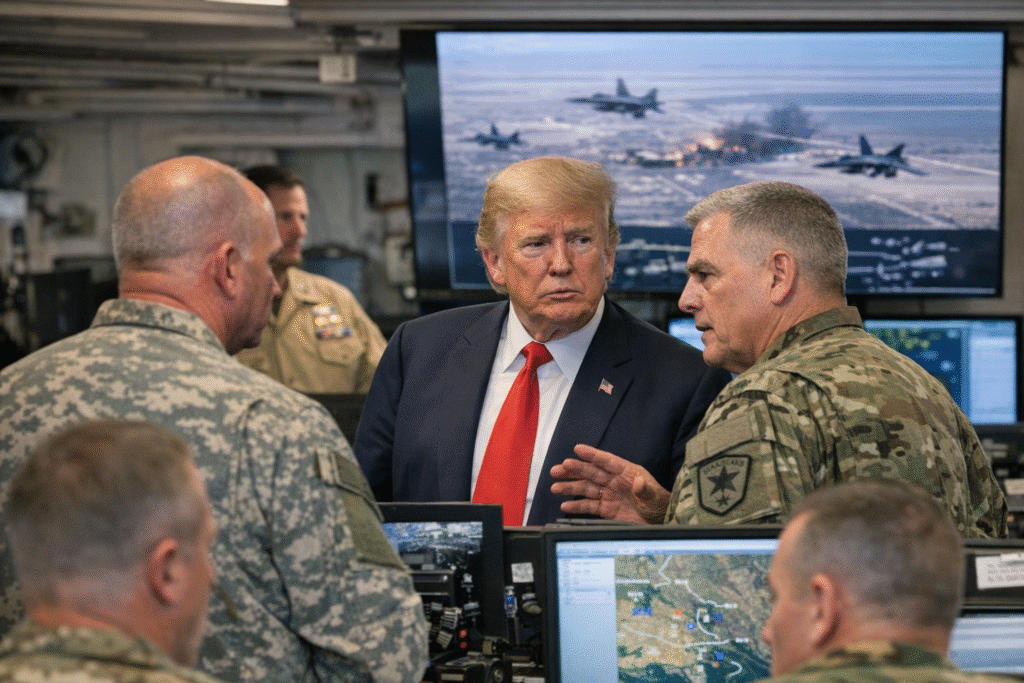
In a recently published video by The Wall Street Journal titled “Trump Says U.S. Could Take Out Iran in One Night,” former President Donald Trump asserted that the United States possesses the military capability to decisively eliminate Iran’s strategic capacity within a very short time frame. His remarks, delivered in a campaign-style setting, underscored a broader theme in his foreign policy rhetoric: the projection of overwhelming force as a deterrent against adversaries.
Trump’s comments reflect a longstanding position he has held since his presidency, during which tensions between Washington and Tehran escalated sharply following the U.S. withdrawal from the 2015 nuclear agreement and the subsequent reimposition of economic sanctions. Those tensions culminated in episodes such as the 2020 U.S. drone strike that killed Iranian General Qassem Soleimani, bringing the two countries to the brink of direct conflict.
In the video, Trump suggests that decisive military action, if ever deemed necessary, could be swift and conclusive. While he does not outline specific operational details, the implication is that U.S. technological superiority and military reach would enable rapid neutralization of key Iranian targets. Such claims align with his broader campaign messaging, which emphasizes strength and unpredictability as tools of international negotiation and deterrence.
Defense analysts have long cautioned, however, that military confrontations with Iran would likely be far more complex than suggested by such assertions. Iran maintains a network of regional proxy forces, significant missile capabilities, and asymmetric warfare strategies that could extend any conflict beyond a single, contained strike. Moreover, military action against Iran risks drawing in neighboring countries and disrupting global energy markets, particularly given Iran’s position along critical shipping routes such as the Strait of Hormuz.
Trump’s remarks also come amid renewed debate over U.S. policy toward Iran, including questions about nuclear proliferation, regional stability, and the future of diplomatic engagement. While some policymakers advocate a return to negotiated constraints on Iran’s nuclear program, others argue for maintaining or intensifying pressure through sanctions and military posturing.
The Wall Street Journal’s video highlights how Trump continues to frame foreign policy in stark, high-impact terms as he seeks to reassert his influence on the national stage. His comments are likely to resonate with supporters who favor a more hardline approach, while drawing criticism from those concerned about the consequences of escalatory rhetoric in an already volatile region.
As geopolitical tensions persist, statements such as these underscore the enduring challenges of balancing deterrence, diplomacy, and the risks inherent in projecting military power.