State Pauses Gas Tax as Iran Tensions Push Prices Up
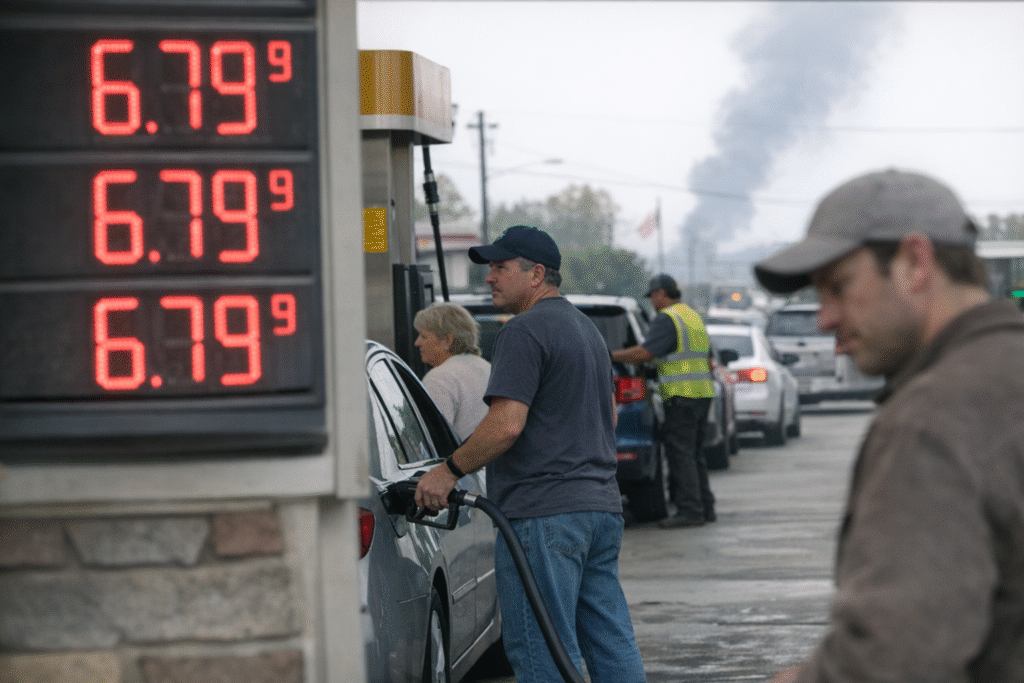
A U.S. state government has moved to temporarily suspend its gasoline tax in an effort to shield consumers from rapidly rising fuel costs tied to escalating tensions involving Iran, according to a report by The Daily Wire titled “Red State Pauses Gas Tax To Ease Pain Of Iran War Price Increase.” The policy reflects a broader scramble among policymakers to respond to renewed volatility in global energy markets and its downstream effects on household budgets.
Fuel prices have climbed sharply in recent days as geopolitical developments in the Middle East have raised concerns over potential disruptions to oil supply routes. Analysts note that even the perception of risk around key transit chokepoints can drive immediate price increases, which are then passed along to consumers at the pump. In this context, state-level tax relief measures are being framed as short-term interventions to offset sudden spikes rather than long-term structural changes.
The decision to pause the gas tax highlights the limited but tangible tools available to states when global forces drive energy costs. While federal policy and international dynamics largely determine crude oil prices, state taxes represent a smaller, more controllable component of what drivers ultimately pay. By suspending or reducing these taxes, officials aim to deliver immediate, visible relief, though the magnitude of savings varies depending on the duration of the pause and the state’s existing tax rate.
Critics of such measures caution that gas tax revenues typically fund transportation infrastructure projects, and temporary suspensions can create budget shortfalls or delay planned improvements. Fiscal analysts often emphasize that these taxes are a critical, if politically unpopular, funding source for road maintenance and expansion. As a result, policymakers must balance consumer relief against longer-term infrastructure needs.
Supporters, however, argue that extraordinary circumstances justify short-term trade-offs. With inflationary pressure already affecting essential goods and services, rising fuel costs can have a disproportionate impact on lower- and middle-income households, as well as on industries reliant on transportation. In this view, suspending the tax is a targeted step to cushion what is seen as an externally driven economic shock.
The move also underscores how quickly international events can reverberate through domestic economic policy. Even without direct involvement in overseas conflict, U.S. consumers and state governments remain exposed to global energy market fluctuations. As tensions persist, additional states may consider similar measures, particularly if elevated fuel prices continue to strain household finances.
Whether such tax suspensions provide meaningful relief over time remains a subject of debate. Much depends on the trajectory of oil prices and the duration of geopolitical instability. For now, the policy represents an immediate, visible response to a rapidly evolving situation, reflecting both the urgency of the moment and the constraints of state-level economic intervention.