American AI Models Are Powering Russian Drone Targeting, Influence Campaigns, and Cyberattack Tools, Researchers Warn
Russian operators are exploiting U.S.-built AI systems to develop autonomous drones, cyberattack bots, and disinformation tools.

Russia is systematically exploiting commercially available American artificial intelligence to develop weapons systems, automate cyberattacks, and scale disinformation operations, according to findings detailed by Defense One. The report, published in September 2026, describes a pattern in which Russian state-linked actors and proxies route access to U.S. AI platforms through third-party intermediaries, bypassing export controls and terms-of-service restrictions designed to prevent military misuse. The findings underscore a fundamental tension in dual-use AI: the same frontier models that drive commercial productivity can, in hostile hands, compress the development timeline for lethal autonomous systems and influence operations alike.
The disclosure is consistent with a broader pattern of adversary AI exploitation documented across the intelligence community. Earlier this year, GDD reported that Russian Chinese operators had used Anthropic’s Claude model to assist in engineering drone swarms and weapons systems — an episode that previewed the misuse taxonomy now described at greater scale. Defense One’s reporting indicates that the problem has grown more operationally concrete since those early findings.

Autonomous Drones and the AI Targeting Problem
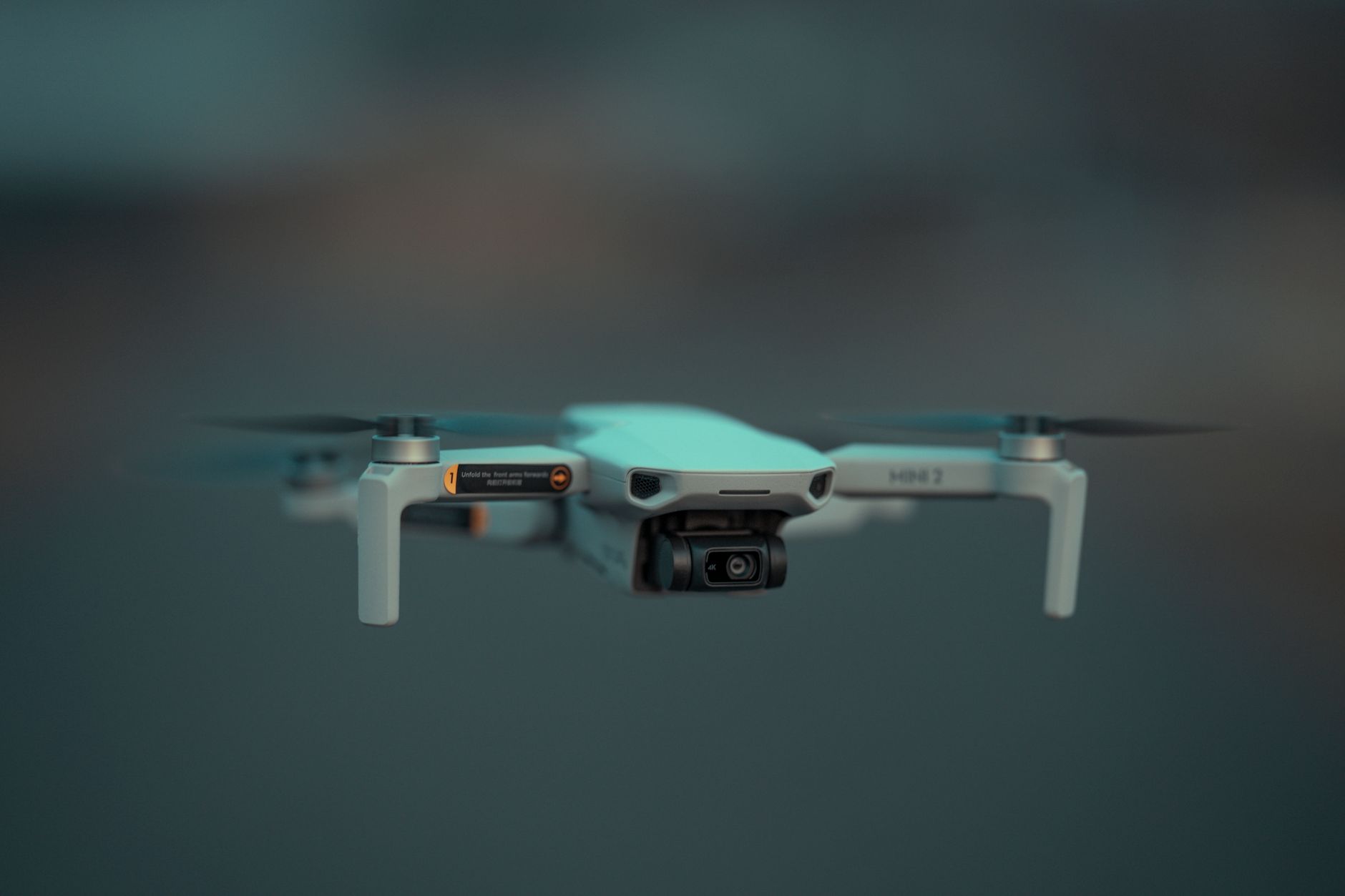
Among the most operationally significant elements of the Defense One report is the finding that Russian developers are using U.S.-built AI tools to improve drone targeting and autonomy. The specifics of which models or intermediary channels are involved were not fully confirmed by officials cited in the reporting, but researchers described workflows in which AI assists in object recognition, flight path optimization, and target selection — functions that, combined, push loitering munitions closer to fully autonomous lethality. The practical effect is a reduction in the human labor required to field effective drone strikes, at a moment when drone saturation has already reshaped the operational calculus in Ukraine.
NATO has been grappling with this trajectory directly. As NATO’s drone doctrine makes clear, the alliance’s current framework holds that AI may manage flight and targeting queues but that lethal strike authority must remain with a human operator. Russia’s apparent effort to collapse that distinction — using Western AI to automate the kill chain — represents a direct challenge to that framework and to the arms-control assumptions embedded in it.
Cyberattack Automation and the Disinformation Layer
Beyond the physical battlefield, the Defense One reporting describes Russian operators using U.S. AI platforms to generate and deploy cyberattack bots at scale and to produce synthetic disinformation content — text, imagery, and potentially audio — intended for foreign influence operations. Officials cited in the piece did not provide specific attribution to named Russian government units, and the precise AI platforms being exploited were not fully disclosed, leaving some details unconfirmed. What researchers did assert is that the accessibility and capability of frontier commercial AI has lowered the barrier to entry for both tasks considerably.
The geographic routing of AI access is also a factor. Tech industry observers have noted that Central Asian jurisdictions with limited export-control enforcement have become nodes in procurement pipelines for restricted Western technology — a dynamic that complicates any enforcement regime premised on point-of-sale compliance. The structural challenge for U.S. policymakers is that no single technical control eliminates the problem once a model or API is broadly distributed: the enforcement surface is too wide, and the intermediary networks too adaptive, for restrictions alone to constitute a durable solution. What the Defense One findings suggest is that the gap between commercial AI availability and adversary operational deployment has narrowed to a point where it now demands a policy response that matches the pace of the technology itself.