Rafael Advances SPICE 1000 Integration Onto the F-35 Stealth Fighter
Rafael Advanced Defense Systems is developing SPICE 1000 compatibility with the F-35, expanding the stealth jet’s precision standoff strike options.
Rafael Advanced Defense Systems has publicly confirmed it is working to integrate its SPICE 1000 standoff precision-strike weapon with the F-35 stealth fighter, a development that would extend the platform’s long-range strike repertoire beyond its current certified munitions load. The disclosure, first reported by The War Zone, marks the first time the company has formally acknowledged the integration effort and signals a broader push to qualify Israeli-developed munitions on fifth-generation airframes. The move has direct implications for the standoff weapons portfolio available to F-35 operators, including the Israeli Air Force, which fields the F-35I Adir variant.
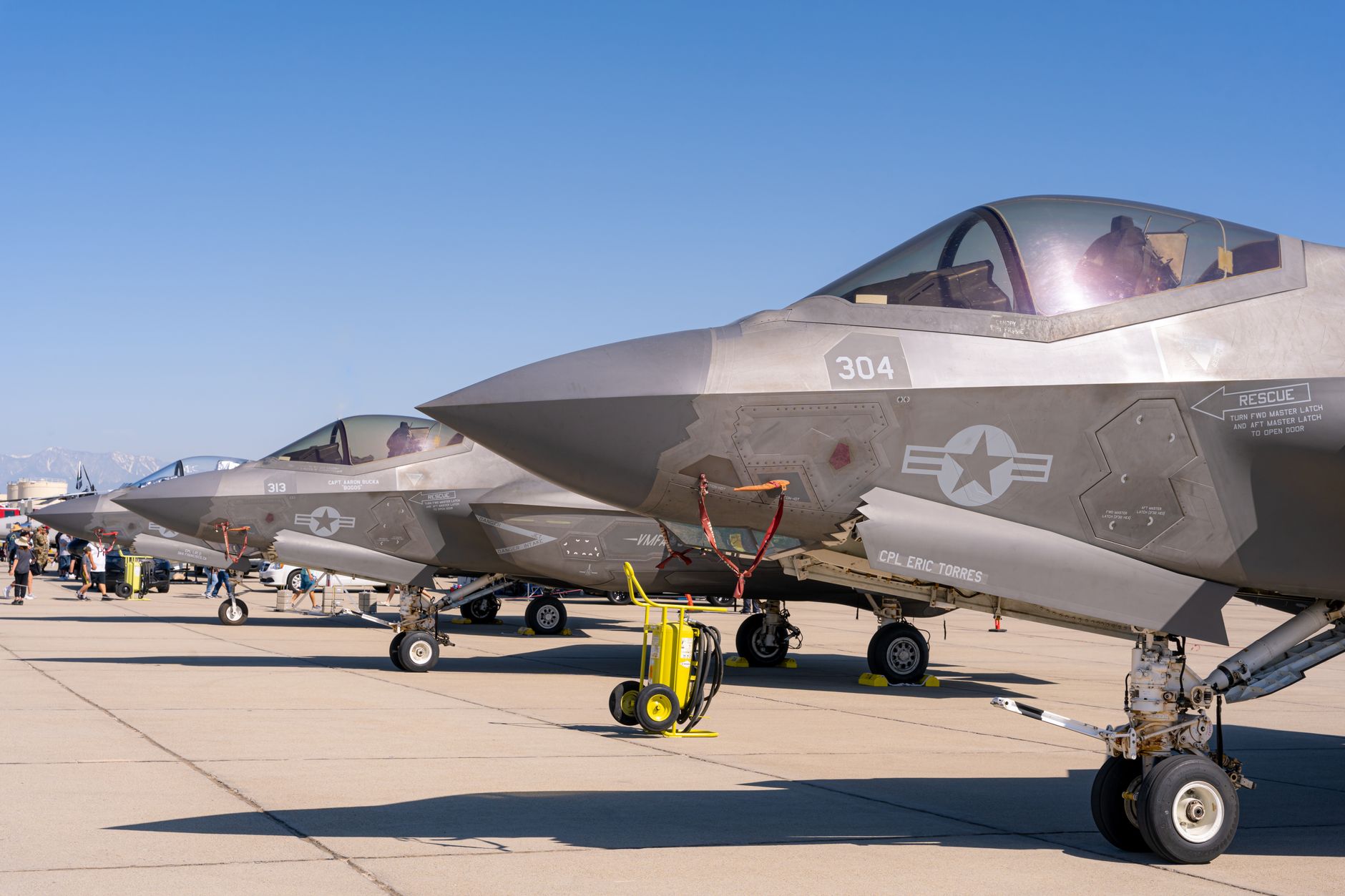
Rafael shared details through an official announcement on its verified social media account, describing the SPICE 1000 as being brought to the F-35 platform and highlighting the weapon’s standoff and precision-strike attributes.
What the SPICE 1000 Brings to the F-35
The SPICE — Smart, Precise Impact, Cost-Effective — 1000 is a guidance and propulsion kit that converts standard Mk-83 general-purpose bombs into autonomous, GPS- and electro-optical/infrared-guided glide weapons. According to The War Zone’s reporting, the system is capable of standoff ranges exceeding 100 kilometers and can engage targets without a datalink, using scene-matching algorithms to identify and strike aim points independently. Those autonomous terminal-guidance capabilities make it distinct from simpler GPS-only kits and allow employment in GPS-contested environments.
Fitting the SPICE 1000 to the F-35 is not straightforward. The stealth fighter’s internal weapons bays impose strict dimensional and weight constraints, and any externally carried munition affects the aircraft’s low-observable signature. The War Zone noted that it is not yet clear whether the integration envisions internal carriage — which would be dimensionally challenging for the 1,000-pound-class weapon — or external carriage on the jet’s wing hardpoints in a configuration that trades stealth for payload. Rafael has not publicly addressed that distinction.
Program Significance and Operational Context
Israel has operated SPICE-family weapons on F-16s and F-15s, and the munition has an extensive operational record. Qualifying it on the F-35 would give Israeli air planners a familiar, combat-proven precision weapon on their most capable and survivable strike platform. The Israeli Air Force designates its F-35 variant the Adir and has made modifications to the aircraft — with U.S. approval — to accommodate Israeli systems and mission requirements, a precedent that makes this kind of indigenous munition integration more feasible than it might be for other F-35 partner nations.
Broader demand also exists among the more than a dozen nations that operate the F-35. Expanding the type’s certified munitions catalog with allied or partner-nation weapons has been a recurring program challenge, given that the Joint Program Office controls the aircraft’s weapons qualification process. It remains unclear whether Rafael is pursuing qualification through the JPO’s formal process, working through a bilateral arrangement with the United States, or pursuing a configuration that does not require full JPO certification. None of those specifics have been confirmed by the company or by the Israeli defense establishment. What the announcement does establish is that the integration is an active program objective — one that, if realized, would add a long-range autonomous-terminal-guidance option to an airframe already valued for its ability to operate in defended airspace.