Report Links Alleged Western Intelligence Support to Kurdish Militias in Effort to Pressure Iran
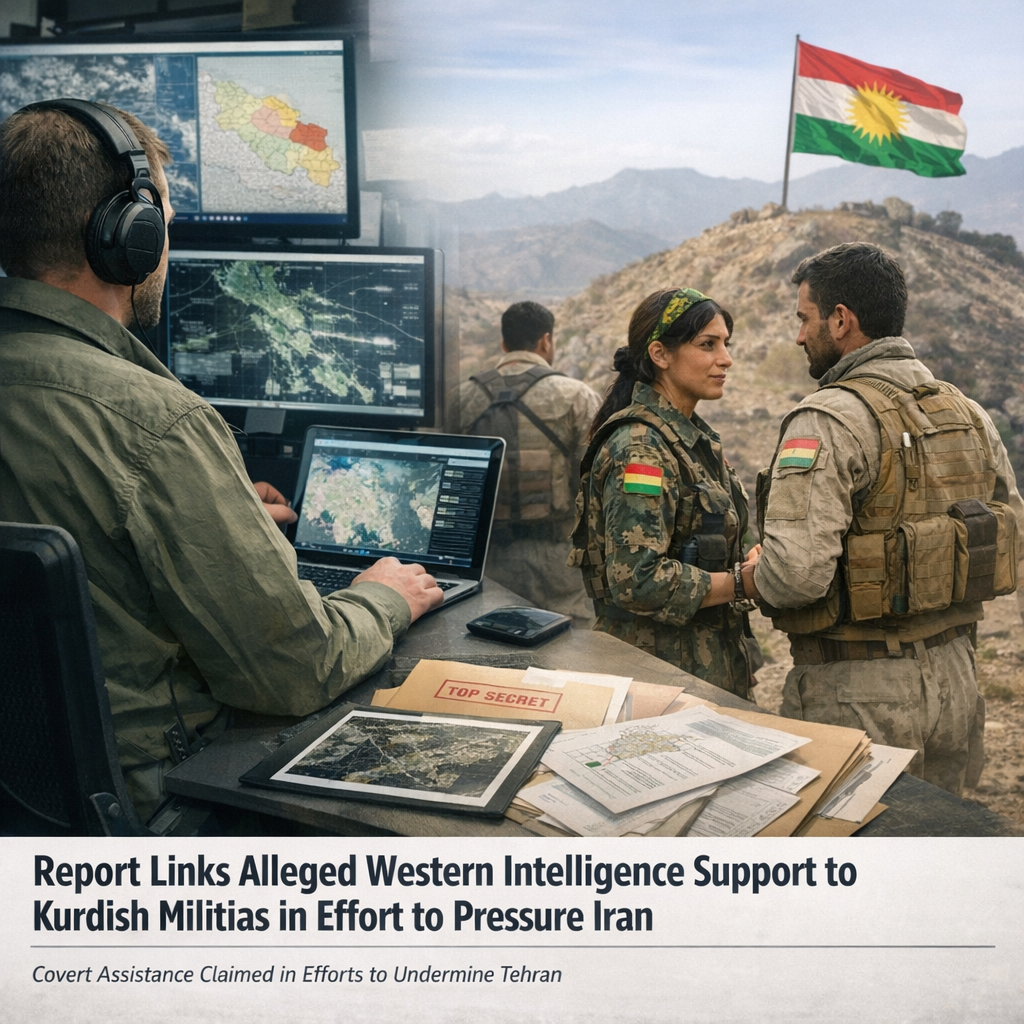
A report published by i24NEWS, titled “Mossad and CIA covert operation armed Kurdish militias to topple Iranian regime,” has drawn renewed attention to longstanding allegations of clandestine cooperation between Western and regional intelligence services aimed at destabilizing Iran (see original report: i24NEWS article).
According to the report, Israeli and American intelligence agencies—such as the Central Intelligence Agency (CIA) and Israel’s Mossad—have allegedly supported Kurdish militant groups operating along Iran’s northwest border, providing weapons and training as part of a broader effort to pressure the Islamic Republic. The claims, which remain unverified by official sources, suggest that the operation was intended to exploit ethnic and political fault lines within Iran by strengthening insurgent activity in predominantly Kurdish regions.
Kurdish armed groups in Iran, including factions opposed to Tehran’s central authority, have intermittently clashed with Iranian security forces for decades. These groups, some of which have bases across the border in Iraq’s semi-autonomous Kurdish region, have long accused Tehran of political repression and economic marginalization. Iranian authorities, in turn, have consistently characterized such movements as foreign-backed insurgencies aimed at undermining national sovereignty.
The i24NEWS report indicates that the alleged covert effort reflects a convergence of interests between Israel and the United States in countering Iran’s regional influence. Israel has historically viewed Iran as its most significant strategic threat, particularly in light of Tehran’s nuclear program and its support for proxy groups such as Hezbollah. While U.S. policy has fluctuated over time, Washington has maintained a complex stance that combines diplomatic engagement, economic sanctions, and, at times, covert pressure.
Neither the CIA nor Israel’s Mossad has publicly commented on the allegations. Both agencies have well-established policies of neither confirming nor denying specific intelligence operations. Analysts note that claims of this nature are difficult to independently verify, often relying on anonymous sources or secondary reporting.
Experts on Iran caution that while external support can amplify internal unrest, it rarely produces swift or decisive political change. Iran’s security apparatus remains extensive and deeply entrenched, and previous attempts to stoke internal dissent have yielded limited results. Nonetheless, persistent tensions in Iran’s border regions continue to present vulnerabilities that external actors may seek to exploit.
The report emerges at a time of heightened regional uncertainty, as Iran faces domestic economic challenges, intermittent protests, and ongoing friction with Western powers. Whether or not the specific claims outlined by i24NEWS are substantiated, they underscore the enduring shadow war surrounding Iran, in which intelligence operations, proxy actors, and regional rivalries intersect in ways that are often opaque and difficult to document.
As with many allegations involving covert activity, the full scope and accuracy of the reported operation may remain unclear. What is evident, however, is that Iran’s internal dynamics continue to be closely watched by external powers, and that its border regions remain a focal point in broader geopolitical competition.