Pentagon Locks In $24.4 Billion SM-6 Deal as Demand for Naval Interceptors Surges
Raytheon secures a $24.4 billion multi-year contract to produce SM-6 interceptors for the U.S. Navy and allied partners.

Raytheon has been awarded a $24.4 billion multi-year contract to produce Standard Missile-6 interceptors for the United States Navy and foreign military sales customers, according to Naval News, which first reported the award. The deal represents one of the largest single missile procurement contracts in recent U.S. defense history, reflecting both sustained operational demand and a broader effort to build depth in naval missile inventories at a time when stocks across the fleet have been stressed by ongoing conflicts and deterrence commitments.
The SM-6 is a versatile, long-range interceptor capable of engaging anti-ship cruise missiles, ballistic missile threats in their terminal phase, and surface targets, making it one of the most operationally relevant weapons in the Navy’s surface warfare inventory. Its dual-role capability — both as a defensive interceptor and as an offensive surface-strike weapon — has driven persistent demand from U.S. combatant commanders and allied navies alike. As GDD has previously reported on extended carrier deployments, the logistical pressure to sustain magazine depth across forward-deployed strike groups has become a recurring concern for naval planners.

Contract Structure and Industrial Scope
Naval News reported the contract is structured as a multi-year procurement arrangement, a vehicle the Pentagon uses to reduce per-unit costs by giving the contractor predictable production runs over several years. Multi-year contracts require Congress to certify that the arrangement will produce meaningful savings compared to annual buys, and awards of this scale typically reflect sustained requirements already validated through the programming and budgeting process. The precise number of missiles to be produced under the contract and the delivery schedule were not confirmed in the available reporting.
Raytheon, operating as part of RTX Corporation, manufactures the SM-6 at facilities that have faced capacity pressure alongside broader defense-industrial demands. The scale of this award signals the Pentagon’s intent to prioritize missile production rate as a strategic variable, not merely a procurement detail. Defense officials and independent analysts have repeatedly flagged that the U.S. defense industrial base has struggled to replenish precision munitions at rates commensurate with wartime consumption, and multi-year contracts structured at this value are one mechanism for incentivizing the capital investment needed to expand throughput.
Strategic Context and Allied Demand
The inclusion of foreign military sales in the contract’s scope underscores how broadly the SM-6 has been adopted among U.S. treaty allies. Several allied navies operating Aegis-compatible combat systems or other U.S.-supplied surface combatants have qualified or are pursuing the SM-6, drawn by its interoperability and the missile’s demonstrated performance envelope. Demand from partners in the Indo-Pacific and Europe has added volume to the production line while also raising diplomatic and allocation questions about how limited supply is prioritized across competing requirements.
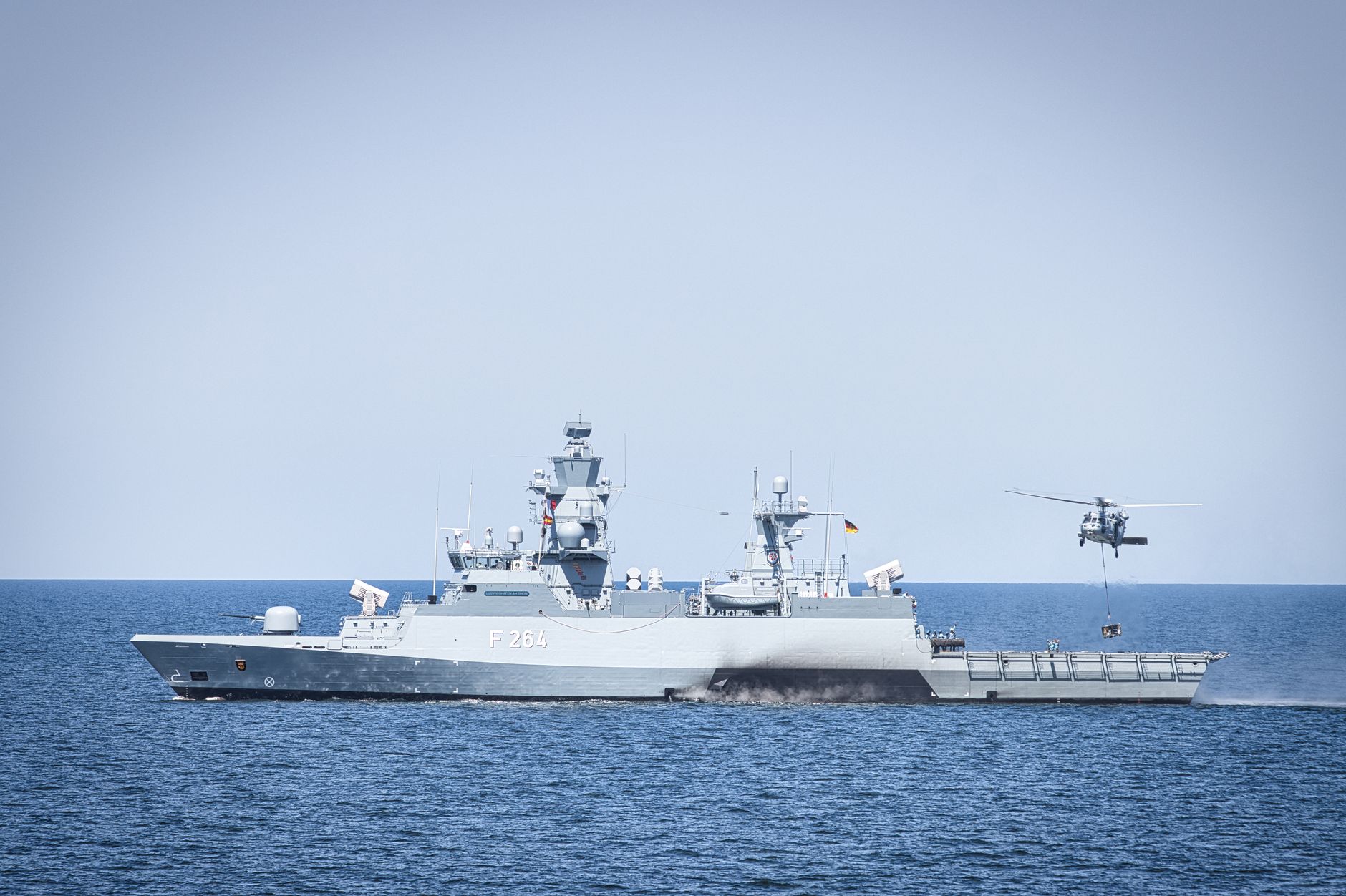
The contract arrives against a backdrop of intensifying great-power competition in which naval missile defense has moved from a supporting capability to a central strategic variable. Adversary investments in anti-ship ballistic missiles, hypersonic glide vehicles, and saturation cruise missile tactics have placed renewed emphasis on interceptor depth and reload capacity. The ability to sustain offensive and defensive fires across a prolonged high-intensity campaign — rather than a short, decisive engagement — has reshaped how the Navy thinks about procurement quantities. A $24.4 billion multi-year award for a single interceptor type reflects how seriously those requirements are now being resourced, a dynamic also visible in parallel investments in long-range radar infrastructure across allied defense establishments.