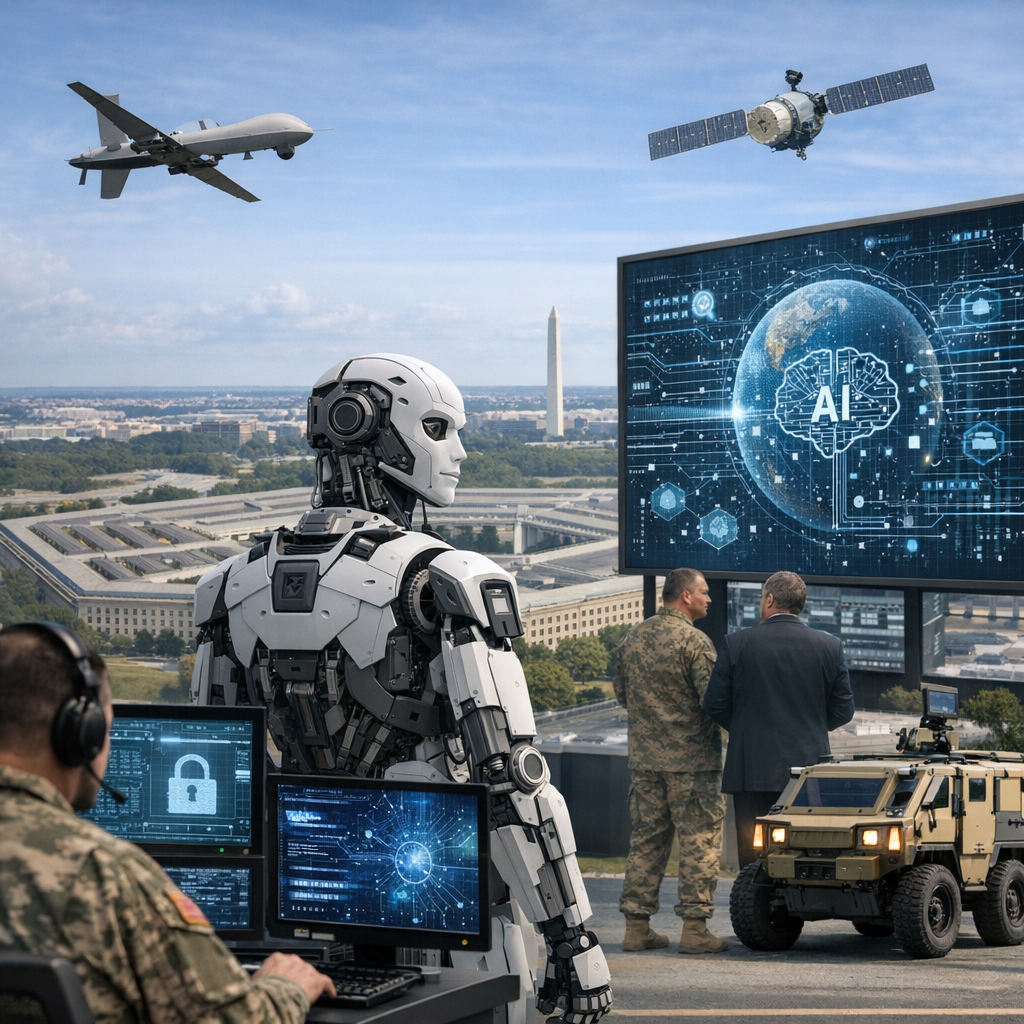
Pentagon Races to Integrate AI Cyber and Autonomous Systems Amid Rapid Defense Transformation
A recent article titled “Emerging Tech” published by DefenseScoop (original source) highlights the accelerating pace at which advanced technologies are reshaping the priorities and capabilities of the U.S. defense establishment, underscoring both the opportunities and risks associated with rapid innovation in a shifting global security environment.
The report emphasizes that artificial intelligence, autonomous systems, cyber capabilities and next-generation communications are no longer peripheral investments but central pillars of modern defense strategy. Defense officials, according to the article, are increasingly prioritizing these tools not only to maintain battlefield superiority but also to streamline logistics, intelligence gathering and decision-making processes across the military, aligning with broader initiatives such as the Department of Defense’s AI efforts.
A key theme running through the DefenseScoop piece is the Pentagon’s effort to bridge the gap between traditional procurement systems and the speed of private-sector innovation. Defense leaders have expressed concern that legacy acquisition pathways are ill-suited to keeping pace with emerging technologies that evolve on a timescale of months rather than years. As a result, new partnerships with startups, expanded use of pilot programs, and alternative contracting mechanisms—similar to those promoted by the Defense Innovation Unit—are becoming more common.
The article also notes that artificial intelligence remains at the forefront of defense planning, particularly in areas such as target recognition, predictive maintenance and operational planning. However, officials cited in the report acknowledge ongoing challenges related to data quality, integration across platforms and ethical considerations. Concerns about AI reliability and accountability continue to shape how quickly such systems can be deployed in critical missions.
Cybersecurity is another focal point. As defense systems grow more interconnected, vulnerabilities expand. The DefenseScoop article points to heightened efforts to harden networks against increasingly sophisticated state-backed threats, especially as geopolitical competition intensifies. Investments in zero-trust architecture—outlined by frameworks like NIST’s Zero Trust Architecture guidance—and real-time threat detection tools are described as essential components of this effort, alongside collaboration with agencies such as the Cybersecurity and Infrastructure Security Agency.
Autonomous systems, including unmanned aerial and maritime platforms, are likewise gaining prominence. The article suggests that these technologies are being viewed not merely as force multipliers but as potential game-changers in contested environments where human access is limited or too risky, a vision long explored through programs at the Defense Advanced Research Projects Agency (DARPA). At the same time, policymakers continue to grapple with rules of engagement and escalation risks associated with autonomous operations.
Another important element discussed in the DefenseScoop report is workforce readiness. The Pentagon faces ongoing challenges in recruiting and retaining talent with expertise in software engineering, data science and cyber operations. To address this, defense agencies are expanding training programs and seeking closer ties with academic institutions and private industry.
Ultimately, the article portrays a defense ecosystem in transition, balancing urgency with caution. While emerging technologies offer clear strategic advantages, their integration into military operations requires careful coordination, sustained investment and clear governance frameworks. As the DefenseScoop piece makes clear, the success of these efforts will play a decisive role in shaping the future of national security.