IDF Plans World Cup Broadcasts for Troops Deployed Along Lebanon Border to Boost Morale
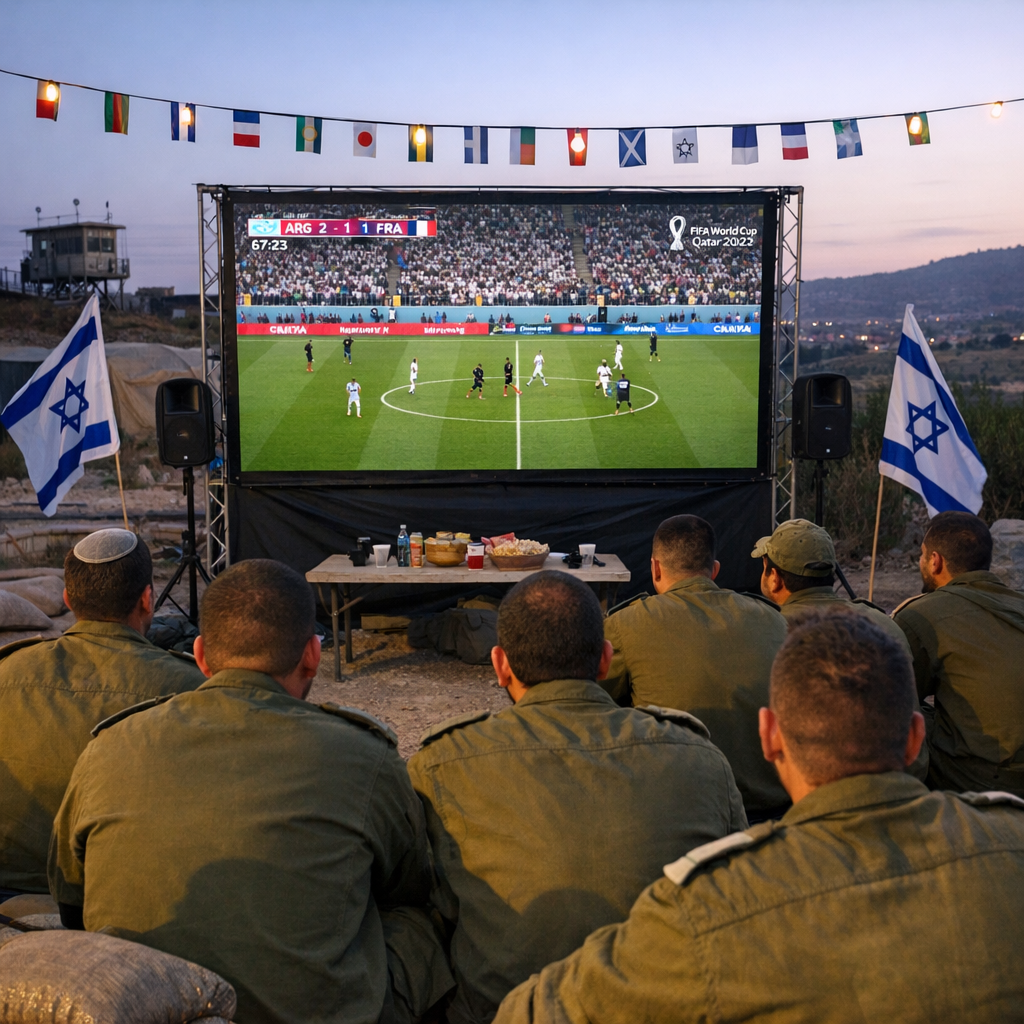
The Israeli military has announced plans to broadcast World Cup matches to soldiers stationed in southern Lebanon, according to a report by i24NEWS titled “IDF to broadcast World Cup games for soldiers based in Lebanon.” The initiative reflects an effort to maintain morale among troops deployed in a volatile region, where operational demands and prolonged deployments can impose significant psychological strain.
According to the i24NEWS report, the Israel Defense Forces will arrange for live screenings of matches to be accessible to units positioned along the Lebanese border and within operational zones beyond Israel’s internationally recognized boundary. Officials cited the importance of providing soldiers with moments of normalcy and connection to global events, particularly during a tournament that attracts widespread international attention such as the FIFA World Cup.
The move comes amid heightened tensions along Israel’s northern frontier, where intermittent exchanges of fire and concerns over escalation with Hezbollah have kept troops on extended readiness. In such conditions, commanders have increasingly emphasized welfare initiatives alongside operational preparedness, recognizing their role in sustaining cohesion and resilience within the ranks.
Military representatives indicated that logistical arrangements are being adapted to the constraints of forward positions, including the use of portable broadcasting equipment and secure viewing areas that do not compromise operational security. While the screenings are not expected to interrupt military duties, commanders have been encouraged to allow personnel to view matches where feasible.
The World Cup, one of the most widely followed sporting events globally, has historically served as a unifying spectacle even in conflict zones. Analysts note that access to such events can help mitigate isolation and reinforce a sense of continuity with civilian life, particularly for conscripts and reservists serving far from home. Similar observations have been noted in research on military mental health and morale.
The IDF has previously implemented similar initiatives during major international tournaments, though the current context adds a layer of urgency given the intensity of the northern deployment, where UNIFIL operations also monitor tensions. By facilitating access to the games, military leadership appears to be balancing the demands of operational vigilance with efforts to sustain morale during a period of prolonged regional uncertainty.
Neither Israeli military officials nor government representatives suggested that the initiative would signal any easing of tensions along the border. Instead, it underscores the parallel tracks of maintaining combat readiness while attending to the well-being of personnel tasked with carrying out those duties under challenging conditions.