Italy Uncovers Russian Spy Network Targeting Ukraine Air Defense Weaknesses
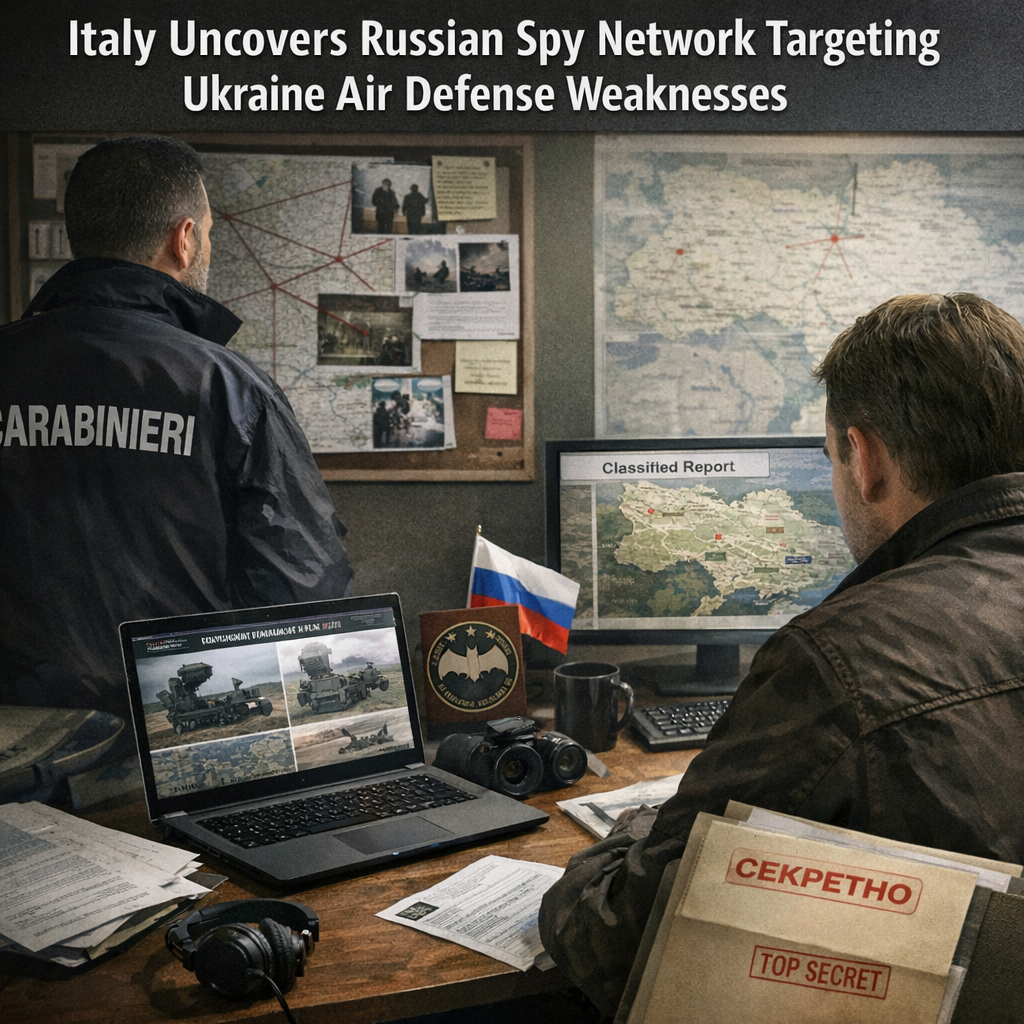
Italian authorities have dismantled what investigators describe as a covert Russian espionage network tasked with gathering sensitive intelligence on vulnerabilities in Ukraine’s air defense systems, according to reporting by Defense News in its article “Italy busts Russian spy ring collecting data on Ukrainian air defense vulnerabilities.”
The operation, carried out by Italy’s domestic intelligence and law enforcement agencies, resulted in multiple arrests and the seizure of materials believed to be linked to efforts to map critical weaknesses in Ukraine’s defensive infrastructure. Officials indicated that the network operated across several European countries, using intermediaries and dual-use commercial channels to obscure its activities.
Prosecutors allege that the group focused on obtaining technical and operational data that could inform Russian military planning, particularly regarding Western-supplied air defense platforms supporting Ukraine. Since the start of Russia’s full-scale invasion in 2022, Ukraine’s layered air defense systems have played a central role in limiting damage from missile and drone attacks, making them a priority target for intelligence collection.
Investigators said the suspects used a combination of encrypted communications, shell companies, and academic or business cover to acquire sensitive information. Some individuals reportedly posed as researchers or consultants to access industry contacts and technical documentation. Others are believed to have handled logistics and transmission of data back to Russian handlers.
Italian officials have not disclosed the full scope of the compromised information but stressed that the network’s objective was strategic rather than opportunistic. The intelligence effort appears to have been aligned with broader Russian attempts to identify pressure points in Western military support to Ukraine, including supply chains, training programs, and system interoperability, particularly among NATO member states.
The case highlights the increasingly transnational character of espionage linked to the war in Ukraine. European security services have repeatedly warned that Russian intelligence agencies are adapting their methods in response to heightened scrutiny, relying more heavily on decentralized networks, non-official cover operatives, and civilians with access to specialized knowledge, a trend also noted by Europol.
According to Defense News, the investigation also underscores Italy’s growing role in counterintelligence efforts tied to the conflict. As a NATO member that hosts key military infrastructure and defense industries, Italy has become a relevant theater for intelligence competition. Authorities in Rome have strengthened coordination with partners across Europe to track and disrupt suspected espionage activities, including through mechanisms supported by the European Union’s coordinated response to Russia.
The arrests come amid a broader pattern of European crackdowns on alleged Russian spy networks. Over the past two years, several countries have expelled diplomats, prosecuted clandestine operatives, and tightened controls over sensitive technologies. Analysts say these efforts reflect mounting concern that intelligence gathered within Europe could directly influence battlefield dynamics in Ukraine and affect systems such as the Patriot air defense platform.
While officials declined to comment in detail on the ongoing judicial proceedings, they emphasized that the operation represents a significant disruption to Russian intelligence-gathering efforts. Further arrests have not been ruled out, and authorities are continuing to analyze seized materials for links to other networks.
The case serves as a reminder that the conflict between Russia and Ukraine extends well beyond the front lines, encompassing a shadow contest for information and technological advantage across the European continent.