Iran Targets US Airpower Through Logistics Strikes
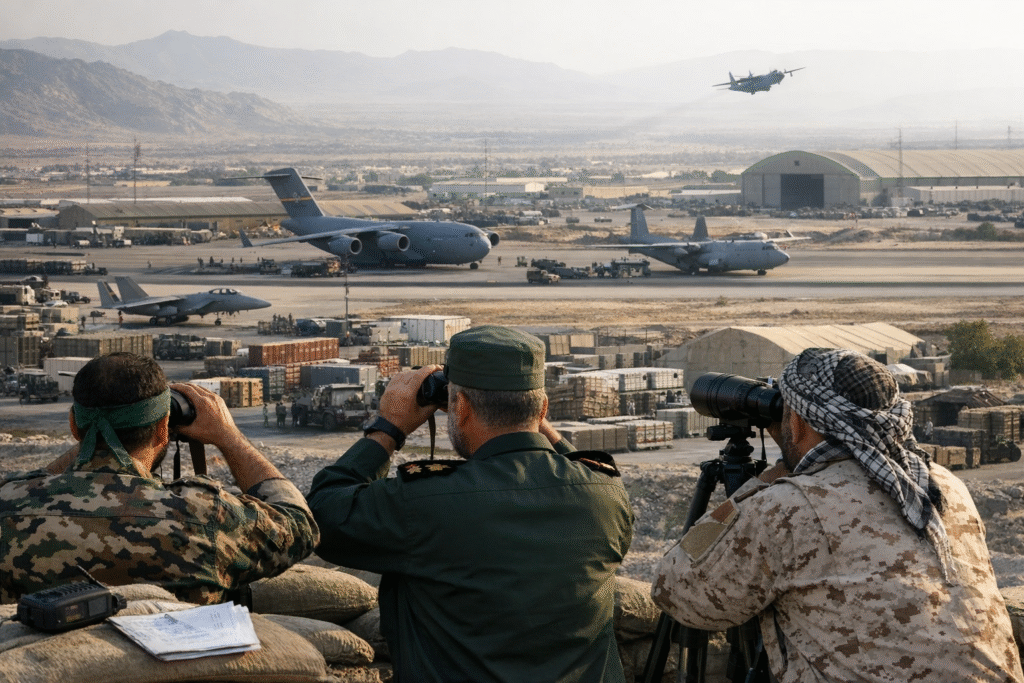
A recent report by Defense News, titled “Iranian strikes target the infrastructure behind US airpower,” highlights a notable shift in Tehran’s military calculus: a growing focus on the logistical backbone that sustains American air operations in the Middle East.
According to the report, rather than concentrating solely on direct attacks against U.S. aircraft or frontline bases, Iranian-linked forces have increasingly targeted support infrastructure, including airfields, fuel depots, maintenance hubs, and transportation nodes. Analysts cited in the article suggest this approach reflects a strategy designed to disrupt sortie generation and operational tempo without provoking the full-scale retaliation that might follow direct, high-casualty attacks on U.S. personnel.
The Defense News article situates this trend within a broader pattern of asymmetric warfare favored by Iran and its regional partners. By striking enabling systems—such as runways, storage facilities, and logistical corridors—these forces aim to degrade U.S. capabilities indirectly. Such tactics can impose operational friction, increase costs, and complicate planning, even when physical damage appears limited.
Military experts referenced in the report note that modern airpower relies heavily on an extensive and often vulnerable support network. Fuel supply chains, precision maintenance facilities, and prepositioned equipment are essential to sustaining high sortie rates. Disruptions to any of these components can have outsized effects, particularly in geographically dispersed theaters like the Middle East.
The article also underscores the growing role of relatively inexpensive weapons systems—such as drones and precision-guided rockets—in carrying out these strikes. These tools allow Iran and aligned groups to threaten critical infrastructure with plausible deniability and at a fraction of the cost of conventional air campaigns. The accessibility and scalability of such systems make them particularly suited to ongoing, low-intensity confrontation.
U.S. military planners, according to Defense News, are increasingly focused on hardening installations and diversifying basing arrangements in response. Efforts include improving air defense coverage, dispersing aircraft, and investing in rapid repair capabilities for runways and other key assets. There is also a renewed emphasis on redundancy within supply chains to mitigate the impact of targeted disruptions.
The report suggests that this evolving dynamic may signal a longer-term contest over resilience rather than outright dominance. As adversaries seek to exploit vulnerabilities in the infrastructure underpinning U.S. airpower, the effectiveness of American operations may depend as much on logistical adaptability as on technological superiority.
In this context, the targeting of support systems represents not just a tactical adjustment but a strategic message. By focusing on the foundations of U.S. military presence in the region, Iran appears intent on demonstrating that even the most advanced air forces remain dependent on a complex and attackable network—one that is increasingly at the center of modern conflict.