Iran Seeks Economic Relief Without Trump Win
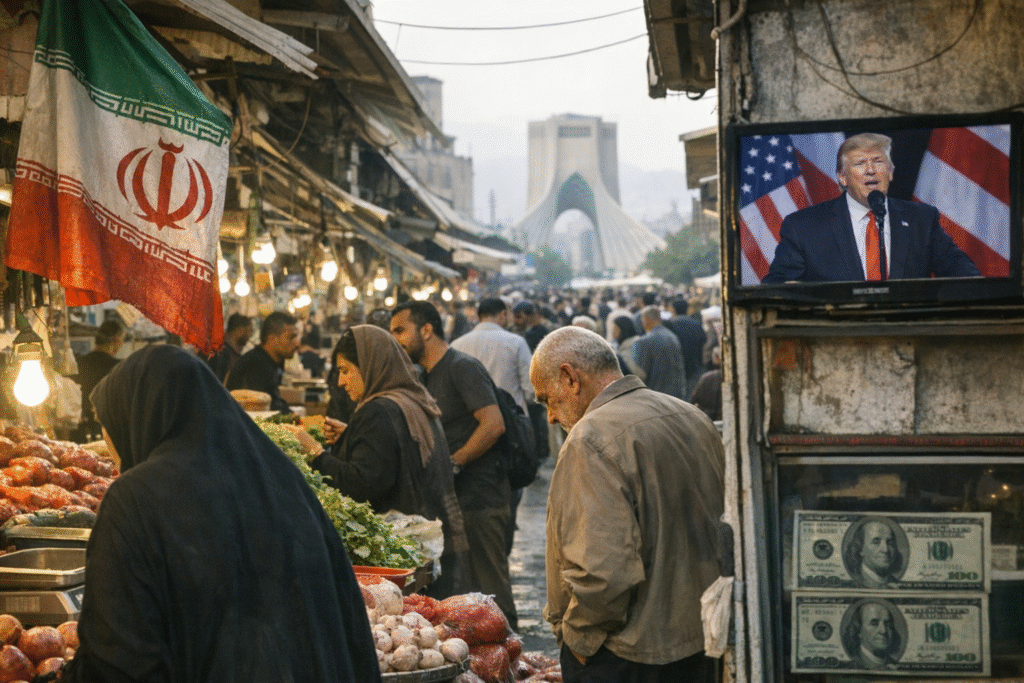
Iran is seeking a path to economic relief while carefully avoiding any outcome that could be framed as a political victory for former U.S. President Donald Trump, according to a report by The Wall Street Journal titled “Iran Pursues Deal That Brings Economic Relief Without Handing Trump Victory.” The article, published by the WSJ, outlines Tehran’s efforts to balance urgent domestic economic pressures with deep রাজনৈতিক sensitivities surrounding its relationship with Washington.
Facing persistent inflation, currency instability, and the lingering effects of international sanctions, Iran’s leadership appears increasingly motivated to secure limited economic concessions. These could include access to frozen assets or eased enforcement of certain sanctions, steps that would offer short-term financial breathing room without requiring a comprehensive renegotiation of the nuclear deal framework.
However, Iranian officials remain wary of entering into any agreement that could be portrayed domestically or internationally as conceding to Trump-era policies. Although Trump is no longer in office, the legacy of his administration’s “maximum pressure” campaign continues to shape Iran’s calculations. Any perceived validation of that approach risks political backlash within Iran’s leadership circles, where skepticism of U.S. intentions remains deeply entrenched.
The WSJ report suggests that indirect talks and backchannel diplomacy have become the preferred mechanisms for advancing these objectives. Rather than pursuing a sweeping, formal agreement akin to the 2015 nuclear deal, both sides have shown interest in incremental arrangements that could deliver mutual, if limited, benefits. For Washington, this may mean curbing aspects of Iran’s nuclear activities or regional behavior; for Tehran, it centers on tangible economic relief without symbolic concessions.
Complicating the situation is the broader geopolitical environment. Regional tensions, shifting alliances, and domestic political considerations in both Iran and the United States constrain the space for negotiation. U.S. policymakers must weigh any engagement with Iran against political pressures at home, particularly in an election-sensitive climate, while Iranian leaders remain focused on preserving internal legitimacy amid economic discontent.
The result, as described in The Wall Street Journal’s reporting, is a cautious diplomatic dance in which both parties explore pragmatic compromises while carefully managing optics. Iran’s strategy underscores a central dilemma: securing economic stability without appearing to yield to a policy framework it has long denounced.
This delicate balancing act reflects a broader trend in U.S.-Iran relations, where formal agreements have become more elusive, and incrementalism has emerged as the more viable, if less decisive, path forward.