Can War With Iran Align With Lower Costs at Home
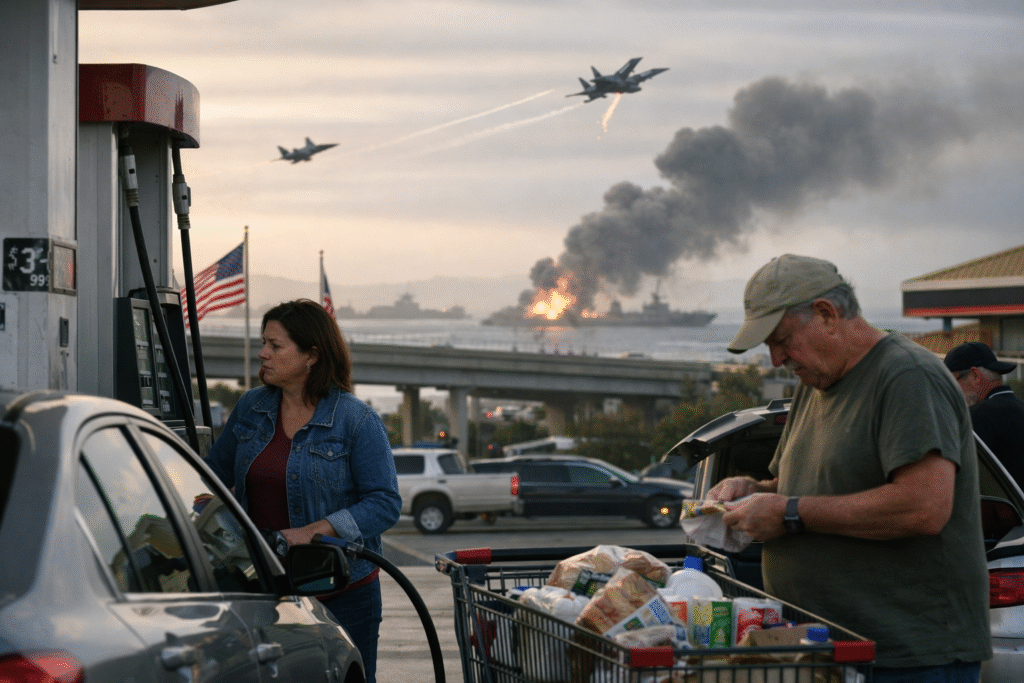
An opinion piece published by the Daily Wire argues that U.S. military action against Iran could coexist with domestic economic relief, contending that the two objectives are not mutually exclusive. The article, titled “Yes, Trump Can Fight Iran And Save American Families Money At The Same Time,” frames foreign policy and household financial stability as compatible priorities under a particular set of political and economic assumptions.
The argument rests on the premise that assertive foreign policy, including potential confrontation with Iran, can be structured in a way that does not impose additional long-term burdens on American taxpayers. The piece suggests that energy policy plays a central role in this equation, asserting that increased domestic oil and gas production could offset global oil price shocks typically associated with Middle East instability. By expanding domestic supply, the article claims, the United States could cushion consumers from price spikes at the pump, a key concern during periods of geopolitical tension.
The commentary also emphasizes the potential for strategic deterrence. It posits that a firm stance against Iran could reduce the likelihood of prolonged conflict, thereby limiting sustained military expenditures. In this view, decisive action early on would avoid drawn-out engagements that historically have proven costly both financially and politically.
Critics of this perspective, however, have long argued that military conflict in the region carries unpredictable economic consequences. Oil markets, highly sensitive to geopolitical risk, can react sharply even to limited escalations. While domestic production may mitigate some effects, global pricing mechanisms mean that U.S. consumers are not fully insulated from international disruptions. Additionally, past conflicts have demonstrated that initial projections of cost containment often underestimate the longer-term financial and human commitments involved.
The article also ties its argument to broader fiscal policy goals, contending that regulatory changes and energy independence could work in tandem with military strategy to provide economic relief. This approach reflects a broader policy debate about the relationship between national security and economic stability, particularly in an interconnected global economy.
Ultimately, the Daily Wire piece presents a case that blends foreign policy assertiveness with economic optimism. Whether these dual objectives can be realized simultaneously depends on a complex set of variables, including market responses, diplomatic developments, and the scope and duration of any potential conflict. The proposition underscores an enduring challenge for policymakers: balancing immediate security concerns with the long-term economic well-being of American households.