Autonomous Combat Aircraft in 2030 May Evolve Beyond the Loyal Wingman Model
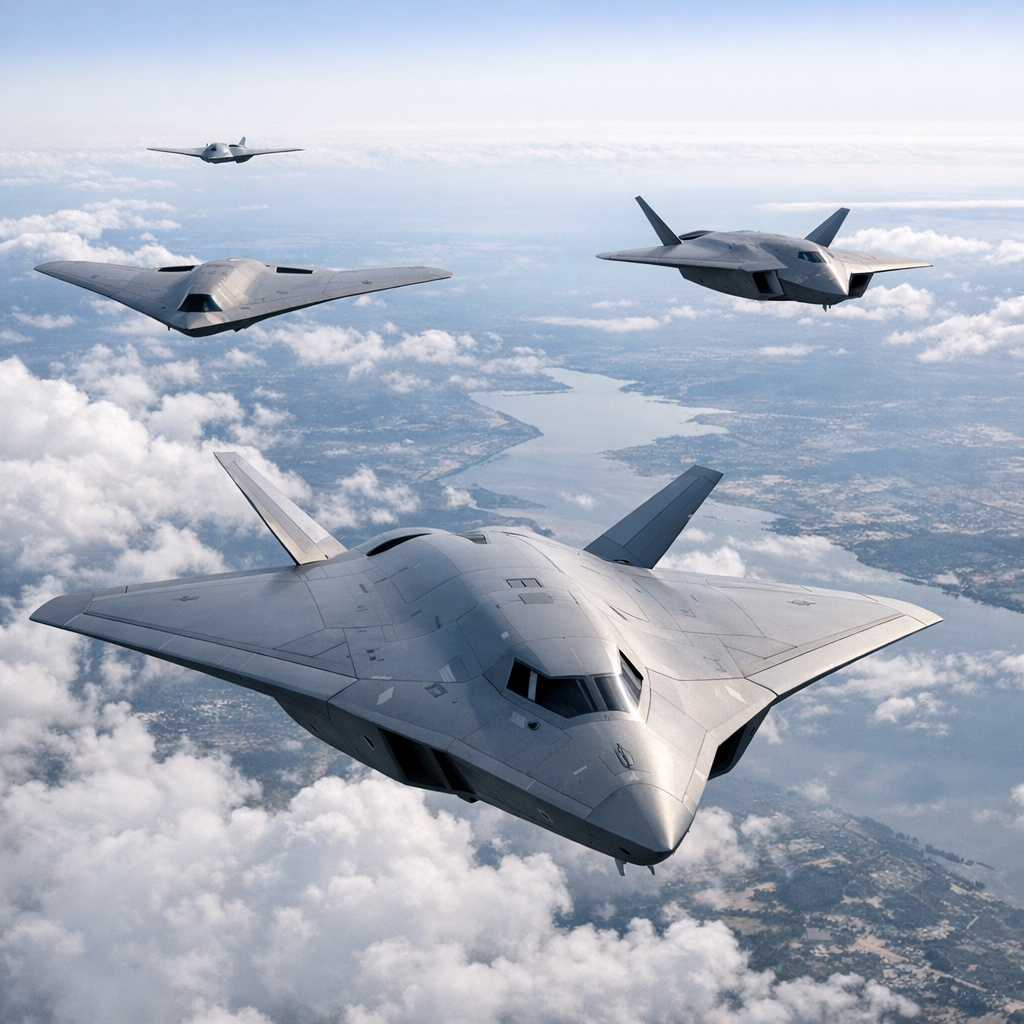
The future of autonomous combat aircraft may diverge sharply from current expectations, according to a recent report by Breaking Defense titled “The autonomous CCA ‘wingmen’ of 2030 may look nothing like today’s assumptions.” The article challenges prevailing narratives around Collaborative Combat Aircraft (CCA), suggesting that the systems envisioned for the end of this decade could be far more varied, adaptable, and mission-specific than the relatively uniform concepts now dominating public discussion.
CCA programs, particularly in the United States, have often been described in terms of loyal wingmen—semi-autonomous drones operating alongside piloted fighters such as the F-35 or next-generation air dominance platforms. These aircraft are typically portrayed as low-cost, attritable systems designed to extend sensor reach, carry additional weapons, or absorb risk in contested environments. However, as Breaking Defense reports, defense planners and industry leaders are increasingly questioning whether this simplified model adequately captures the complexity of future air combat needs.
Instead of a single, standardized type of drone companion, emerging thinking points toward a diverse ecosystem of autonomous and semi-autonomous systems, each optimized for different roles. Some may be relatively expendable and mass-produced, while others could be more sophisticated, reusable platforms with specialized capabilities in electronic warfare, intelligence gathering, or precision strike. The result could be a layered force structure rather than a one-size-fits-all fleet of robotic wingmen.
One key driver of this shift is the evolving nature of threats. Adversaries are rapidly advancing their own air defense networks, electronic warfare capabilities, and counter-drone systems, which complicates assumptions about survivability and cost-effectiveness. As noted in the Breaking Defense report, planners are recognizing that designing CCAs solely as cheap attritable assets may be insufficient if those systems cannot reliably penetrate or operate in highly contested environments. This realization is pushing developers to consider a broader spectrum of capabilities, including stealth, autonomy, and resilience, similar to trends highlighted in RAND research on autonomous military systems.
Another factor is the pace of technological change, particularly in artificial intelligence and autonomy. Improvements in onboard processing, sensor fusion, and decision-making algorithms are enabling more independent operations, potentially reducing reliance on constant human control. This opens the door to aircraft that can perform complex missions with limited communication links, a critical advantage in environments where adversaries may disrupt or jam networks. Programs such as DARPA’s Air Combat Evolution (ACE) initiative demonstrate how AI-driven autonomy is already being tested in realistic combat scenarios.
At the same time, the concept of manned-unmanned teaming itself is evolving. While early visions focused on one-to-one or one-to-few relationships between a piloted aircraft and its drone escorts, future approaches may involve networked groups of autonomous systems operating more collaboratively and less tethered to a single human operator. This could blur the distinction between “wingmen” and independent assets, further complicating the traditional framing of CCA programs, as explored in U.S. Air Force discussions of Collaborative Combat Aircraft concepts.
Industrial considerations also play a role. Defense manufacturers are exploring modular designs and open architectures that would allow rapid upgrades and mission reconfiguration. This flexibility could enable the same baseline platform to serve multiple functions depending on payloads and software, reinforcing the move away from rigid categorization. As Breaking Defense highlights, such adaptability may prove essential in managing costs while keeping pace with changing operational demands, a theme echoed in industry efforts like Boeing’s MQ-28 Ghost Bat program.
Despite this conceptual evolution, significant uncertainties remain. Questions persist about how many different types of CCAs militaries can realistically sustain, how they will be integrated into existing command structures, and how autonomous decision-making will be governed in high-stakes combat scenarios. Budget constraints and acquisition timelines will also shape what ultimately emerges from today’s design studies and prototypes.
The central takeaway from the Breaking Defense article is that the commonly cited image of a small, expendable drone faithfully shadowing a fighter jet may be too narrow to capture the trajectory of CCA development. By 2030, autonomous air systems could encompass a far broader and more complex set of capabilities than current assumptions suggest, reflecting both technological opportunity and the demanding realities of future warfare.