NATO 2026 Summit Signals Shift Toward Long Term Defense, Industrial Capacity, and Strategic Adaptation
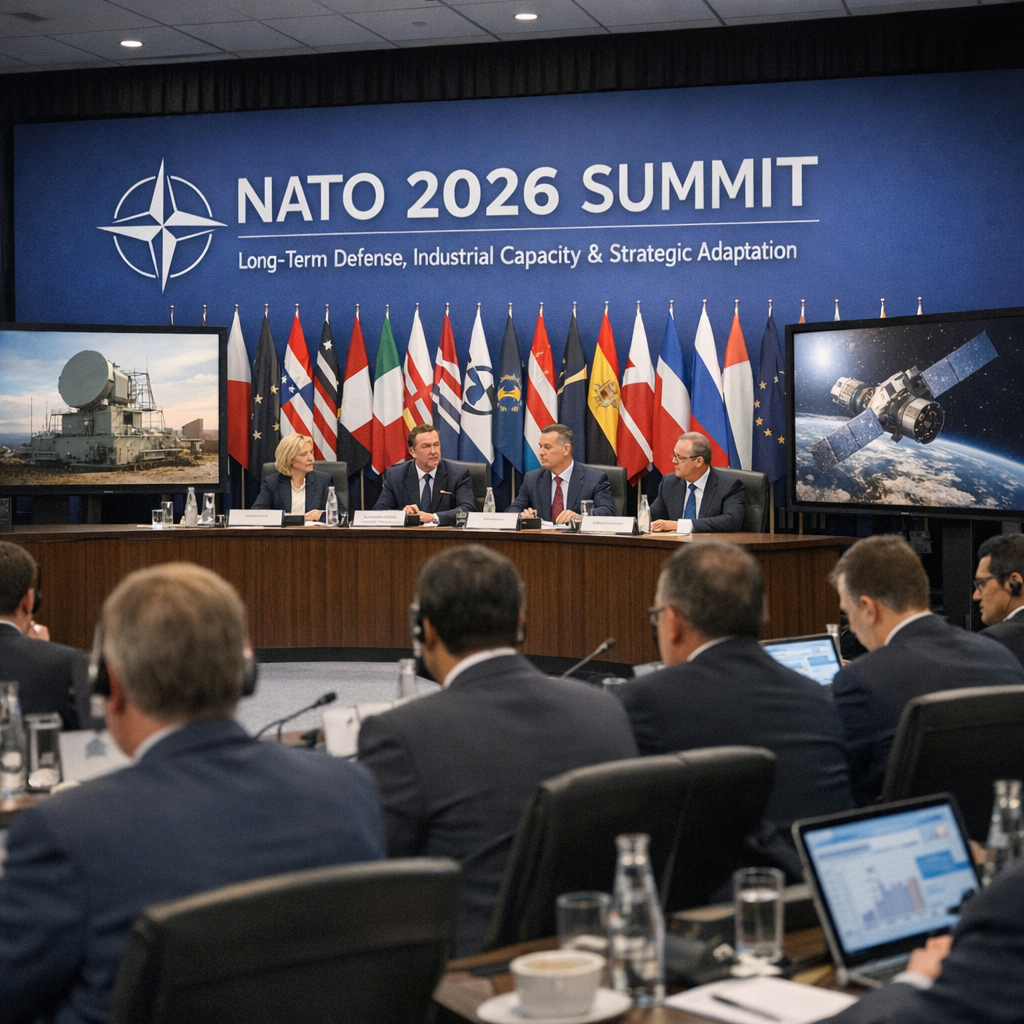
A newly published analysis by Breaking Defense, titled “Six take-aways from the 2026 NATO Summit,” underscores a pivotal moment for the transatlantic alliance as it confronts an increasingly complex security environment shaped by ongoing war in Europe, rising tensions with China, and evolving technological threats.
The summit, as described in the Breaking Defense report, reflects a shift from reactive crisis management toward longer-term strategic consolidation. One of the most prominent themes is NATO’s continued prioritization of collective defense, particularly along its eastern flank. Allies reiterated commitments to sustained military support for Ukraine, framing the conflict not as a regional issue but as a defining test of the alliance’s credibility and deterrence posture. Rather than signaling fatigue, the summit suggests a normalization of long-term assistance frameworks, including expanded training programs and NATO-Ukraine cooperation.
Breaking Defense also highlights a growing emphasis on defense spending and industrial capacity. While past summits have often struggled to translate spending pledges into measurable outcomes, this year’s discussions emphasized production scale and supply chain resilience. Member states appear increasingly aligned on the need to move from symbolic budget targets toward tangible outputs such as munitions stockpiles, interoperable systems, and faster procurement cycles. This reflects lessons learned from Ukraine, where sustained high-intensity warfare has underscored the limits of current Western defense industrial capacity, including challenges outlined in NATO’s defense industry framework and the alliance’s defence spending benchmarks.
Another key takeaway centers on NATO’s evolving approach to China. While the alliance remains cautious not to redefine itself as an Indo-Pacific actor, the Breaking Defense analysis notes a clearer acknowledgment of China as a systemic challenge. This includes concerns over technological competition, cyber capabilities, and Beijing’s growing alignment with Moscow, as outlined in NATO’s approach to China. The summit stopped short of adopting a confrontational posture, but it reinforced the idea that Euro-Atlantic security cannot be fully separated from global dynamics.
Technology and innovation also featured prominently, with NATO leaders emphasizing the integration of emerging technologies such as artificial intelligence, autonomous systems, and cyber defense tools into operational planning. The Breaking Defense article points to a growing recognition that technological superiority will be as determinative as troop numbers in future conflicts. This has led to renewed focus on public-private partnerships and cross-border collaboration within initiatives like NATO’s DIANA innovation accelerator.
At the same time, internal cohesion remains a recurring concern. While leaders publicly emphasized unity, underlying political differences persist, particularly regarding burden-sharing and strategic priorities. The summit attempted to navigate these tensions by reinforcing NATO’s core principle of collective defense while allowing for flexible contributions from member states with varying capabilities and domestic constraints. More broadly, these dynamics reflect the ongoing evolution of the alliance as documented by NATO itself.
Finally, the Breaking Defense piece notes a broader strategic recalibration within NATO, moving the alliance toward a posture that blends deterrence, resilience, and sustained engagement. Rather than preparing for a single, defined threat, NATO is increasingly positioning itself to address a spectrum of challenges, from conventional military aggression to hybrid warfare and economic coercion.
Taken together, the six takeaways outlined by Breaking Defense depict an alliance that is adapting—sometimes unevenly—to a more demanding security landscape. While questions remain about execution and political will, the 2026 NATO Summit appears to mark a continued shift toward long-term preparedness rather than short-term reassurance.