NATO Expands Strategic Cooperation with Gulf States Through New Security Initiatives
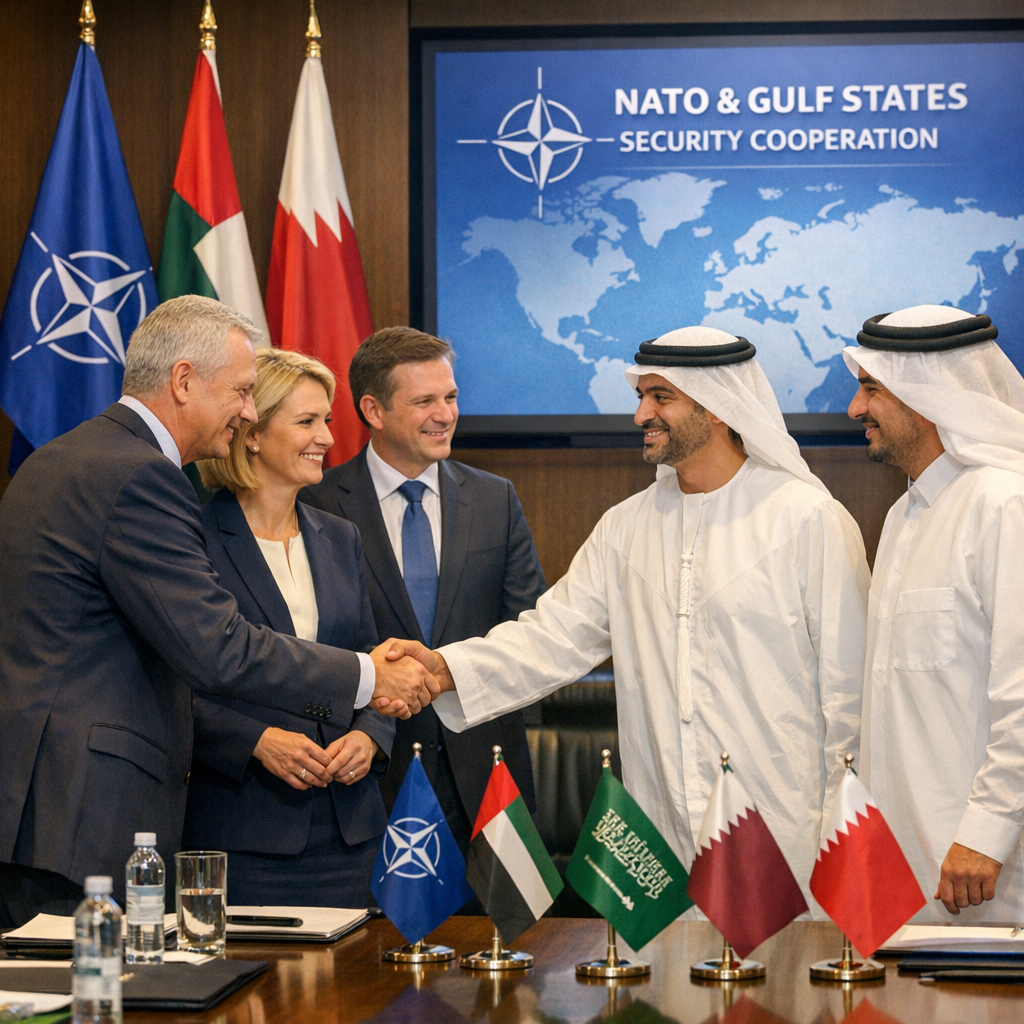
NATO has announced a new phase of engagement with Gulf partners, signalling a broader strategic effort to deepen ties with countries in a region that remains central to global security and energy stability. The initiative, outlined in the NATO website article titled “NATO deepens security cooperation with Gulf countries through the launch of flagship projects,” reflects the alliance’s intent to move beyond dialogue toward more structured, operational collaboration.
According to the report published on NATO’s official website, the alliance is introducing a set of “flagship projects” designed to strengthen practical cooperation with members of the Gulf Cooperation Council (GCC). These projects are expected to focus on areas such as maritime security, cyber defence, counter-terrorism, and the protection of critical infrastructure—domains NATO increasingly identifies as interconnected and transnational in nature.
The move builds on NATO’s long-standing Istanbul Cooperation Initiative, launched in 2004 to foster partnerships with countries in the broader Middle East. While that framework has supported political consultations and limited joint activities, the latest step indicates an evolution toward more tangible and sustained collaboration. Officials describe the flagship projects as both scalable and demand-driven, suggesting they will be tailored to the specific security priorities of participating Gulf states.
NATO leadership has framed the expansion as a response to a rapidly shifting security landscape. Instability in nearby regions, persistent threats from extremist networks, and the growing sophistication of cyber attacks have underscored the need for closer coordination between Euro-Atlantic and Gulf partners. Maritime security, in particular, has taken on renewed importance given the strategic significance of shipping routes in and around the Gulf, through which a substantial share of global energy supplies transit, especially via chokepoints like the Strait of Hormuz.
At the same time, the initiative reflects a broader recalibration of NATO’s partnerships beyond its traditional geographic focus. While the alliance continues to prioritize collective defence in Europe, its leadership has increasingly emphasized the importance of projecting stability through partnerships, particularly in regions where security challenges can have global spillover effects, including domains like cyber defence.
Gulf countries have, for their part, shown interest in diversifying their security relationships amid evolving geopolitical dynamics. Cooperation with NATO offers access to technical expertise, training, and interoperability frameworks that can complement existing bilateral arrangements with individual member states.
The flagship projects are expected to include training programs, joint exercises, and advisory support, with an emphasis on building local capacity rather than establishing a permanent NATO presence in the region. NATO officials have stressed that participation will remain voluntary and based on mutual agreement, reinforcing the initiative’s cooperative rather than prescriptive character, particularly in areas like maritime security.
The development also carries political implications, as it signals NATO’s intent to maintain relevance in regions where other global powers, including China and Russia, have sought to expand their influence. By strengthening ties with Gulf partners, the alliance positions itself as a collaborative security actor capable of addressing both traditional and emerging threats in a multipolar environment.
While the scope and impact of the flagship projects will depend on implementation and sustained commitment from both sides, the initiative marks a notable step in NATO’s effort to adapt its partnership model. As the NATO website article makes clear, the alliance is seeking to translate long-standing relationships into more concrete forms of cooperation, reflecting a strategic shift toward greater engagement outside its core Euro-Atlantic area.