Israel Signals Indefinite Military Presence in Southern Lebanon Amid Push to Disarm Hezbollah
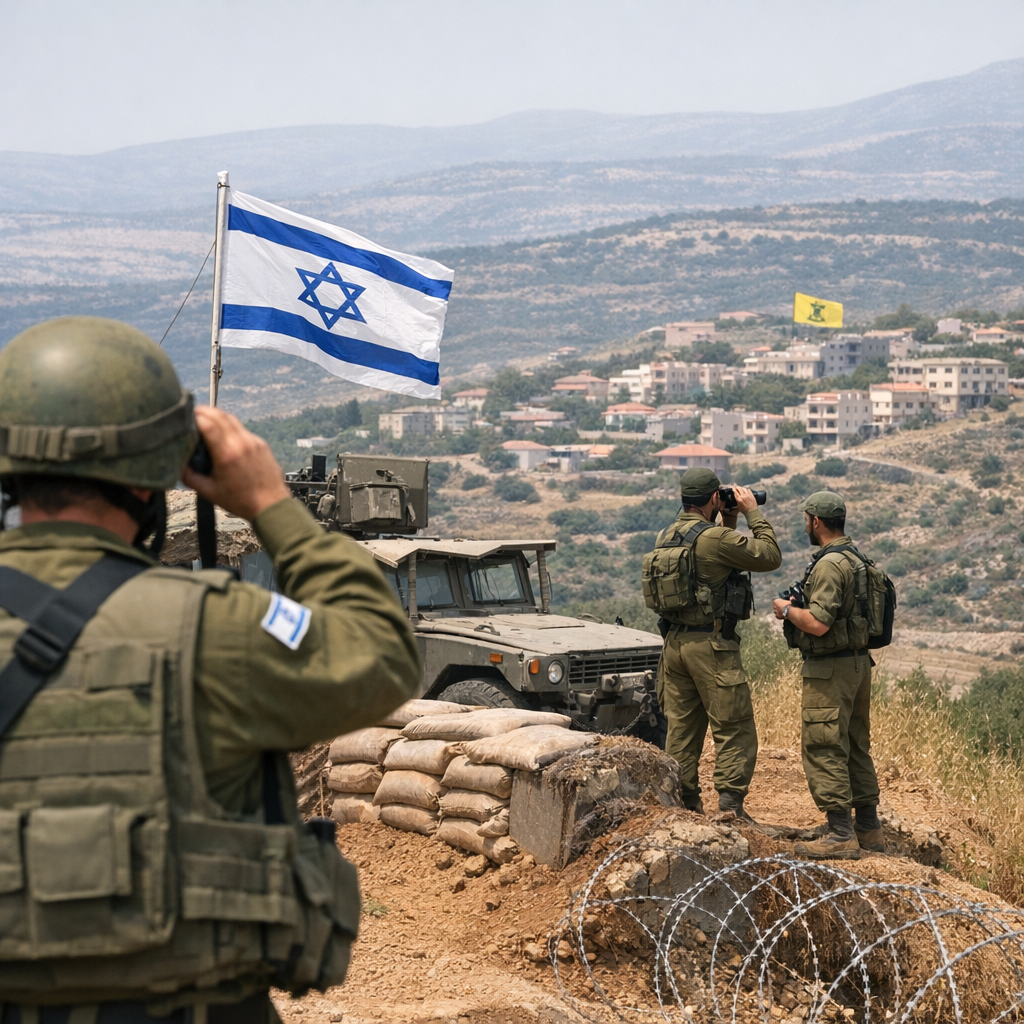
Israel’s defense leadership has signaled its intention to maintain a military presence inside southern Lebanon until Hezbollah is disarmed, underscoring a hardening stance that risks prolonging tensions along the volatile northern border.
According to the i24NEWS report titled “Katz: Israel will remain in Lebanon security zone until Hezbollah is disarmed,” Defense Minister Israel Katz stated that Israeli forces would continue operating within a so-called security zone in southern Lebanon for the foreseeable future. The remarks reflect Israel’s growing emphasis on preventing Hezbollah from reestablishing a robust military infrastructure near its border, following months of cross-border hostilities that have intensified since the outbreak of the Gaza war.
Katz’s comments suggest that Israel is prepared for an extended deployment beyond its own territory, a move likely to attract international scrutiny and heighten diplomatic pressure. Israeli officials have framed the presence as a necessary buffer to prevent attacks and ensure the safe return of displaced residents in northern Israel, many of whom were evacuated amid persistent exchanges of fire with Hezbollah.
Hezbollah, which is backed by Iran and widely regarded as one of the region’s most heavily armed non-state actors, has not indicated any willingness to disarm. The group has instead continued to portray its armed presence as a deterrent against Israeli military action, raising questions about the feasibility of Israel’s stated objective. Analysts note that disarmament has long been a contentious and largely unrealized provision of United Nations Security Council Resolution 1701, which ended the 2006 Lebanon war and called for Hezbollah’s withdrawal from southern Lebanon.
The prospect of an open-ended Israeli security zone also revives memories of Israel’s prior occupation of southern Lebanon, which lasted from 1982 until its unilateral withdrawal in 2000. That period was marked by sustained conflict with Hezbollah and its predecessors, and it remains a sensitive issue in Lebanese politics and public opinion.
Lebanese officials have repeatedly condemned Israeli incursions as violations of sovereignty, while international actors, including the United States and European governments, have urged restraint and diplomatic solutions to prevent further escalation. The United Nations Interim Force in Lebanon (UNIFIL), tasked with monitoring the ceasefire along the border, faces additional pressure as the situation grows more complex.
Katz’s statement appears to align with a broader Israeli strategy of recalibrating its northern defense posture in response to what it sees as an increasingly entrenched and capable adversary. However, the gap between Israel’s demand for Hezbollah’s disarmament and the political realities in Lebanon—where Hezbollah remains a powerful political and სამხედრო force—suggests that the conditions outlined by Israeli leadership may be difficult to achieve in the near term.
As tensions persist, the risk of miscalculation remains high. Continued Israeli military operations inside Lebanon could provoke deeper Hezbollah involvement, potentially drawing in regional actors and further destabilizing an already fragile security environment.