NATO Strains Deepen as U.S. Pressures Spain on Defense and Revives Greenland Ambitions
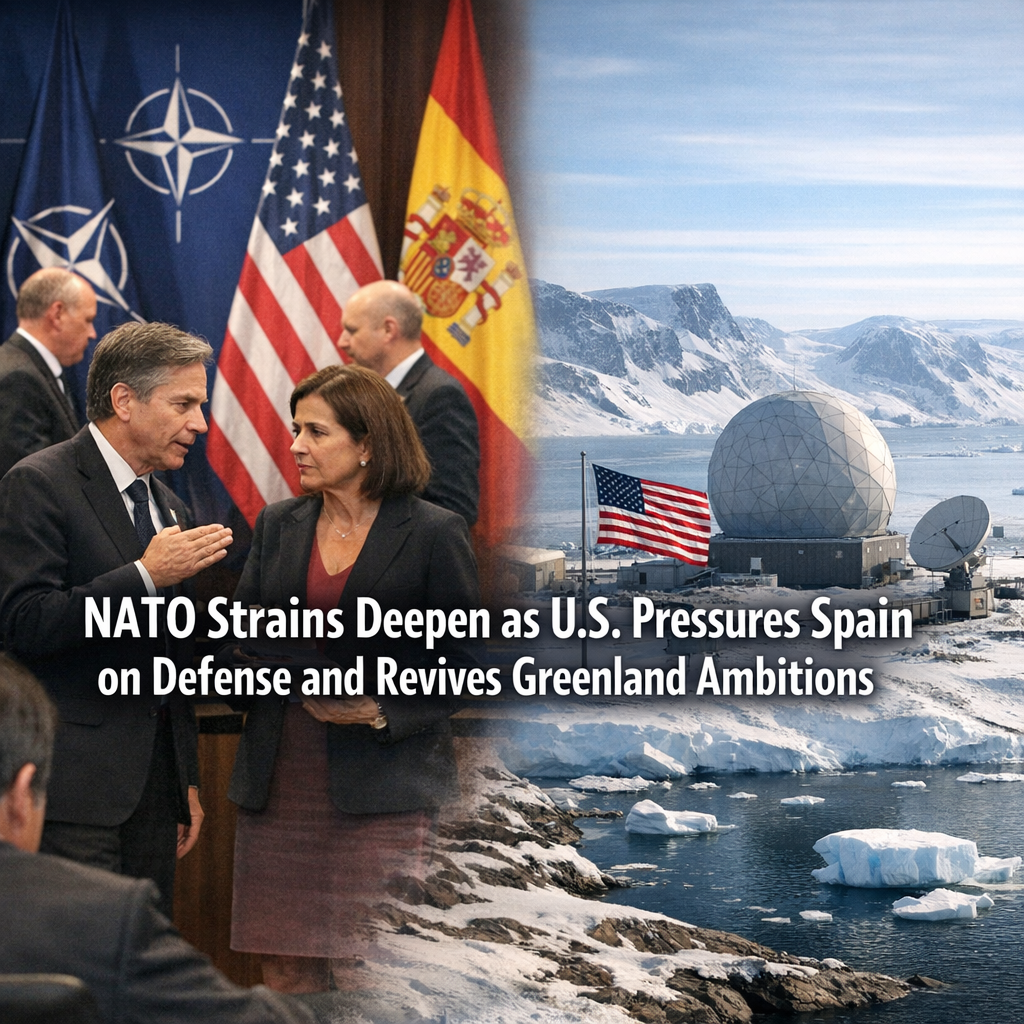
Tensions within the NATO alliance surfaced sharply this week as U.S. President Donald Trump escalated disputes with European partners, singling out Spain over defense spending and reviving a controversial proposal involving Greenland. The developments, first detailed in this Defense News report, underscore widening divisions at a time when the alliance faces mounting strategic pressures.
At the center of the dispute is Washington’s renewed insistence that NATO members meet and exceed defense spending commitments. Spain, which has consistently spent below the alliance’s benchmark of 2 percent of GDP on defense, became a focal point of criticism during the summit. Trump publicly rebuked Madrid, arguing that persistent shortfalls undermine collective security and place disproportionate burdens on higher-spending allies such as the United States.
Spanish officials responded cautiously but firmly, reiterating their commitment to NATO while defending their spending trajectory as aligned with their broader fiscal priorities. The exchange highlighted a recurring fault line within the alliance, where differing domestic constraints and threat perceptions shape national defense policies.
Compounding the tensions was Trump’s renewed push to secure control over Greenland, a semiautonomous territory of Denmark and a strategically significant landmass in the Arctic. While previous U.S. interest in Greenland has been framed in terms of resource access and military positioning, the issue has long been politically sensitive in Copenhagen and Nuuk. Danish leaders again rejected any notion of a sale or transfer, emphasizing Greenland’s autonomy and the non-negotiable nature of its status.
The reemergence of the Greenland proposal during a high-stakes NATO summit raised concerns among European officials about the coherence of U.S. strategic messaging. Diplomats privately expressed unease that such proposals risk distracting from urgent alliance priorities, including deterrence against Russia, support for Ukraine, and the management of emerging security challenges in the Arctic.
Analysts note that the Arctic itself has become an increasingly contested domain, with Russia expanding its military infrastructure and China signaling growing interest in the region’s shipping routes and natural resources. Against that backdrop, U.S. policymakers argue that a stronger presence is essential. However, the manner in which Washington is advancing these interests has prompted questions about diplomatic coordination and alliance cohesion, particularly in light of evolving Arctic territorial competition.
The episode reflects broader strains that have accumulated over years of debate about burden-sharing, strategic autonomy, and the future direction of NATO. While European members have increased defense spending in response to Russia’s war in Ukraine, disparities remain, and political disagreements persist over how quickly and extensively budgets should grow.
Despite the friction, officials on both sides of the Atlantic have sought to contain the fallout and reaffirm core commitments. NATO Secretary General emphasized the alliance’s enduring unity and the importance of continued cooperation in the face of shared threats. Public statements from multiple member states stressed that disagreements over policy should not overshadow the alliance’s foundational role in transatlantic security.
Nevertheless, the disputes highlighted during the summit suggest that underlying tensions are far from resolved. As defense priorities evolve and geopolitical competition intensifies, managing differences within NATO may prove as critical as addressing external challenges.