Navy Identifies Fallen Squadron Leader as Investigation Continues into Fatal Helicopter Crash
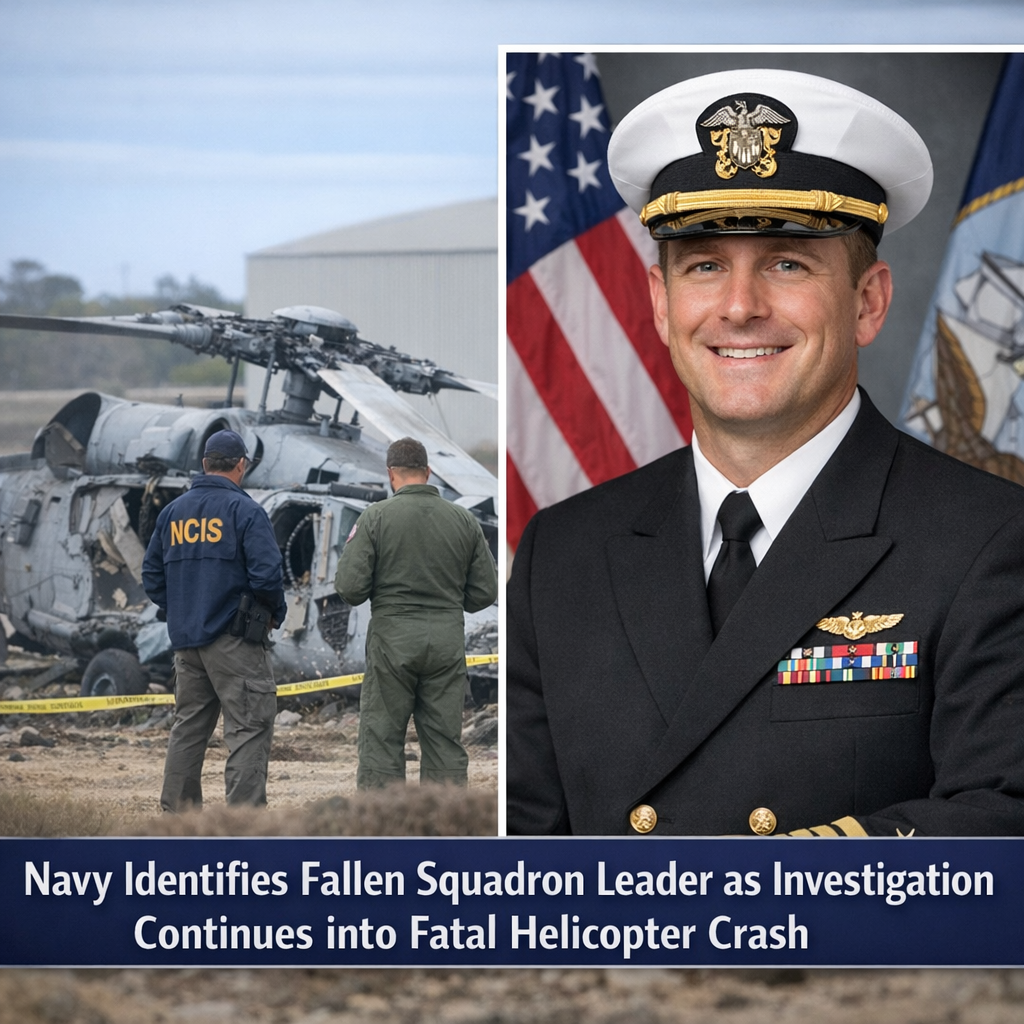
The Navy has identified the commanding officer killed in a recent helicopter crash, bringing a measure of clarity to an incident that has underscored the risks inherent in military aviation. According to reporting by Military Times in its article “Squadron commanding officer identified as Navy aviator killed in downed helicopter”, the officer led a naval aviation squadron and was among those aboard the aircraft when it went down.
Officials said the crash occurred during what has been described as a routine operation, though the circumstances surrounding the incident remain under investigation. The U.S. Navy has not released a definitive cause, and authorities continue to examine potential mechanical issues, environmental conditions, and operational factors that may have contributed to the loss of the aircraft.
The identification of the commanding officer has prompted an outpouring of tributes from across the naval aviation community. Colleagues and superiors described the officer as an experienced aviator and respected leader who played a central role in guiding the squadron’s mission and personnel. The loss is being felt not only within the unit but across the broader service, where such leadership positions carry significant operational and symbolic weight.
Naval aviation units operate in demanding environments that require constant readiness and precision, and even routine training or transport missions can involve complex risks. While accidents of this nature are relatively rare, each incident typically triggers a comprehensive investigation aimed at determining root causes and preventing future occurrences. The Navy has indicated that safety review protocols are already underway, often guided by frameworks such as those used by the Department of Defense safety programs.
The crash also highlights the vulnerability of rotary-wing operations, which often involve low-altitude flight and dynamic conditions. In recent years, the military has invested in expanded safety measures and maintenance oversight, informed in part by studies and guidance from organizations like the Federal Aviation Administration, but investigators frequently emphasize that each mishap must be evaluated on its own terms, without early assumptions.
Families of those involved have been notified, and support services are being provided, including resources coordinated through programs such as Military OneSource. The Navy has asked for privacy as loved ones and fellow service members process the loss.
Further details are expected to emerge as the investigation progresses, including any preliminary findings that may clarify what led to the helicopter’s downing. For now, the focus within the Navy remains on honoring the fallen officer’s service while seeking answers that could help avert similar tragedies in the future.