Germany Set to Host First Overseas ATACMS Production as US Deepens Defense Ties with Europe
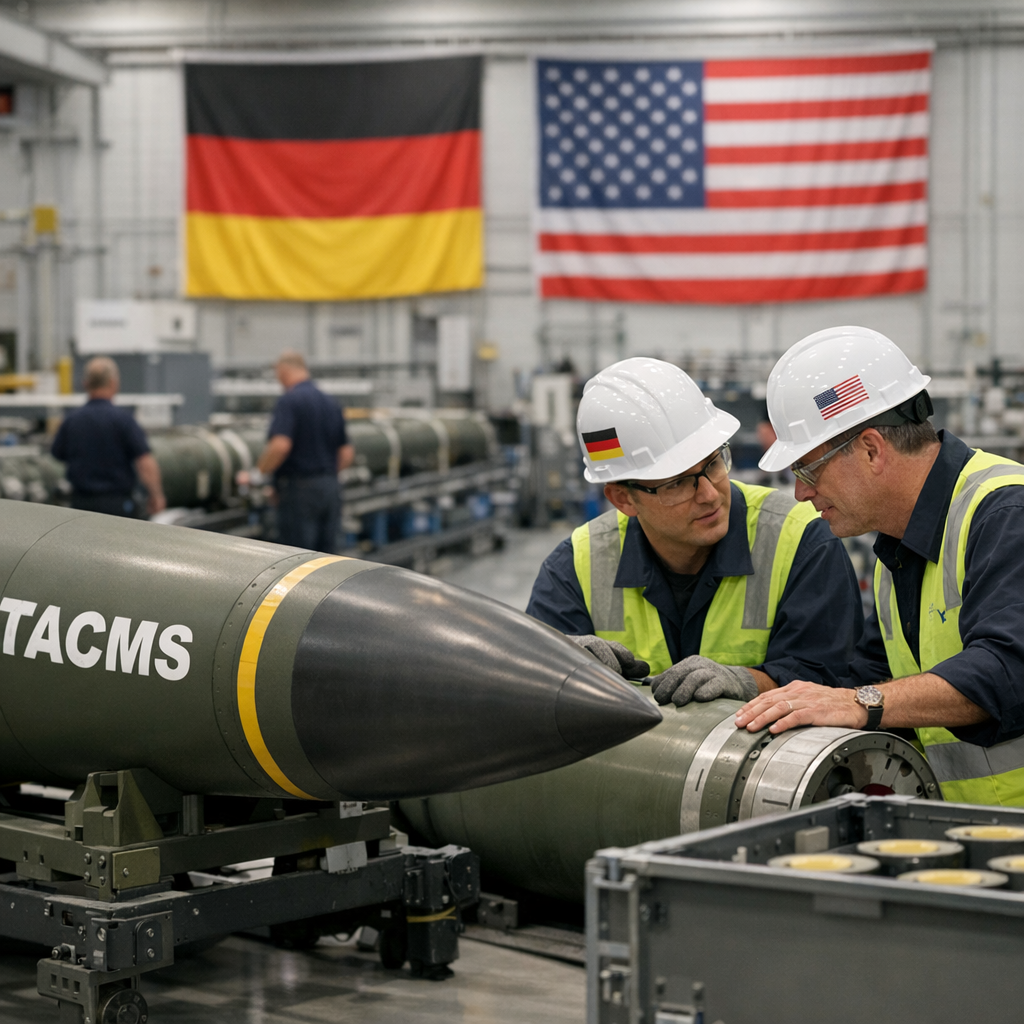
Germany is poised to host the first international production site for the U.S.-made Army Tactical Missile System (ATACMS), a move that underscores deepening transatlantic defense cooperation and Europe’s urgent drive to strengthen its own weapons manufacturing capacity. The development was reported by Defense News in its article “Germany set to become first international site for ATACMS missile production.”
According to the report, U.S. defense contractor Lockheed Martin is working with German partners to establish a production capability for the long-range precision missile system, which has become a critical asset in modern warfare. The initiative reflects both growing demand for the system and mounting pressure on NATO allies to expand defense production closer to potential theaters of operation.
ATACMS, a surface-to-surface missile with a range of up to 300 kilometers depending on the variant, has gained renewed strategic relevance amid Russia’s war in Ukraine. Kyiv has used the system to strike high-value targets, showcasing its effectiveness and reinforcing allied interest in ensuring steady supply and faster production timelines.
Germany’s selection as the first international production site marks a milestone in U.S. defense export policy, which has traditionally limited advanced weapons manufacturing to domestic facilities. The shift signals a broader recalibration aimed at strengthening allied industrial bases and reducing logistical bottlenecks that have become evident during prolonged conflicts.
The planned production effort is also closely aligned with Germany’s own defense policy evolution. Since Russia’s full-scale invasion of Ukraine in 2022, Berlin has committed to significantly increasing military spending and revitalizing its defense industrial sector, as outlined by the German government’s “Zeitenwende” strategy. Hosting ATACMS production would not only enhance Germany’s strategic role within NATO but also support its ambition to become a central hub for European defense manufacturing.
From an industrial perspective, the move could help ease supply constraints that have affected U.S. production lines, particularly as demand for precision-guided munitions continues to rise. Establishing manufacturing capacity in Europe could shorten delivery times for allied nations and provide greater flexibility in responding to regional security needs.
However, the initiative also raises questions about technology transfer, regulatory oversight, and long-term production governance. Sensitive systems like ATACMS involve complex agreements on intellectual property, export controls, and operational security. Ensuring that these arrangements satisfy both U.S. and German legal frameworks will be a critical step before production can begin.
The broader context is a shifting defense landscape in which NATO allies are increasingly expected to shoulder more of the burden for their own security. The war in Ukraine has exposed vulnerabilities in ammunition stockpiles and industrial readiness, prompting a push for more distributed manufacturing networks across the alliance.
As detailed by Defense News, the establishment of an ATACMS production line in Germany represents more than a single industrial project. It reflects a strategic adjustment in how the United States and its allies approach deterrence, readiness, and cooperation in an era of heightened geopolitical competition.
If successfully implemented, the project could serve as a model for future transatlantic defense initiatives, potentially extending to other advanced weapons systems. For now, it stands as a tangible sign of the increasing integration of U.S. and European defense industries amid evolving global security challenges.